167 kr
Läs direkt efter köp
167 kr
Läs direkt efter köp
189 kr
Kommande
187 kr
Skickas inom 7-10 vardagar
155 kr
Skickas
270 kr
Skickas inom 3-6 vardagar
Explains the cutting-edge research that reveals inflammation as the culprit behind many diseases related to aging, including heart disease, osteoporosis, Alzheimer’s Disease, and even cancer and asthma.
Outlines a complete program for keeping inflammation to a minimum—what foods to eat, recommended supplements, weight control, and which medications to take and which to avoid. Includes a head-to-toe guide of ways to prevent or reduce inflammation.
268 kr
Skickas inom 3-6 vardagar
328 kr
Läs direkt efter köp
Based on its author''s four-year study and 15 years of experience in Alzheimer''s and dementia-related care, Alzheimer''s Activities That Stimulate the Mind is the only book offering exercises appropriate to each of the four stages of the disease. It features hundreds of exercises across an array of areas and disciplines, including arts and crafts, community outings, physical activity, religion and spirituality, grooming, gardening, music, and many more.
348 kr
Läs direkt efter köp
"In addition to explaining inflammation''s causes and its role in various diseases, the author offers advice--''an antiinflammation game plan''--on how to maintain ''inflammation balance'' and feel better."--The New York Times
In clear, everyday language, William Meggs, M.D., explains what causes inflammation, its relationship to disease in the body, and what steps readers can take to minimize their risk.
208 kr
Skickas
2 353 kr
Skickas inom 11-20 vardagar
619 kr
Skickas inom 11-20 vardagar
Advances in Alzheimer's disease (AD) research have been challenging and without major breakthroughs in understanding its pathological basis. The reigning hypothesis suggests AD is the result of extracellular amyloid deposition that seed to form amyloid plaques, which then grow and kill neighboring neurons. However, there are several inconsistencies with this hypothesis, not to mention the inability to show clinical benefit in several failed clinical trials by pharmaceuticals (i.e., from Pfizer, Eli Lilly, etc.), and it is in the field's best interest to explore and test multiple hypotheses for pathology rather than drive the majority of research on this single amyloid theory. Reviewing many scientifically peer-reviewed publications, this book describes the "Inside-Out" hypothesis on how amyloid escapes the circulatory system through a dysfunctional blood-brain barrier to bind to the alpha 7 nicotinic acetylcholine receptor on pyramidal neurons. Over time, excessive amounts of amyloid appear to be internalized, resulting in neuron death and lysis. This simple mechanism readily explains plaque composition, size, shape, and location. Based on the current direction of research in the field, this hypothesis appears years from any research and development.
The clear, compelling, and unifying "Inside-Out" hypothesis of AD is brought to life through a string of scientific publications, synthesizing many known features of disease pathology A high-level text on AD pathology, and suggestions for progress in a stagnating field Point-by-point discussion on the issues surrounding the current amyloid cascade, and possible reasons why current clinical trials have failed Contains high-quality photomicrographs in support of the "Inside-Out" hypothesis using single, double, and triple immunohistochemistry on human AD CNS tissues Chapters address the need for a unifying plaque nomenclature, the importance of intracellular amyloid, the blood-brain barrier, inflammation, and autoimmunity1 818 kr
Skickas inom 11-20 vardagar
Developing Therapeutics for Alzheimer's Disease: Progress and Challenges provides a thorough overview of the latest advances toward the development of therapeutics for Alzheimer's disease, along with the major hurdles that still must be overcome and potential solutions to these problems. Despite the lack of progress toward developing therapeutics that can slow or stop the progression of this disease, important discoveries have been made and many promising approaches are advancing in preclinical studies and clinical trials. This book outlines the special challenges related to specific targets and approaches, while presenting a realistic, comprehensive and balanced view of drug discovery and development in this area.
Written by international leaders in the field, the book assesses prospects for the emergence of effective agents and allows readers to better understand the challenges, failures, and future potential for research in Alzheimer's disease. This book is a valuable resource to academic scientists carrying out translational research in Alzheimer's disease, industrial scientists engaged in Alzheimer's drug discovery, executives in biopharmaceutical companies making strategic decisions regarding the direction of internal research and potential outside partnerships, and graduate-level students pursuing courses on Alzheimer's therapeutics.
Provides a realistic but promising assessment of the potential of various therapeutic approaches to Alzheimer's disease Focuses primarily on neuroprotective agents and cognitive enhancers, as well as approaches to targeting the amyloid B-peptide, tau and Apolipoprotein E Discusses alternative approaches, preclinical and clinical development issues, related biomarkers and diagnostics, and prevention and nonpharmacological approaches1 372 kr
Skickas inom 11-20 vardagar
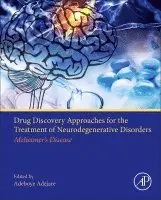
Drug Discovery Approaches for the Treatment of Neurodegenerative Disorders: Alzheimer's Disease examines the drug discovery process for neurodegenerative diseases by focusing specifically on Alzheimer's Disease and illustrating the paradigm necessary to ensure future research and treatment success.
The book explores diagnosis, epidemiology, drug discovery strategies, current therapeutics, and much more to provide a holistic approach to the discovery, development, and treatment of Alzheimer's Disease. Through its coverage of the latest research in targeted drug design, preclinical studies, and mouse and rat models, the book is a must-have resource for all pharmaceutical scientists, pharmacologists, neuroscientists, and clinical researchers working in this area. It illustrates why these drugs tend to fail at the clinical stage, and examines Alzheimer's Disease within the overall context of improving the drug discovery process for the treatment of other neurodegenerative disorders.
Provides a compilation of chemical considerations required in drug discovery for the treatment of neurodegenerative disorders Examines different classes of compounds currently being used in discovery and development stages Explores in vitro and in vivo models with respect to their ability to translate these models to human conditions Distills the most significant information across multiple areas of Alzheimer's disease research to provide a single, comprehensive, and balanced resource913 kr
Skickas inom 11-20 vardagar
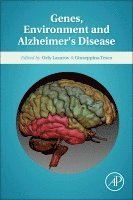
Genes, Environment and Alzheimer's Disease discusses the role that activities such as exercise can play in cardiovascular health, while also highlighting the fact that the last 10 years have brought great discoveries in the strong environmental component of brain disorders, neurodegeneration, and cognitive decline.
It is now clear that brain insult is an environmental risk factor for AD, while on the other hand, lifestyle components such as exercise and level of education may play a protective role, delaying the onset and/or severity of the disease. Evidence from experiments in rodent models of Alzheimer's disease contributes major insight into the molecular mechanisms by which the environment plays its role in AD. Additionally, there are diseases related to lifestyle that may lead to AD. This volume reviews new discoveries related to all these factors, serving as a translational tool for clinicians and researchers interested in genetic and environmental risk factors for the disease.
Provides the first volume to link genetic and environmental risk factors for Alzheimer's disease and dementia Aids researchers and clinicians in understanding the basic mechanisms of Alzheimer's disease and cognitive decline Brings the basic science and clinical perspectives together in a single volume, facilitating translational possibilities Includes a range of molecular to behavioral components assembled into a single volume that creates an excellent resource for basic and clinical neuroscientists1 385 kr
Skickas inom 11-20 vardagar
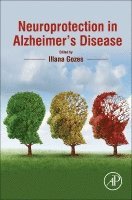
Neuroprotection in Alzheimer's Disease offers a translational point-of-view from both basic and clinical standpoints, putting it on the cusp for further clinical development with its emphasis on nerve cell protection, including the accumulation of knowledge from failed clinical trials and new advances in disease management.
This book brings together the latest findings, both basic, and clinical, under the same cover, making it easy for the reader to obtain a complete overview of the state-of-the-field and beyond. Alzheimer's disease is the most common form of dementia, accounting for 60 to 80 percent of dementia cases. It is a progressive brain disease that slowly destroys memory, thinking skills, and eventually, even the ability to carry out the simplest tasks. It is characterized by death of synapses coupled to death nerve cells and brain degeneration which is manifested by loss of cognitive abilities. Understanding neuroprotection in Alzheimer's disease will pave the path to better disease management and novel therapeutics.
Comprehensive reference detailing neuroprotection in Alzheimer's Disease, with details on nerve cell protection and new advances in disease management Combines the knowledge and points-of-view of both medical doctors and basic scientists, putting the subject at the forefront for further clinical development Edited by one of the leading researchers in Alzheimer's Disease619 kr
Skickas inom 11-20 vardagar
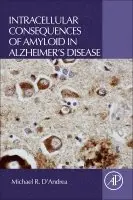
Consequences of Intracellular Amyloid in Alzheimer's Disease addresses one of the more currently unresolved aspects confounding Alzheimer's research, the significance of intraneuronal amyloid. It seeks to explain some of the unresolved questions concerning intracellular amyloid and its origin, entry, and toxicity.
Following up on Dr. D'Andrea's first book, Bursting Neurons and Fading Memories: An Alternative Hypothesis for the Pathogenesis of Alzheimer's Disease, this book further examines the Inside-Out or Bursting alternative hypothesis of how amyloid escapes the circulatory system to ultimately enter neurons, also examining whether there is a relationship between intracellular amyloid, amyloid plaques, and cognitive impairment. Through a comprehensive explanation of the currently relevant scientific research on intracellular amyloid compiled in this handy reference, readers will better understand the mechanisms that lead to neuron death.
Presents the latest research on the significance of intracellular amyloid as it relates to Alzheimer's Addresses crucial questions about intracellular amyloid, including how if forms and enters neurons, its toxicity, if it triggers cell death, and how amyloid plaques are formed Examines the potential relationship between intracellular amyloid, plaques, and cognitive impairment in an effort to answer whether Alzheimer's is initially a problem of amyloid, the neuron, or of the blood-brain barrier Seeks to help researchers generate additional alternative therapeutic opportunities to cure Alzheimer's1 228 kr
Skickas inom 11-20 vardagar
Physical Activity and the Aging Brain: Effects of Exercise on Neurological Function is a complete guide to the manifold effects of exercise and physical activity on the aging brain. Cognitive decline and motor impairment, onset of diseases and disorders, and even changes in family structure and social settings that occur as we age can all impact activity levels, yet continued physical activity is crucial for successful neurological functioning.
This book examines the role that exercise and physical activity play in halting or modulating the deleterious effects of these numerous aging concerns by first examining the current state of research into how exercise manifests physical changes in the brain. It then discuss how physical activity combines with other lifestyle factors to benefit the aging brain, including nutrition, computerized brain training, and social engagement. Most significantly, it also covers how physical activity can serve as therapy to help alleviate the symptoms of various neurological diseases impacting aging populations, with particular emphasis on Alzheimer's disease and age-related cognitive decline.
The book provides broad coverage of the effects of exercise and physical activity on the aging brain, its therapeutic effects, and the many factors that influence the aging process.
Presents research scientists with a complete understanding of the role of exercise in healthy brain aging Considers the roles of nutrition, the mind-body connection, and other lifestyle factors Presents a major resource for exercise and physical activity in the neurological health of older adults Provides a synopsis of key ideas associated with the many aspects of physical activity, along with lifestyle factors that can modify neurological diseases and age-related neurological decline1 174 kr
Skickas inom 11-20 vardagar
Better Living With Dementia: Implications for Individuals, Families, Communities, and Societies highlights evidence-based best practices for improving the lives of patients with dementia. It presents the local and global challenges of these patients, also coupling foundational knowledge with specific strategies to overcome these challenges. The book examines the trajectory of the disease, offers stage-appropriate practices and strategies to improve quality of life, provides theoretical and practical frameworks that inform on ways to support and care for individuals living with dementia, includes evidence-based recommendations for research, and details global examples of care approaches that work.
Weaves research evidence and theories with practical know-how Identifies support strategies for home, community, and health care settings Provides stage-appropriate strategies relative to dementia severity Summarizes dementia pathology, diagnosis, and progression Considers the changing needs of both the individual with dementia and family and formal caregivers Offers evidence-informed recommendations for research, practice, policy, and how to make things better at home, in the community, in healthcare and service settings, and through national policies Provides local and global exemplars of what works Provides case vignettes to illustrate key points with real examples Contains brief conversations with national and international experts1 043 kr
Skickas inom 11-20 vardagar
A Paradigm Shift to Prevent and Treat Alzheimer's Disease: From Monotargeting Pharmaceuticals to Pleiotropic Plant Polyphenols is the first book to systematically exhibit the powerful pleiotropic pharmacological effects on Alzheimer's disease of plant-based compounds from ancient foods that humans have been consuming safely with substantial health benefits for thousands of years.
These plant-based compounds include curcuminoids from turmeric, resveratrol from red wine and grape seed extract from other grape products, epigallocatechin-gallate (EGCG) from green tea, and oleocanthal and oleuropein from olive oil, in addition to a special extract, EGb 761, from the leaves of Ginkgo biloba, the oldest living species of tree on earth.
This book also presents a new analytical framework that convincingly favors a multi-targeting ("pleiotropic") approach to the prevention and treatment of complex chronic diseases, in contrast to the mono-targeting of the pharmaceutical model.
A Paradigm Shift to Prevent and Treat Alzheimer's Disease is a unique and exciting resource for pharmaceutical scientists, pharmacologists, neurologists, general practitioners, research scientists in various medical and life sciences, healthcare professionals in clinical and executive positions, conventional medical schools, schools of naturopathic medicine, healthcare and medical journalists, executives in both national public healthcare systems and private insurers, and informed general readers.
Presents carefully compiled evidence supporting the need to shift from pharmaceutical-based mono-targeting to plant polyphenol-based pleiotropic targeting for the prevention and treatment of Alzheimer's disease Includes valuable tables that aggregate pleiotropic pharmacological effects of the plant polyphenols on Alzheimer's disease-related pathogenic hallmarks Highlights regulatory aspects and discusses the challenges and potential solutions with respect to bioavailability of certain plant polyphenols1 214 kr
Skickas inom 11-20 vardagar
EEG-Based Diagnosis of Alzheimer Disease: A Review and Novel Approaches for Feature Extraction and Classification Techniques provides a practical and easy-to-use guide for researchers in EEG signal processing techniques, Alzheimer's disease, and dementia diagnostics. The book examines different features of EEG signals used to properly diagnose Alzheimer's Disease early, presenting new and innovative results in the extraction and classification of Alzheimer's Disease using EEG signals. This book brings together the use of different EEG features, such as linear and nonlinear features, which play a significant role in diagnosing Alzheimer's Disease.
Includes the mathematical models and rigorous analysis of various classifiers and machine learning algorithms from a perspective of clinical deployment Covers the history of EEG signals and their measurement and recording, along with their uses in clinical diagnostics Analyzes spectral, wavelet, complexity and other features of early and efficient Alzheimer's Disease diagnostics Explores support vector machine-based classification to increase accuracy2 068 kr
Skickas inom 10-15 vardagar
2 068 kr
Skickas inom 10-15 vardagar
1 517 kr
Skickas inom 11-20 vardagar
Considerable progress has been made in neurochemical and therapeutic aspects of dementia research in recent years. Molecular and Therapeutic Aspects of Dementia presents readers with comprehensive and cutting-edge information on the neurochemical mechanisms of various types of dementias. It provides a clearly written and logically organized and comprehensive overview of molecular aspects of risk factors, symptoms, pathogenesis, biomarkers, and therapeutic strategies for various types of dementia. This book is written for the international audience of neurochemists, neuroscientists, neurologists, neuropharmacologists, and clinicians. The hope is that this discussion will not only integrate and consolidate knowledge in this field, but will jumpstart more studies on molecular mechanisms and therapeutic aspects of dementia.
The comprehensive information in this monograph may not only help in early detection of various types of dementia and dementia linked neurological disorders, but also promote discovery of new drugs, which may block or delay the onset of dementia in elderly patients. Understanding the course of dementia is important not only for patients, caregivers, and health professionals, but also for health policy-makers, who have to plan for national resources needed in the management of an increasing number of dementia cases.?
Provides a comprehensive overview of molecular aspects of risk factors, symptoms, pathogenesis, biomarkers, and therapeutic strategies for various types of dementia Summarizes cutting edge research information on signal transduction processes associated with neurochemistry of dementia Discusses the synthesis, metabolism, and role of lipid mediators in dementia1 556 kr
Skickas inom 11-20 vardagar
1 511 kr
Skickas inom 11-20 vardagar
1 517 kr
Skickas inom 11-20 vardagar
Nanomedicine-Based Approaches for the Treatment of Dementia explores a wide range of promising approaches for the diagnosis and treatment of dementia. The book begins with introductory sections on dementia and brain ailments that are followed by further chapters that discuss detailed information about challenges of drug delivery across the blood-brain barrier as well as the current status. This book helps readers design and develop novel drug delivery systems and devices for the treatment of dementia that take advantage of recent advances in nanomedical technologies.
Numerous drug delivery systems have been developed recently for dementia. Unfortunately, most of them are ineffective since dementia is not a single disease. It is an umbrella term for several neurodegenerative conditions which alter brain functions. Due to this, there is an urgent need for innovative technologies/nano drug delivery systems to improve the targeting and delivery of therapeutic as well as diagnostic agents specifically for treating dementia.
Explores promising approaches for the diagnosis and treatment of dementia Discusses advances in cutting-edge nanomedical technologies Focuses on the design, synthesis and application of nanocarriers in drug delivery108 kr
Läs direkt efter köp
210 kr
Lyssna direkt efter köp
Brought to you by Penguin.When Dr Arthur Kleinman, an eminent Harvard psychiatrist and social anthropologist, began caring for his wife, Joan, after she was diagnosed with early-onset Alzheimer''s disease, he found just how far the act of caregiving extended beyond the boundaries of medicine. In The Soul of Care, he delivers a deeply inspiring story about what it means to grapple with illness from both sides, as an experienced doctor and a loving husband.Caregiving is long, hard, unglamorous work - at moments joyous, more often tedious, sometimes agonizing, but always rich in meaning. Describing the practical, emotional and moral aspects of caring, Kleinman explores how we must ask uncomfortable questions of ourselves and of our doctors. Poignant and honest, The Soul of Care is an uplifting story about what really matters in our lives.© Arthur Kleinman 2020 (P) Penguin Audio 2020
3 832 kr
Skickas inom 3-6 vardagar
1 662 kr
Läs direkt efter köp