

45 kr
Läs direkt efter köp
45 kr
Läs direkt efter köp

853 kr
Skickas
I Straffansvar vid atypiska sinnestillstånd undersöks de straffrättsliga förutsättningarna för skuld i fall där gärningspersonen har ett atypiskt sinnestillstånd, såsom en allvarlig psykisk störning eller en tillfällig sinnesförvirring. I de flesta straffsystem gäller särskilda regler som undantar eller ursäktar personer som på grund av till exempel en psykos har saknat förmåga att förstå eller kontrollera sitt handlande. Sådana undantagsregler anses uppfylla ett grundläggande krav på rättvisa i en modern rättsstat.
Det svenska straffsystemet utgör dock ett avvikande exempel. Sedan brottsbalken trädde i kraft 1965 saknas ett krav på ansvarsförmåga, eller tillräknelighet, som förutsättning för straffansvar. Huvudregeln är att alla har ansvarsförmåga och det finns inga undantag. Brottsbalken innehåller istället regler för särbehandling som möjliggör rättspsykiatrisk vård som påföljd för brott. För att vård- och skyddsåtgärder ska kunna komma till stånd måste dock gärningspersonen dömas för brott, vilket förutsätter skuld. Personen måste ha begått gärningen med uppsåt, det vill säga med ’vett och vilja’.
Avhandlingen behandlar hur skuldkravet konstrueras och tillämpas genom ett samspel mellan rättsliga och rättspsykiatriska bedömningar. Analysen visar på både begreppsliga och praktiska problem med att tillämpa straffrättens ’vanliga’ regler vid atypiska sinnestillstånd. Straffrättsliga föreställningar om normalitet och rationalitet ställer upp ramar för den rättsliga bedömningen som lämnar ett mycket begränsat utrymme för friande domar och som gör prövningen sårbar för hänsyn gällande vårdbehov och samhällsskydd.
577 kr
Skickas inom 10-15 vardagar

700 kr
Skickas inom 10-15 vardagar

5 889 kr
Skickas inom 7-10 vardagar
Der Löwe-Rosenberg enthält die grundlegende, umfassende Kommentierung des deutschen Strafprozessrechts und gibt dem Benutzer eine Hilfe zur Lösung nicht nur häufig auftauchender, sondern auch entlegener Sachfragen. Der Großkommentar erläutert die StPO, das GVG, das EGGVG sowie die das Strafverfahren betreffenden Vorschriften der EMRK und des IPBPR. Der gegenwärtige Erkenntnisstand und der Stand der rechtlichen Kontroversen sind vollständig dargestellt.
Der Löwe-Rosenberg ist als Großkommentar der Praxis angelegt, bei Darstellung und Gewichtung wird stets auf Praxisbezug und Praxistauglichkeit geachtet. Auch für die Neuauflage konnten wieder besonders fachkundige Herausgeber und Autoren aus Wissenschaft und Praxis gewonnen werden, die für eine wissenschaftlich fundierte und zugleich praxisorientierte Erläuterung stehen.
Band 11 enthält die Kommentierung des Gerichtsverfassungsgesetzes (GVG) und die des Einführungsgesetzes zum Gerichtsverfassungsgesetz (EGGVG). Neu aufgenommen wurden insbesondere die Ausführungsvorschriften (§§ 142b, 143 Abs. 6 GVG) zur Verordnung (EU) 2017/1939 des Rates vom 12.10.2017 zur Durchführung einer Verstärkten Zusammenarbeit zur Errichtung der Europäischen Staatsanwaltschaft (EUStA) (ABlEU Nr. L 283 vom 31.10.2017).

435 kr
Skickas

491 kr
Skickas

970 kr
Skickas inom 10-15 vardagar
1 374 kr
Skickas inom 5-8 vardagar

Part II Secular Poems
639 kr
Skickas inom 10-15 vardagar
455 kr
Läs direkt efter köp

577 kr
Skickas inom 10-15 vardagar
347 kr
Skickas inom 7-10 vardagar
661 kr
Läs direkt efter köp
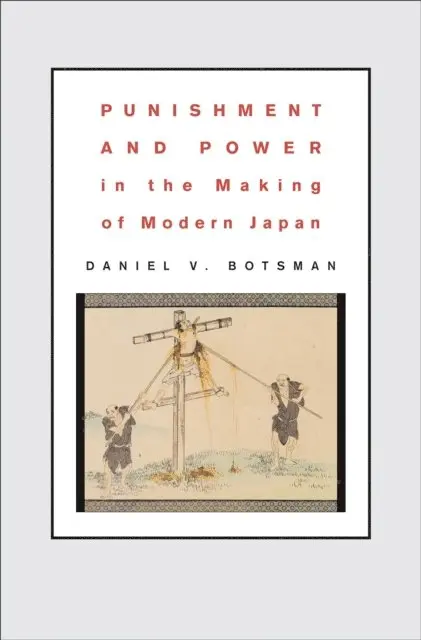
The kinds of punishment used in a society have long been considered an important criterion in judging whether a society is civilized or barbaric, advanced or backward, modern or premodern. Focusing on Japan, and the dramatic revolution in punishments that occurred after the Meiji Restoration, Daniel Botsman asks how such distinctions have affected our understanding of the past and contributed, in turn, to the proliferation of new kinds of barbarity in the modern world. While there is no denying the ferocity of many of the penal practices in use during the Tokugawa period (1600-1868), this book begins by showing that these formed part of a sophisticated system of order that did have its limits. Botsman then demonstrates that although significant innovations occurred later in the period, they did not fit smoothly into the "modernization" process. Instead, he argues, the Western powers forced a break with the past by using the specter of Oriental barbarism to justify their own aggressive expansion into East Asia. The ensuing changes were not simply imposed from outside, however. The Meiji regime soon realized that the modern prison could serve not only as a symbol of Japan''s international progress but also as a powerful domestic tool. The first English-language study of the history of punishment in Japan, the book concludes by examining how modern ideas about progress and civilization shaped penal practices in Japan''s own colonial empire.
428 kr
Skickas inom 10-15 vardagar
99 kr
Läs direkt efter köp

116 kr
Läs direkt efter köp

57 kr
Läs direkt efter köp

241 kr
Lyssna direkt efter köp

241 kr
Lyssna direkt efter köp

88 kr
Läs direkt efter köp

129 kr
Skickas

79 kr
Läs direkt efter köp

88 kr
Läs direkt efter köp

141 kr
Skickas

200 kr
Skickas
199 kr
Skickas inom 7-10 vardagar
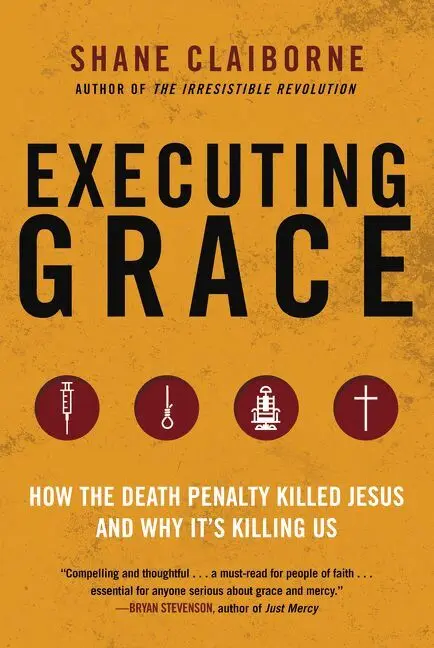
In this reasoned exploration of justice, retribution, and redemption, the champion of the new monastic movement, popular speaker, and author of the bestselling The Irresistible Revolution offers a powerful and persuasive appeal for the abolition of the death penalty.
The Bible says an eye for an eye. But is the state’s taking of a life true—or even practical—punishment for convicted prisoners? In this thought-provoking work, Shane Claiborne explores the issue of the death penalty and the contrast between punitive justice and restorative justice, questioning our notions of fairness, revenge, and absolution.
Using an historical lens to frame his argument, Claiborne draws on testimonials and examples from Scripture to show how the death penalty is not the ideal of justice that many believe. Not only is a life lost, so too, is the possibility of mercy and grace. In Executing Grace, he reminds us of the divine power of forgiveness, and evokes the fundamental truth of the Gospel—that no one, even a criminal, is beyond redemption.
174 kr
Läs direkt efter köp

219 kr
Skickas

945 kr
Skickas inom 11-20 vardagar
Understanding Forensic Digital Imaging offers the principles of forensic digital imaging and photography in a manner that is straightforward and easy to digest for the professional and student. It provides information on how to photograph any setting that may have forensic value, details how to follow practices that are acceptable in court, and recommends what variety of hardware and software are most valuable to a practitioner.
In addition to chapters on basic topics such as light and lenses, resolution, and file formats, the book contains forensic-science-specific information on SWGIT and the use of photography in investigations and in court. Of particular note is Chapter 17, Establishing Quality Requirements, which offers information on how to create a good digital image, and is more comprehensive than any other source currently available.
Covers topics that are of vital importance to the practicing professional Serves as an up-to-date reference in the rapidly evolving world of digital imaging Uses clear and concise language so that any reader can understand the technology and science behind digital imaging