700 kr
Skickas inom 10-15 vardagar
700 kr
Skickas inom 10-15 vardagar
999 kr
Skickas inom 10-15 vardagar
2 564 kr
Skickas inom 10-15 vardagar
2 863 kr
Skickas inom 10-15 vardagar
646 kr
Skickas inom 10-15 vardagar
646 kr
Skickas inom 10-15 vardagar
360 kr
Skickas inom 10-15 vardagar
2 346 kr
Skickas inom 10-15 vardagar
673 kr
Skickas inom 10-15 vardagar
543 kr
Kommande
2 085 kr
Kommande
292 kr
Skickas inom 10-15 vardagar
1 421 kr
Skickas inom 10-15 vardagar
2 346 kr
Skickas inom 10-15 vardagar
2 346 kr
Skickas inom 10-15 vardagar
700 kr
Skickas inom 10-15 vardagar
360 kr
Skickas inom 10-15 vardagar
2 346 kr
Skickas inom 10-15 vardagar
673 kr
Skickas inom 10-15 vardagar
551 kr
Skickas inom 10-15 vardagar
646 kr
Skickas inom 10-15 vardagar
412 kr
Läs direkt efter köp
Exploring the relationship between competition law and technology pools, this book provides general-purpose details of the biotechnology patent pool scheme while discussing historical developments, approaches of the US Department of Justice, Federal Trade Commission, and the European Union Competition Commission via EU regulations. In addition to these regulatory approaches and evolution in concept and theory of technology pools, this book illustrates relationship issues including tying arrangements and essential facility consideration vis-Ã -vis technology pools. It analyzes the modalities of forming such pools in the area of biotechnology, specifically illustrating that the formation of technology pools is possible and can be safely undertaken, and proposes a viable solution and structure.
Patent pools in the biotechnology industry will pave the way towards open collaborative research, reducing patent thickets. Formation of such pools will increase access to various technology and patents otherwise out of bounds, resulting in a reduction of licensing costs and a spur in the development of new solutions. Most importantly, such pools will reduce the frequency of patent toll gates, making the entire spectrum of research interesting from the perspective of researchers as well as investors. This book will be an aid to researchers studying intellectual property, patents, and biotechnology, as well as to interest groups including funding agencies, venture funds, angel investors, and proponents of the open-source movement.
414 kr
Läs direkt efter köp
Exploring the relationship between competition law and technology pools, this book provides general-purpose details of the biotechnology patent pool scheme while discussing historical developments, approaches of the US Department of Justice, Federal Trade Commission, and the European Union Competition Commission via EU regulations. In addition to these regulatory approaches and evolution in concept and theory of technology pools, this book illustrates relationship issues including tying arrangements and essential facility consideration vis-Ã -vis technology pools. It analyzes the modalities of forming such pools in the area of biotechnology, specifically illustrating that the formation of technology pools is possible and can be safely undertaken, and proposes a viable solution and structure.
Patent pools in the biotechnology industry will pave the way towards open collaborative research, reducing patent thickets. Formation of such pools will increase access to various technology and patents otherwise out of bounds, resulting in a reduction of licensing costs and a spur in the development of new solutions. Most importantly, such pools will reduce the frequency of patent toll gates, making the entire spectrum of research interesting from the perspective of researchers as well as investors. This book will be an aid to researchers studying intellectual property, patents, and biotechnology, as well as to interest groups including funding agencies, venture funds, angel investors, and proponents of the open-source movement.
733 kr
Läs direkt efter köp
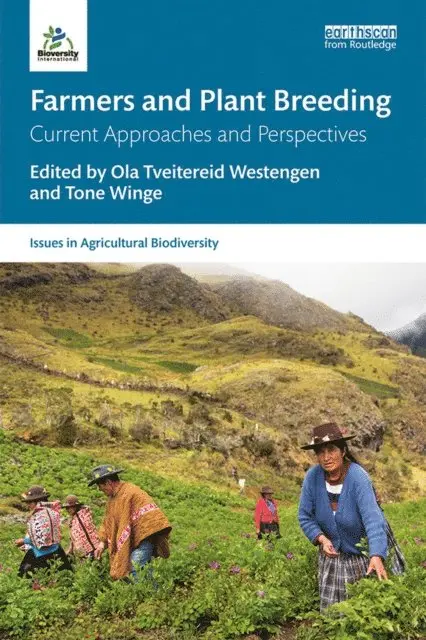
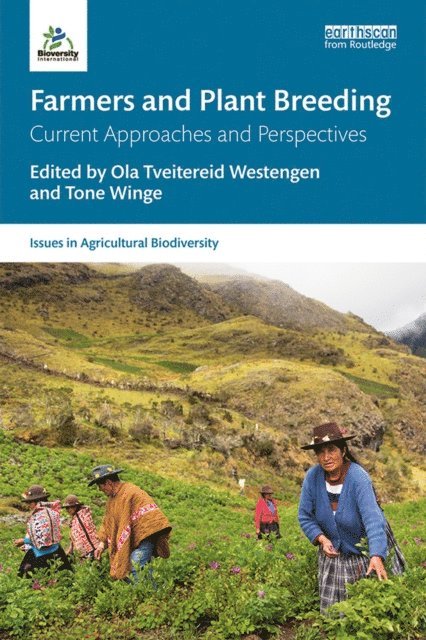
This book presents the history of, and current approaches to, farmer-breeder collaboration in plant breeding, situating this work in the context of sustainable food systems, as well as national and international policy and law regimes.
Plant breeding is essential to food production, climate-change adaptation and sustainable development. This book brings together experienced practitioners and researchers involved in collaborative breeding programmes across a diversity of crops and agro-ecologies around the world. Case studies include collaborative sorghum and pearl millet breeding for water-stressed environments in West Africa, participatory rice breeding for intensive rice farming in the Mekong Delta, and evolutionary participatory quinoa breeding for organic agriculture in North America. While outlining the challenges, the volume also highlights the positive impacts, such as yield increases, farmers’ empowerment in the innovation and development processes, contributions to maintenance of crop genetic diversity and adaptation to climate change. This collection offers a range of perspectives on enabling conditions for farmer–breeder collaboration in plant breeding in relation to biodiversity agreements such as the Plant Treaty, trade agreements and related intellectual property rights (IPR) regimes, and national seed policies and laws.
Relevant to a wide audience, including practitioners with experience in plant breeding and management of crop genetic resources and those with a broader interest in agriculture and development, as well as students of international cooperation and development, this volume is a timely addition to the literature.
749 kr
Läs direkt efter köp
This book presents the history of, and current approaches to, farmer-breeder collaboration in plant breeding, situating this work in the context of sustainable food systems, as well as national and international policy and law regimes.
Plant breeding is essential to food production, climate-change adaptation and sustainable development. This book brings together experienced practitioners and researchers involved in collaborative breeding programmes across a diversity of crops and agro-ecologies around the world. Case studies include collaborative sorghum and pearl millet breeding for water-stressed environments in West Africa, participatory rice breeding for intensive rice farming in the Mekong Delta, and evolutionary participatory quinoa breeding for organic agriculture in North America. While outlining the challenges, the volume also highlights the positive impacts, such as yield increases, farmers’ empowerment in the innovation and development processes, contributions to maintenance of crop genetic diversity and adaptation to climate change. This collection offers a range of perspectives on enabling conditions for farmer–breeder collaboration in plant breeding in relation to biodiversity agreements such as the Plant Treaty, trade agreements and related intellectual property rights (IPR) regimes, and national seed policies and laws.
Relevant to a wide audience, including practitioners with experience in plant breeding and management of crop genetic resources and those with a broader interest in agriculture and development, as well as students of international cooperation and development, this volume is a timely addition to the literature.
617 kr
Läs direkt efter köp
This book critiques the decision-making process in Article 53(a) of the European Patent Convention. To date, such decisions have been taken at high levels of expertise without much public involvement. The book eschews traditional solutions, such as those found within legislative, judicial and patent office realms and instead develops a radical blueprint for how these decisions can be put to the public. By examining wide-scale models of participatory democracy and deliberation, this book fills a significant gap in the literature. It will be invaluable for patent lawyers, academics, practitioners and intellectual property and patent officials.
622 kr
Läs direkt efter köp
This book critiques the decision-making process in Article 53(a) of the European Patent Convention. To date, such decisions have been taken at high levels of expertise without much public involvement. The book eschews traditional solutions, such as those found within legislative, judicial and patent office realms and instead develops a radical blueprint for how these decisions can be put to the public. By examining wide-scale models of participatory democracy and deliberation, this book fills a significant gap in the literature. It will be invaluable for patent lawyers, academics, practitioners and intellectual property and patent officials.
617 kr
Läs direkt efter köp
This book is the first legal geography book to explicitly engage in method. It complements this by also bringing together different perspectives on the emerging school of legal geography. It explores human–environment interactions and showcases distinct environmental legal geography scholarship.
Legal Geography: Perspectives and Methods is an innovative book concerned with a new relational and material way of examining our legal-spatial world. With chapters examining natural resource management, Indigenous knowledge and political ecology scholarship, the text introduces legal geography’s modes of analysis and critique. The book explores topics such as Indigenous environmental rights, the impacts of extractive industries, mediation of climate change, food, animal and plant patents, fossil fuels, mining and coastal environments based on empirical, jurisdictional and methodological insights from Australia, New Zealand and the Asia-Pacific to demonstrate how space and place are invoked in legal processes and contestations, and the methods that may be employed to explore these processes and contestations.
This book examines the role of legal geographies in the 21st century beyond the simple “law in action”, and it will thus appeal to students of socio-legal studies, human geography, environmental studies, environmental policy, as well as politics and international relations.
749 kr
Läs direkt efter köp
A major target of Goal 3 of the Sustainable Development Goals adopted by the United Nations in 2015 is the elimination of ‘the epidemics of AIDS, tuberculosis, malaria and neglected tropical diseases’ and combating ‘hepatitis, water-borne diseases and other communicable diseases’. Intellectual property (IP) has been identified as one of the factors impeding access to affordable medicines in developing countries, especially in relation to the HIV pandemic.
This book examines the scope of the existing flexibilities in international IP law for promoting access to medicines. It analyses the factors accounting for the underutilisation of the flexibilities in Africa and the measures that African countries may adopt to address the IP barriers to access to medicines. It explores the regional strategies that Africa can adopt to resolve the tension between IP regimes and access to medicines. It also highlights how trade liberalisation and regional integration can play crucial roles in enhancing the use of TRIPS flexibilities, local pharmaceutical manufacturing and access to medicines in Africa.
By adopting qualitative research methods to investigate how African countries may effectively use IP to serve public health purposes through the stratagem of regional integration, this book will be a valuable contribution to the existing literature on IP.