1 535 kr
Läs direkt efter köp
1 535 kr
Läs direkt efter köp
974 kr
Läs direkt efter köp
288 kr
Skickas inom 11-20 vardagar
Anabolic Steroid Abuse in Public Safety Personnel: A Forensic Manual provides readers with information on both the history and overwhelming evidence relating to steroid abuse in the law enforcement subculture.
The text raises awareness regarding the pervasiveness of the problem that has grown into a systemic and nationwide phenomenon, and then addresses the consequences of anabolic steroid abuse on individual health, agency liability, and public safety.
Particular attention is paid to forensic issues, including investigative, evidentiary, and legal concerns, facilitating just and lawful outcomes when these crimes are suspected or exposed.
Provides readers with information on both the history and overwhelming evidence relating to steroid abuse in the law enforcement subculture An investigative and forensic desk reference manual for investigators and attorneys Pays particular attention to forensic issues, including investigative, evidentiary, and legal concerns874 kr
Skickas inom 11-20 vardagar
321 kr
Läs direkt efter köp
1 022 kr
Läs direkt efter köp
933 kr
Skickas inom 11-20 vardagar
Though polygraph has been the mainstay for government and police departments since World War II, it has undergone substantial transformation in recent years. Fundamentals of Polygraph Practice bridges the gap between the outmoded practices and today's validated testing and analysis protocols. The goal of this reference is to thoroughly and concisely describe the evidence-based practices of polygraphy. Coverage will include: psychophysiology, testing techniques, data collection, data analysis, ethics, polygraph law, alternate technologies and much more. This text addresses the foundational needs of polygraph students, and is written to be useful and accessible to attorneys, forensic scientists, consumers of polygraph services, and the general public.
Includes protocols and fundamentals of polygraph practice Covers the history of lie detection, psychophysiology, data collection, techniques and testing, data analysis and much more Authors are internationally recognized in the polygraph field1 029 kr
Läs direkt efter köp
1 007 kr
Läs direkt efter köp
710 kr
Läs direkt efter köp
624 kr
Läs direkt efter köp
890 kr
Skickas inom 11-20 vardagar
Essentials of Medicolegal Death Investigation uses a unique approach by combining medical issues, injury patterns, and investigative procedures to provide the reader with the basic fundamentals for a death investigation. The text introduces the reader to death investigation, common causes of death, and very specific types of death, including blunt-force injuries, gunshot wounds, and toxicology deaths. Each section includes case studies with written and visual descriptions. Written by a well-known and experienced medicolegal death investigator, the book fills a void in medicolegal literature for both students and professionals alike.
Provides a valuable guide to the interpretation of medical death investigation for practitioners and students Covers the following circumstances in death investigations: asphyxiation, blunt-force injuries, sharp-force injuries, gunshot wounds, toxicology deaths, and natural causes Includes case studies with written and visual descriptions and discussion, as well as up-to-date literature review921 kr
Läs direkt efter köp
321 kr
Läs direkt efter köp
2 558 kr
Läs direkt efter köp
419 kr
Läs direkt efter köp
520 kr
Läs direkt efter köp
604 kr
Skickas inom 11-20 vardagar
The ability to preserve electronic evidence is critical to presenting a solid case for civil litigation, as well as in criminal and regulatory investigations. Preserving Electronic Evidence for Trial provides everyone connected with digital forensics investigation and litigation with a clear and practical hands-on guide to the best practices in preserving electronic evidence.
Corporate management personnel (legal & IT) and outside counsel need reliable processes for the litigation hold - identifying, locating, and preserving electronic evidence. Preserving Electronic Evidence for Trial provides the road map, showing you how to organize the digital evidence team before the crisis, not in the middle of litigation. This practice handbook by an internationally known digital forensics expert and an experienced litigator focuses on what corporate and litigation counsel as well as IT managers and forensic consultants need to know to communicate effectively about electronic evidence.
You will find tips on how all your team members can get up to speed on each other's areas of specialization before a crisis arises. The result is a plan to effectively identify and pre-train the critical electronic-evidence team members. You will be ready to lead the team to success when a triggering event indicates that litigation is likely, by knowing what to ask in coordinating effectively with litigation counsel and forensic consultants throughout the litigation progress. Your team can also be ready for action in various business strategies, such as merger evaluation and non-litigation conflict resolution.
Destroy your electronic evidence, destroy your own case-learn how to avoid falling off this cliff Learn how to organize the digital evidence team before the crisis, not in the middle of litigation Learn effective communication among forensics consultants, litigators and corporate counsel and management for pre-litigation process planning Learn the critical forensics steps your corporate client must take in preserving electronic evidence when they suspect litigation is coming, and why cheerful neglect is not an option720 kr
Läs direkt efter köp
651 kr
Skickas inom 11-20 vardagar
Seeking the Truth from Mobile Evidence: Basic Fundamentals, Intermediate and Advanced Overview of Current Mobile Forensic Investigations will assist those who have never collected mobile evidence and augment the work of professionals who are not currently performing advanced destructive techniques. This book is intended for any professional that is interested in pursuing work that involves mobile forensics, and is designed around the outcomes of criminal investigations that involve mobile digital evidence. Author John Bair brings to life the techniques and concepts that can assist those in the private or corporate sector.
Mobile devices have always been very dynamic in nature. They have also become an integral part of our lives, and often times, a digital representation of where we are, who we communicate with and what we document around us. Because they constantly change features, allow user enabled security, and or encryption, those employed with extracting user data are often overwhelmed with the process. This book presents a complete guide to mobile device forensics, written in an easy to understand format.
Provides readers with basic, intermediate, and advanced mobile forensic concepts and methodologyThirty overall chapters which include such topics as, preventing evidence contamination, triaging devices, troubleshooting, report writing, physical memory and encoding, date and time stamps, decoding Multi-Media-Messages, decoding unsupported application data, advanced validation, water damaged phones, Joint Test Action Group (JTAG), Thermal and Non-Thermal chip removal, BGA cleaning and imaging, In-System-Programming (ISP), and morePopular JTAG boxes - Z3X and RIFF/RIFF2 are expanded on in detailReaders have access to the companion guide which includes additional image examples, and other useful materials770 kr
Läs direkt efter köp
1 163 kr
Skickas inom 11-20 vardagar
1 607 kr
Läs direkt efter köp
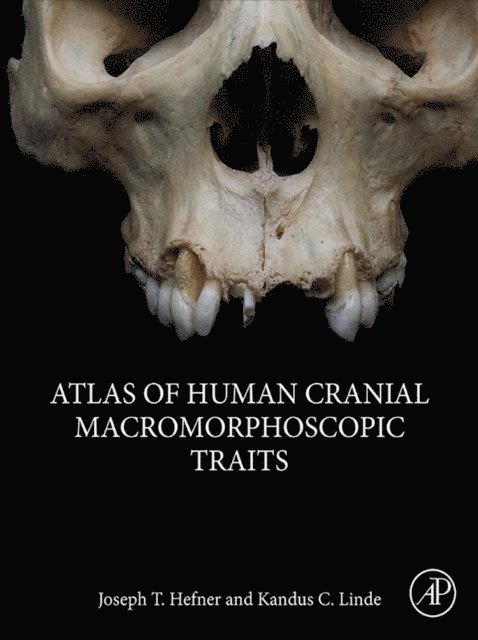
Atlas of Human Cranial Macromorphoscopic Traits synthesizes macromorphoscopic traits and their analysis in an accessible manner, providing detailed descriptions and examples of the various character state manifestations intended for use in classrooms, laboratories, and in the field. The volume begins with an outline of the macromorphoscopic dataset, its history, recent modifications to the historical approach, and recent technological and analytical advances. Additional sections cover Nomenclature, Gross Anatomy, Function, Methodology, Line Drawings, Detailed Definitions, Multiple High-resolution Photographs, and Population Variation Data from the Macromorphoscopic Databank (MaMD).
The volume concludes with a chapter outlining the statistical analysis of macromorphoscopic data and a summary of the computer programs and reference databases available to forensic anthropologists for the analysis of these data.
Provides detailed descriptions, illustrations and high-resolution images of various character state manifestations of seventeen macromorphoscopic traits Applies to both forensic and bioarcheological research Written by the foremost expert on macromorphoscopic trait analysis and estimation of ancestry in forensic anthropology1 183 kr
Skickas inom 11-20 vardagar
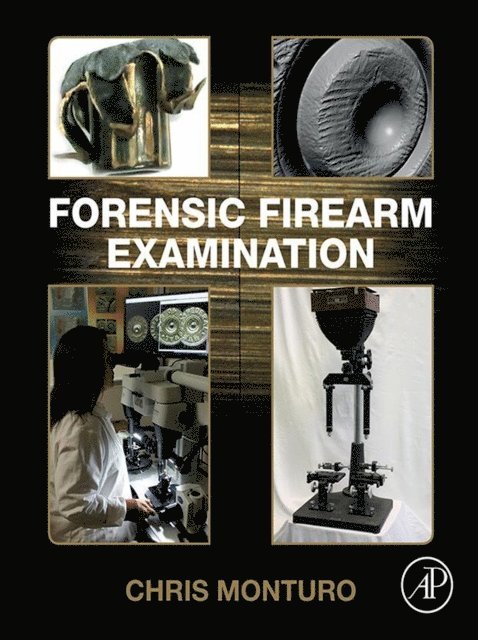
Forensic Firearm Examination provides the reader with a thorough understanding of theory, application, and process of firearm comparison. It is essential in the field of forensic firearm examination to not only understand the marks that examiners are observing, but more importantly learn where these marks come from during the manufacturing process. This book explores the various machining techniques utilized in the manufacturing process and the resulting marks left by those tools. This information will equip the examiner with the knowledge to answer questions posed by the legal system regarding the uniqueness or potential similarity of marks on firearms imparted to fired bullets and cartridge cases.
Intended primarily for firearm and tool mark examiners, this valuable resource serves as a primary requirement for the training of firearm and tool mark examiners. Other forensic science disciplines who rely on pattern matching as a primary determining factor whether or not two objects may share a common source would also find utility in this work. Finally, it will be a valuable resource for attorneys who are seeking to understand better the scientific aspects of firearm identification.
Written by a foremost expert in the field, Forensic Firearm Examination explores specific firearm manufacturing techniques and the resulting marks, which has not been covered in any book publication. Chris Monturo has over 23 years of experience as forensic firearm and tool mark examiner. Additionally, he is a distinguished member of the Association of Firearm and Tool Mark Examiners (AFTE), a past member of the Scientific Working Group for Firearm and Tool Marks (SWGGUN), past member of the Organization of Scientific Area Subcommittees (OSAC) for firearm and tool marks and has instructed courses in machining for the firearm examiner in the United States and Internationally.
Provides reader with a thorough understanding of theory, application, and process of firearm identification Topics include the manufacturing process of all components that interact with the bullet or case during firing, the nature of manufacturing and potential pitfalls, such as subclass1 298 kr
Läs direkt efter köp
1 045 kr
Läs direkt efter köp
1 298 kr
Läs direkt efter köp
933 kr
Skickas inom 11-20 vardagar
3D Data Acquisition for Bioarchaeology, Forensic Anthropology, and Archaeology serves as a handbook for the collection and processing of 3-D scanned data and as a tool for scholars interested in pursuing research projects with 3-D models. The book's chapters enhance the reader's understanding of the technology by covering virtual model processing protocols, alignment methods, actual data acquisition techniques, basic technological protocols, and considerations of variation in research design associated with biological anthropology and archaeology.
Thoroughly guides the reader through the "how-to� on different stages of 3D-data-related research Provides statistical analysis options for 3D image data Covers protocols, methods and techniques as associated with biological anthropology and archaeology1 282 kr
Läs direkt efter köp
1 660 kr
Skickas inom 11-20 vardagar
Microbial Forensics, Third Edition, serves as a complete reference on the discipline, describing the advances, challenges and opportunities that are integral in applying science to help solve future biocrimes. New chapters include: Microbial Source Tracking, Clinical Recognition, Bioinformatics, and Quality Assurance. This book is intended for a wide audience, but will be indispensable to forensic scientists and researchers interested in contributing to the growing field of microbial forensics. Biologists and microbiologists, the legal and judicial system, and the international community involved with Biological Weapons Treaties will also find this volume invaluable.
Presents new and expanded content that includes a statistical analysis of forensic data, legal admissibility and standards of evidence Discusses actual cases of forensic bioterrorism Includes contributions from editors and authors who are leading experts in the field, with primary experience in the application of this fast-growing discipline