165 kr
Skickas inom 7-10 vardagar
165 kr
Skickas inom 7-10 vardagar
128 kr
Skickas
204 kr
Skickas inom 7-10 vardagar
456 kr
Skickas
259 kr
Skickas
1 933 kr
Skickas inom 10-15 vardagar
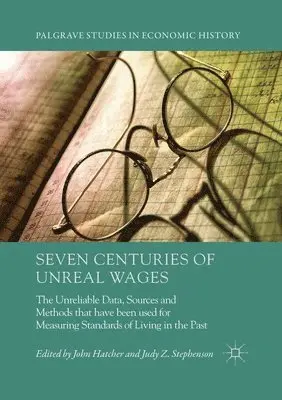
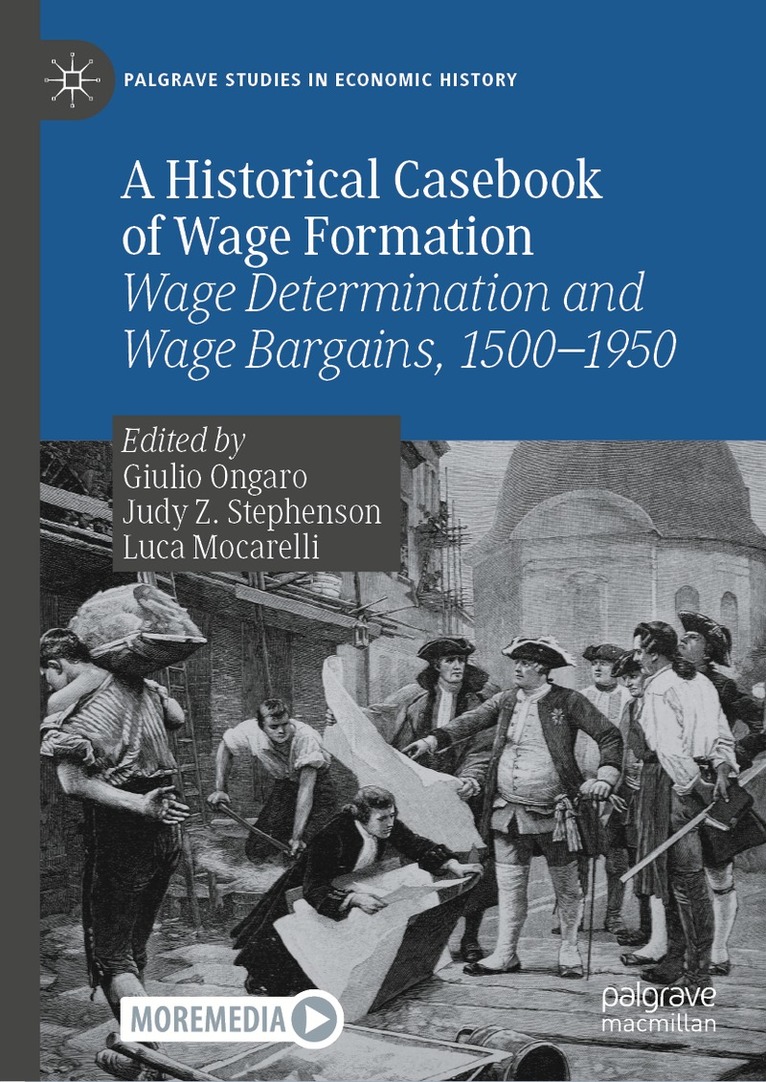
The quality of life experienced by people in the past is one of the most important areas of historical enquiry, and the standard of living of populations is one of the leading measures of the economic performance of nations. Yet how accurate is the information on which these judgments are based? This collection of essays, written by renowned scholars in the fields of labour, wage and welfare history, cogently undermine the validity of the data that have for decades dominated the measurement of these phenomena in Britain, Europe and Asia, and provided the statistical backbone for countless descriptions and analyses of economic development, welfare and many other prime subjects in economic and social history.
The contributors to this volume rigorously expose misapprehensions of long-run macroeconomic estimates of the real wage and provide a host of improved methods and data for revising and rejecting them. This volume is essential reading for anyone interested in economic and social history, economics and the application of statistical methods to historical evidence.
517 kr
Skickas inom 10-15 vardagar
2 037 kr
Skickas inom 7-10 vardagar
1 357 kr
Skickas
256 kr
Skickas inom 7-10 vardagar
189 kr
Skickas
1 480 kr
Skickas inom 10-15 vardagar
615 kr
Läs direkt efter köp
239 kr
Skickas
99 kr
Läs direkt efter köp
279 kr
Skickas
157 kr
Lyssna direkt efter köp
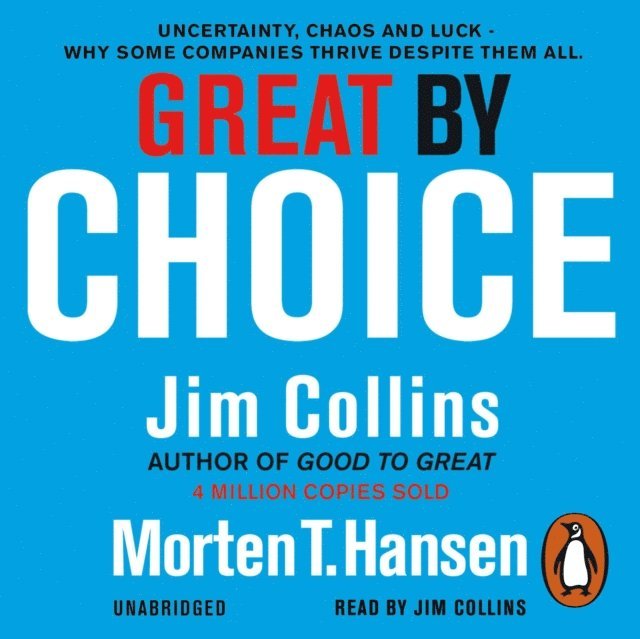
THE NEW QUESTIONTen years after the worldwide bestseller Good to Great, Jim Collins returns with another groundbreaking work, this time to ask: Why do some companies thrive in uncertainty, even chaos, and others do not? Based on nine years of research, buttressed by rigorous analysis and infused with engaging stories, Collins and his colleague, Morten Hansen, enumerate the principles for building a truly great enterprise in unpredictable, tumultuous, and fast-moving times.THE NEW STUDY Great by Choice distinguishes itself from Collins''s prior work by its focus not just on performance, but also on the type of unstable environments faced by leaders today. With a team of more than twenty researchers, Collins and Hansen studied companies that rose to greatness - beating their industry indexes by a minimum of ten times over fifteen years - in environments characterized by big forces and rapid shifts that leaders could not predict or control. The research team then contrasted these "10X companies" to a carefully selected set of comparison companies that failed to achieve greatness in similarly extreme environments.THE NEW FINDINGSThe study results were full of provocative surprises. Such as: * The best leaders were not more risk taking, more visionary, and more creative than the comparisons; they were more disciplined, more empirical, and more paranoid.* Innovation by itself turns out not to be the trump card in a chaotic and uncertain world; more important is the ability to scale innovation, to blend creativity with discipline.* Following the belief that leading in a "fast world" always requires "fast decisions" and "fast action" is a good way to get killed.* The great companies changed less in reaction to a radically changing world than the comparison companies.The authors challenge conventional wisdom with thought-provoking, sticky, and supremely practical concepts. They include 10Xers; the 20 Mile March; Fire Bullets then Cannonballs; Leading above the Death Line; Zoom Out, Then Zoom In; and the SMaC Recipe. Finally, in the last chapter, Collins and Hansen present their most provocative and original analysis: defining, quantifying, and studying the role of luck. The great companies and the leaders who built them were not luckier than the comparisons, but they did get a higher Return on Luck. This book is classic Collins: contrarian, data driven, and uplifting. He and Hansen show convincingly that, even in a chaotic and uncertain world, greatness happens by choice, not by chance.
241 kr
Skickas inom 7-10 vardagar
707 kr
Skickas inom 7-10 vardagar
443 kr
Skickas
“Empire of Things isn't just an insightful and surprisingly entertaining read, but a crucial one.”—NPR
What we consume has become a central—perhaps the central—feature of modern life. Our economies live or die by spending, we increasingly define ourselves by our possessions, and this ever-richer lifestyle has had an extraordinary impact on our planet. How have we come to live with so much stuff, and how has this changed the course of history?
In Empire of Things, Frank Trentmann unfolds the extraordinary story of our modern material world, from Renaissance Italy and late Ming China to today’s global economy. While consumption is often portrayed as a recent American export, this monumental and richly detailed account shows that it is in fact a truly international phenomenon with a much longer and more diverse history. Trentmann traces the influence of trade and empire on tastes, as formerly exotic goods like coffee, tobacco, Indian cotton and Chinese porcelain conquered the world, and explores the growing demand for home furnishings, fashionable clothes and convenience that transformed private and public life. The nineteenth and twentieth centuries brought department stores, credit cards and advertising, but also the rise of the ethical shopper, new generational identities and, eventually, the resurgence of the Asian consumer.
With an eye to the present and future, Frank Trentmann provides a long view on the global challenges of our relentless pursuit of more—from waste and debt to stress and inequality. A masterpiece of research and storytelling many years in the making, Empire of Things recounts the epic history of the goods that have seduced, enriched and unsettled our lives over the past six hundred years.
234 kr
Skickas
1 145 kr
225 kr
Kommande
How dangerous is our diet? How much of sports falls into the realm of luck? When authorities categorize a given event as “highly likely”—how likely is that, really? Whether we’re trying to decide if the benefits of a new medication are worth the chance of side effects or if artificial intelligence truly threatens humanity, our lives are riddled with uncertainties both everyday and existential—yet it can be difficult to know how to properly weigh all those unknowns. Luckily for us, renowned statistician David Spiegelhalter has spent his career dissecting data to resolve the apparently random and decode the many decisions we face with imperfect information. In The Art of Uncertainty, he shows how we can become better at dealing with what we don’t know to make smarter choices in a world so full of puzzling variables.
In lucid, lively prose, Spiegelhalter guides us through the principles of probability, illustrating how they can help us think more analytically about everything from medical advice to sports to climate change forecasts. He demonstrates how taking a mathematical approach to phenomena we might otherwise attribute to fate or luck can help us sort hidden patterns from mere coincidences, better evaluate cause and effect, and predict what’s likely to happen in the future. Along the way, we learn how a misinterpretation of a probability contributed to the infamous Bay of Pigs fiasco, why a ship twice the size of the Titanic sank without a trace, and why we can be so confident that no two properly shuffled decks of cards have ever been in the same order.
Sparkling with wit and fascinating real-world examples, this is an essential guide to navigating uncertainty while also retaining the humility to admit what we don’t, or simply cannot, know.
154 kr
Skickas
2 927 kr
Skickas inom 7-10 vardagar
3 108 kr
322 kr
Skickas inom 7-10 vardagar
Making Money Move
264 kr
1 049 kr
Skickas inom 10-15 vardagar
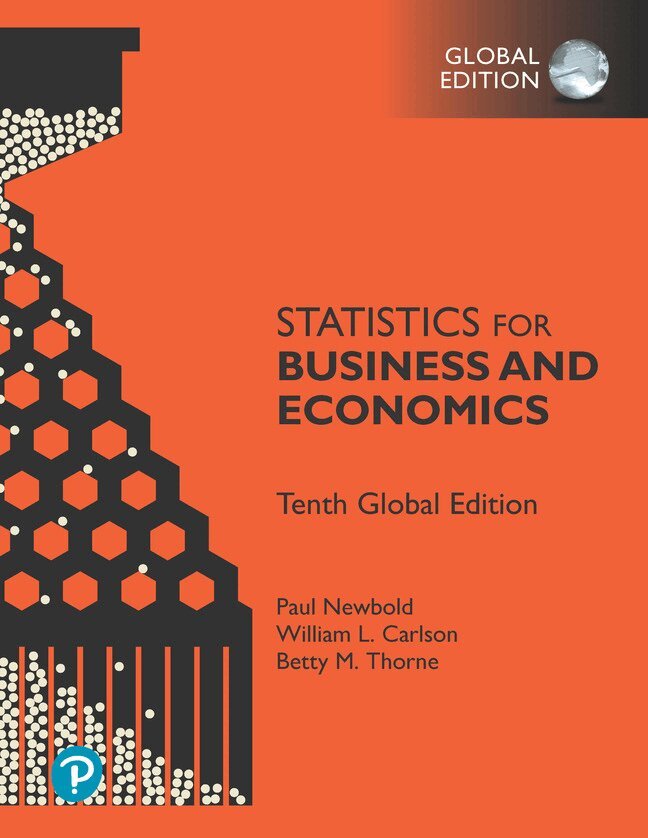
A classic text for accuracy and statistical precision.
Statistics for Business and Economics enables readers to conduct serious analysis of applied problems rather than running simple “canned” applications. This text is also at a mathematically higher level than most business statistics texts and provides readers with the knowledge they need to become stronger analysts for future managerial positions.
The eighth edition of this book has been revised and updated to provide readers with improved problem contexts for learning how statistical methods can improve their analysis and understanding of business and economics.
1 336 kr
Skickas inom 10-15 vardagar
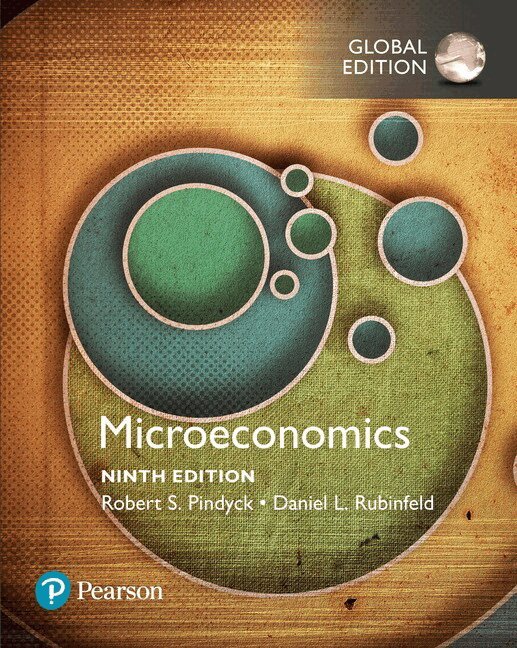
For Intermediate Microeconomics courses.
Microeconomics exposes students to topics that play a central role in microeconomics. From game theory and competitive strategy, to the roles of uncertainty and information, and the analysis of pricing by firms with market power, the text helps students understand what’s going on in the world of business. It also shows students how microeconomics can be used as a practical tool for decision-making and for designing and understanding public policy. The 9th Edition further illustrates microeconomics’ relevance and usefulness with new coverage and examples, and an improved exposition that is clear and accessible as well as lively and engaging. With Microeconomics, readers will be able to fully appreciate how a modern economy functions.