154 kr
Skickas inom 7-10 vardagar
154 kr
Skickas inom 7-10 vardagar
116 kr
Läs direkt efter köp
154 kr
Läs direkt efter köp
68 kr
Läs direkt efter köp
88 kr
Läs direkt efter köp
130 kr
Skickas
178 kr
Skickas
185 kr
Läs direkt efter köp
121 kr
Skickas
206 kr
Skickas
70 kr
Läs direkt efter köp
234 kr
Lyssna direkt efter köp
125 kr
Skickas
170 kr
Skickas inom 7-10 vardagar
181 kr
Skickas inom 7-10 vardagar
170 kr
Skickas inom 7-10 vardagar
483 kr
Skickas inom 3-6 vardagar
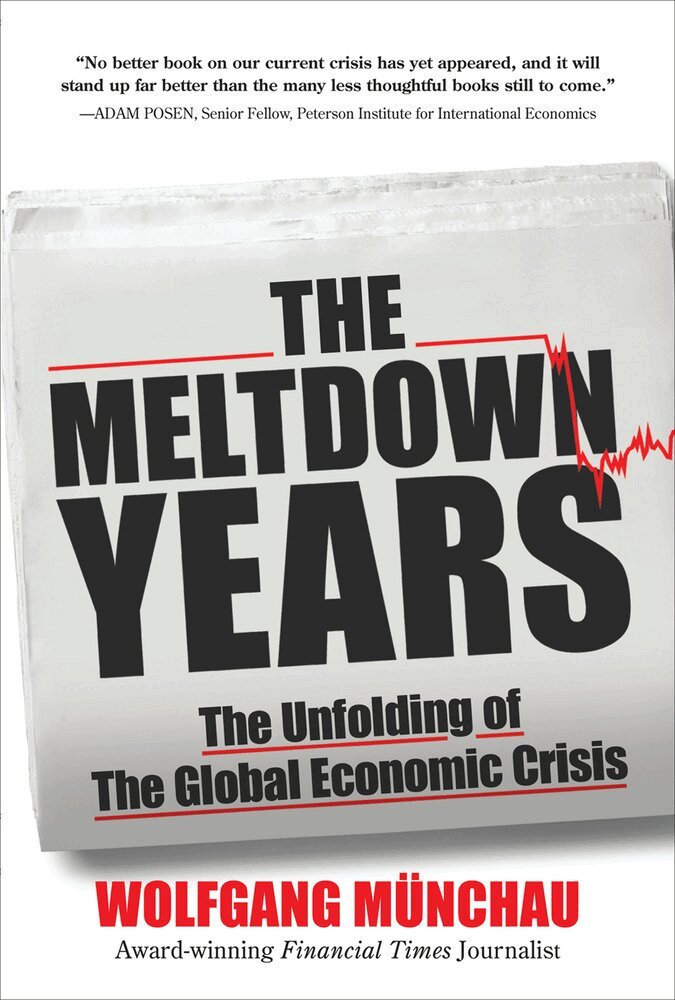
The Meltdown Yearsoffers the most lucid and useful explanation todate about why home values, life savings, jobsecurity, and investments around the worldare in peril.
Rather than focus on who is to blame,though, author Wolfgang Münchau takes themore practical approach of focusing on what isto blame. The fact that individuals were stupid,greedy, and corrupt should come as no surprise.What’s remarkable is that our world’sfinancial systems—put in place to help staveoff such a crisis—failed so miserably.
What is inherently wrong with the globalmonetary system? What happened to theregulatory process? What role did the creditmarket, hedge funds, and investment banksplay? These are the types of questions onemust answer in order to truly comprehendwhat caused the meltdown and, more importantly,to understand what must be done torepair it.
Münchau dissects the global financial system,exposing its flaws and weaknesses in thecontext of the crisis. A decidedly global perspectiveof the greatest financial crisis of ourtime, The Meltdown Years examines
The structure of the worldbanking systemGlobal events that led tofinancial collapseThe growth of speculative bubblesThe descent from financial crisisinto full-out recessionPointing to an unstable global economicsystem as the root of the problem, theauthor predicts how long the recession willand illustrates long-term consequences ofthe meltdown.
“Apportioning [individual] blame for thiscrisis may be fun,” Münchau writes, “butit is a dead-end road for anyone who seeksan understanding of what happened.” AIG,Alan Greenspan, Fannie Mae, Bear Stearns…Each is portrayed as a villain responsible forthe state of the economy. In truth, the blame ismuch broader and lies much deeper.
The Meltdown Years is required readingfor anyone who wants to follow the ongoingdebate about economic recovery and understandwhat the collapse means for the future offinancial capitalism.
415 kr
Skickas inom 3-6 vardagar
Listed in Bloomberg’s TOP 50 BUSINESS BOOKS OF 2010 and shortlisted for Spear’s FINANCIAL HISTORY OF THE YEAR AWARD
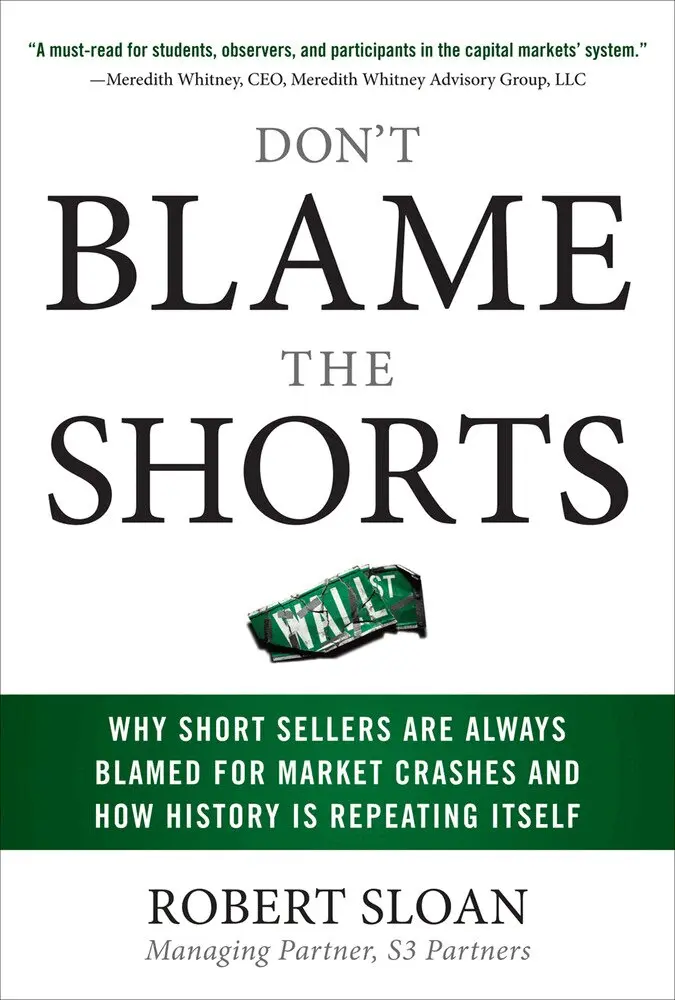
“Robert Sloan works in the hedge-fund industry. As he shows in this readable polemic, dislike of shorting has a long history. . . . Someone has to point out when the emperor has no clothes. The shorts were among the biggest skeptics of the subprime-mortgage boom and of the banks that financed it. And when they were proved right, their activities were banned. Gratitude, huh?”The Economist
“If Robert Sloan manages to go the distance in Don’t Blame the Shorts, it is because his book is as much about historical tensions between Washington and Wall Street as the practice of short selling. He puts it all in the context of the opposing views of the federalist Alexander Hamilton, who was pro-speculation, and Jeffersonian republicans, who were pro-agriculture and convinced that making money from money was nonsense. . . . His book is a useful corrective to the view of short selling as ‘unpatriotic’ or uniquely antisocial . . . it is a brave act to take on anti-finance populists at this time.”Financial Times
“In this knowing book about the business of short-selling stocks, financier Robert Sloan gives a modern day lesson on why we shouldn’t shoot the messenger. . . Rather than blast short sellers, we should praise them for exposing management methane. . . .The story may be old, but Sloan’s easy and informative writing makes for a thoroughly worthwhile update.” Barron’s
”Bob Sloan, a Wall Street veteran, cites the confrontation in his new book, Don’t Blame the Shorts, as evidence that blind fury from politicians and unrepentant shrugs from bankers are far from new. As the title suggests, Sloan’s main thrust is to defend the practice of short-selling. . . . Today, Sloan says, the very same battle of ideas is being played out in America . . . this is just the latest bitter expression of the constant tension between a moneyed east coast financial elite, and the manufacturers, mom-and-pop shops and the scrappy entrepreneurs who bitterly resent the power of Wall Street—but don’t want the cash taps to be turned off.”The Observer
“Timely, concise, accessible to the lay reader and with a decorously polemical edge, it is both revealing and entertaining. No matter what the politicians do, the markets will find a way to challenge the finaglers and the optimists who sustain them. Like the poor, the shorts will always be with us.”Spear’s“Post-crisis reading . . . best books on the financial crisis and its aftermath. . . . While other authors point accusing fingers, in his book, Don’t Blame the Shorts, Robert Sloan leaps to the defense of short sellers who, as he describes, have been long scapegoated for market crashes and are once again in the wake of the recent crisis. The Dutch East India Company was blaming its troubles on them as far back as 1609.”Economist.com
“This book is a rare treat. Unlike most books about Wall Street, it is written from a perspective sympathetic to the banking and securities industries. Better still, Bob Sloan is not only a practitioner and market participant himself, but one with a fine sense of history. Sloan rightly describes prime brokerage as ‘the largest, most unnoticed banking system in the word.’”Global Custodian
“Short and to the point and very well researched. As we are living in an era of history repeating itself, Mr. Sloan depicts the negative market psychology that has transcended Wall Street since the birth of our nation.” Instablog
“Sloan’s recent book…provides an excellent survey of the shorting debate. Sloan recounts how a succession of U.S. government agencies have enacted rules over the decades to restrain short sellers—usually in the aftermath of financial crises such as the one we have just endured. Sloan believes those rules have always had counterproductive results. Sloan’s book is a smooth read, mainly because he has done his homework and has lots of entertaining scoundrels and inept politicians to write about… Sloan’s work provides a real service to market regulators and practitioners alike. With a deft quill, he exposes the futility of government regulation while offering a useful back story to the views of contemporary market regulators.” ABA Banking Journal
About the Book:
On the 80th anniversary of the Crash of 1929, we find ourselves peering backwards through a virtual looking-glass to a time when global markets were in free fall, and venerable financial institutions were in tatters. Yet, here in the present, these same patterns seem to repeat, causing cable newsers, Congressmen, and commoners alike to scream the same refrain, "Blame the short sellers!"
Certainly, short sellers make convenient villains; for one thing, they win only when others lose. But in Don't Blame the Shorts, Bob Sloan taps into a 200-year-old American debate to convincingly and emphatically argue that short selling is not what ails our equities trading markets, but what keeps them honest. To Sloan, short sellers’ objectives are simple: find overvalued securities and bet against overconfident investors. It's an approach that uncovered widespread fraud at Enron, WorldCom, HealthSouth, and other failed outfits long before regulators ever set foot in the door.
Taking the long view of history, Sloan unearths the deep roots of the conflict over speculative investing and its role in our economy. It's a debate that oftentimes puts titans of American history and finance on opposite sides of the divide: Jefferson and Hamilton, over the fundamental nature of America's economic systems; a century later, J.P. Morgan and William Rockefeller, the brother of John D. Rockefeller, who was thought to be part of a cabal of short sellers that brought the country to its financial knees. Further, Sloan reintroduces us to the likes of Ferdinand Pecora, the federal prosecutor whose investigations in the early 1930s revealed a wide range of abusive practices of banks, and led to the creation of vital legislation, including the Glass-Steagall Act.
Don't Blame the Shorts is an eye-opening account that overturns conventional wisdom about short selling, and the vital systemic (and symbolic) role it plays in making financial markets less opaque, more accountable, and, therefore, stronger.

519 kr
Läs direkt efter köp
Why Main Street blames financial speculation for economic crashes
Disdain for short selling is as American as apple pie, dating back to our nation’s founding. But as Bob Sloan argues in Don’t Blame the Shorts, short selling lies at the heart of every Wall Street transaction and fuels the financial system.
Sloan explains that without shorting, credit in high-yield, distressed, convertible bonds and equities vanishes, thus choking economic activity. This eye-opening look at short selling in America provides new insight into our hostile relationship with shorting—a relationship that turns out to be unhealthy and counterproductive.
369 kr
Läs direkt efter köp
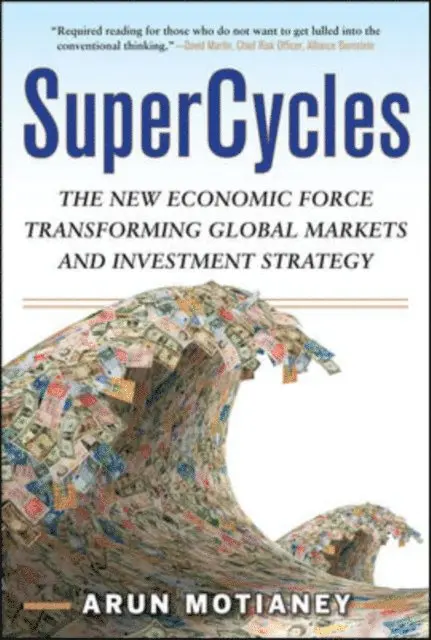
A brilliantly original assessment of what caused the global crash—and a practical plan for investing accordingly
Supercycles, according to international economist and strategist, Arun Motianey, are the continuous, long waves of boom and bust that undulate through the global economic and financial systems. More often than not, they are the result of policymakers'' well-intentioned but misguided attempts to achieve price stability. In Supercycles, Motianey surpasses the traditional business cycle model ("Boom and Bust"), to provide a detailed, objective, and at times surprising explanation of global economics.
Drawing heavily on history and informed by cautious readings of a wide range of economic thought, Motianey critiques the way macroeconomics has been practiced by the major powers'' central banks through the years.
Specifically, it was the banks'' intervention, ostensibly in the quest for price stability that actually served to entrench price instability. Further, he makes a compelling case for the new tools we''ll be using to manage the post-meltdown global economy, and even advises on investor portfolios to protect us from the likeliest scenarios that occur when a supercycle enters its terminal phase.
A cogent and impossible-to-ignore mixture of economics, finance, policy, risk management, and investment advice from a global perspective, Supercycles is certain to inform and inspire debate among investors, academics, and casual readers alike.
Reviews:
"Motianey is an engaging writer and Supercycles should be considered a must read for economic junkies. His ideas are fresh and innovative and he attempts to avoid the dogma that frequently leads those in the profession astray. I highly recommend it for those who want to gain greater perspective on the Credit Crisis and where we might be heading in its aftermath. --SeekingAlpha.com
"Highly readable. The pitch-perfect blend of the best economic thinking informed by the lessons from the past and the investment savvy of a veteran investment advisor at the top of his game." -- Thomas J. Trebat, Executive Director, Institute of Latin American Studies & Center for Brazilian Studies, Columbia University
"A provocative way of looking at the global economy. This book will make you stop and think." -- Peter Scaturro, Private Bank Executive
"This lively volume not only examines the big picture, but also provides practical advice for investors who are trying to prosper in this complex and challenging economic environment." -- Harvey S. Rosen, John L. Weinberg Professor of Economics and Business Policy, Princeton University
"Arun Motianey sheds light on some of the more ludicrous propositions of modern equilibrium economics. He describes how investment bankers and economists got it all wrong—and the world is experiencing the disastrous consequences." -- Dr. Terry O’Shaughnessy, Fellow in Economics, St. Anne’s College, Oxford University
"Not all readers will agree with Motianey''s savage criticism of the finance-driven modern economy, but few can read SuperCycles without having at least some of their preconceived notions challenged. A must-read for policymakers and investors." -- Dr. Kevin Hebner, Global Investment Strategist, Third Wave Global Investors
“Required reading for those who do not want to get lulled into the conventional thinking” -- David Martin, Chief Risk Officer, AllianceBernstein
501 kr
Skickas inom 3-6 vardagar
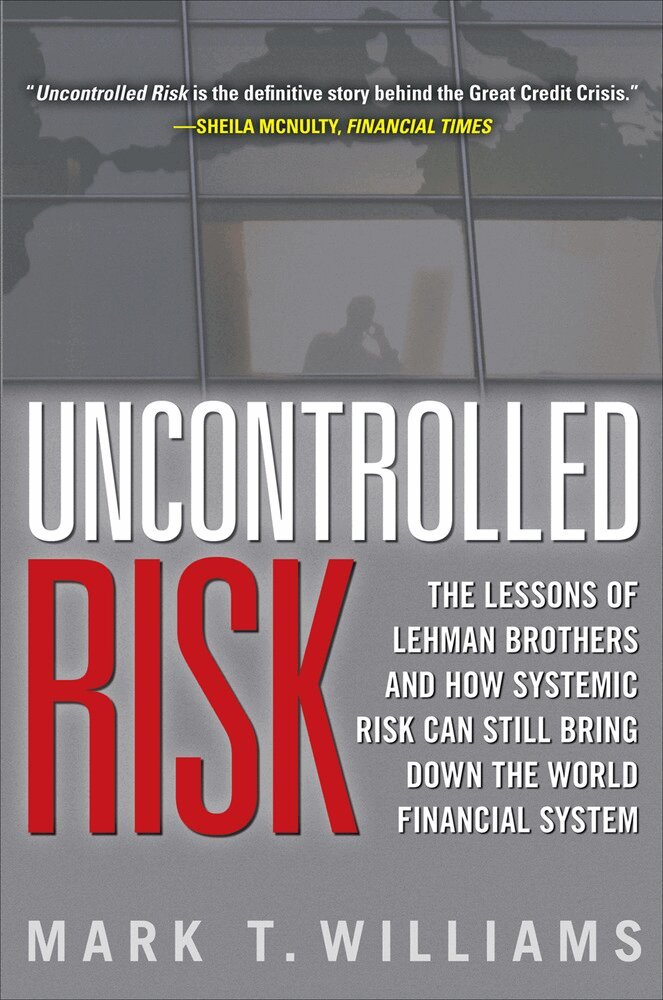
How Excessive Risk Destroyed Lehman and Nearly Brought Down the Financial Industry
“Uncontrolled Risk will ruffle feathers—and for good reason—as voters and legislators learn thediffi cult lessons of Lehman’s collapse and demand that we never forget them.”Dr. David C. Shimko, Board of Trustees, Global Association of Risk Professionals
“Uncontrolled Risk is a drama as gripping as any work of fiction. Williams’s recommendations forchanges in the governance of financial institutions should be of interest to anyone concernedabout the welfare of global financial markets.”Geoffrey Miller, Stuyvesant Comfort Professor of Law and Director, Center for the Study ofCentral Banks and Financial Institutions, New York University
“The complex balance of free enterprise on Wall Street and the healthyregulation of its participants is the central economic issue of today.Williams’s forensic study of Lehman’s collapse may be the bestperspective so far on the issues that now face regulators.”Jeffrey P. Davis, CFA, Chief Investment Officer,Lee Munder Capital Group
“Provides a very perceptive analysis of the fl aws inherent in risk management systems and modernfi nancial markets. Mandatory reading for risk managers and financial industry executives.”Vincent Kaminski, Professor in the Practice of Management,Jesse H. Jones Graduate School of Business, Rice University
“Gives the reader much food for thought on the regulation of our financial system and its interplaywith corporate governance reform in the United States and around the world.”Professor Charles M. Elson, Edgar S. Woolard Jr. Chair in Corporate Governance,University of Delaware
The risk taking behind Wall Street's largest bankruptcy . . .
In this dramatic and compelling account ofLehman Brothers’ spectacular rise and fall,author Mark T. Williams explains how uncontrolledrisk toppled a 158-year-old institution—and whatit says about Wall Street, Washington, D.C., and theworld financial system. A former trading floor executiveand Fed bank examiner, Williams sees Lehman’s2008 collapse as a microcosm of the industry—aworst-case scenario of smart decisions, stupid mistakes,ignored warnings, and important lessons inmoney, power, and policy that affect us all.This book reveals:
The Congressional inquisition of disgracedCEO Dick Fuld: Did he really deserve it?How the investment-banking money machinebroke down: Can it be fixed?The key drivers that caused the financialmeltdown: Can lessons be learnedfrom them?The wild risk taking denounced by PresidentObama: Is Washington to blame, too?The ongoing debate on reform andregulation: Can meaningful reform avertanother financial catastrophe?This fascinating account traces Lehman’s historyfrom its humble beginnings in 1850 to its collapsein 2008. Lehman’s story exemplifies the everchangingtrends in finance—from investmentvehicles to federal policies—and exposes thedanger and infectious nature of uncontrolled risk.
Drawing upon first-person interviews with riskmanagement experts and former Lehman employees,Williams provides more than just a frontlinereport: it’s a call to action for Wall Street bankers,Washington policymakers, and U.S. citizens—a livinglesson in risk management on which to build astronger fi nancial future. Williams provides a tenpointplan to implement today—so another Lehmandoesn’t collapse tomorrow.
Includes aten-point plan toensure a strongfinancial future forboth Wall Street andMain Street
451 kr
Läs direkt efter köp
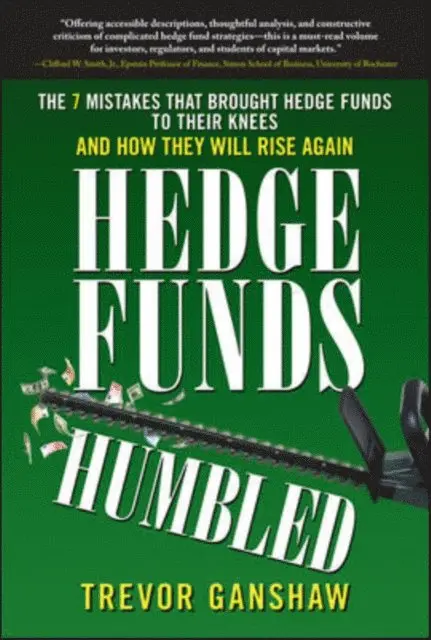
The fall and rise of a trillion-dollar industry
Just three years ago, hedge funds were at the top of the investment world. Years of unparalleled growth had pushed assets to nearly $3 trillion. Leverage was used so aggressively that total long and short investments approached an astonishing $10 trillion. Thousands of new funds had sprouted in every corner of the market, and managers, enjoying an almost unimaginable pool of fees, were dubbed the new “masters of the universe.”
Then came 2008.The industry suffered its worst performance ever, losing $600 billion or roughly 20% in a single year. Multibilliondollar hedge funds collapsed overnight, epic frauds were revealed, and assets plummeted as spooked investors scrambled to get their money back.
The near collapse of the industry is one of the most dramatic stories of the global economic meltdown. It’s also among the most instructive—because hedge funds are still alive and, if managed wisely, will emerge stronger than ever in the coming years.
In Hedge Funds Humbled, industry insider Trevor Ganshaw provides a detailed primer of the industry and explains how the people who earned more than $100 billion in fees during their short but happy heyday planted the seeds of their own destruction. He paints a vivid picture of how the industry leaders’ major mistakes destroyed hundreds of billions of investor capital; Ganshaw calls them the “seven deadly sins” of the hedge fund industry:
Out-of-control leverageInadequate risk managementFlawed fee structuresOvercrowded strategiesThe Peter Principle of too much capitalCapital instabilityFraud, enabled by lax controlsGanshaw examines the future of the industry and shows investors what to look for and what to avoid. There’s still money to be made in hedge funds and, in his estimation, the industry is poised for a comeback. “As all good hedge fund managers know, greed is good,” he writes. “Humility, it seems, may now be an essential part of keeping it that way.”
More dramatic than fiction, Hedge Funds Humbled is a timely work that provides a critical look at an industry gone bad—and an optimistic look at its future.
489 kr
Läs direkt efter köp
Why was Lehman ignored when everyone else was bailed out?
A risk advisor for top financial institutions and top B-school professor, Mark Williams explains how uncontrolled risk toppled a 158-year-old institution, using this story as a microcosm to illuminate the interconnection of the global financial system, as well as broader policy implications.
This story is told through the eyes of an experienced risk manager and educator in a detailed and engaging way and provides the reader with a complete summary of how a savvy company with sophisticated employees and systems could have gotten it so wrong.
480 kr
Skickas inom 3-6 vardagar
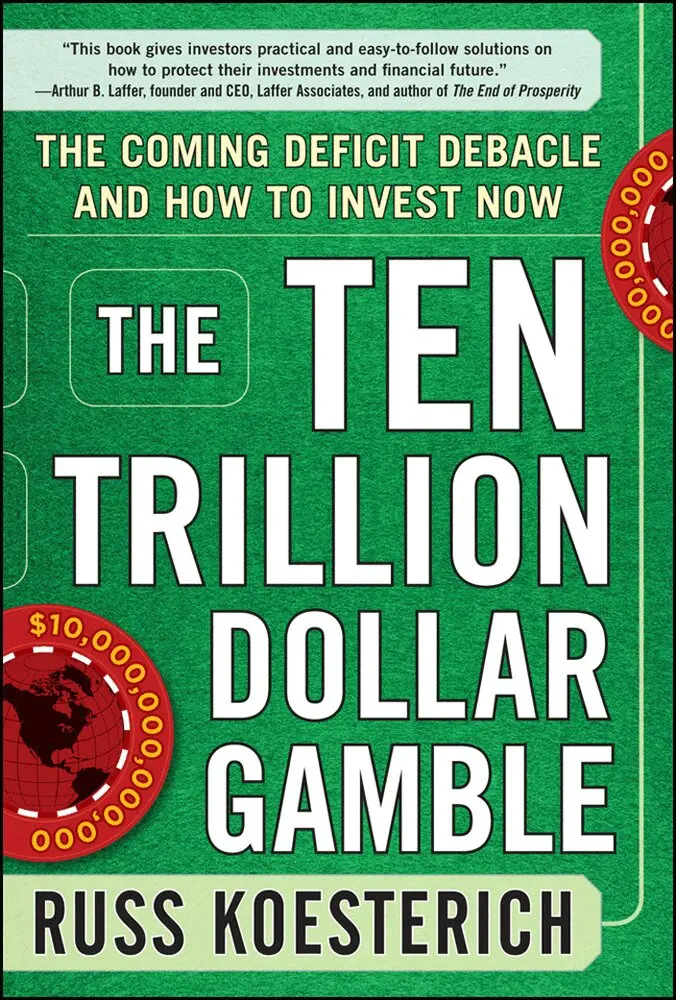
Your Survival Guide to the Next Financial Storm
"Many commentators rant about budget deficits and the country's moral failings. Russ Koesterich calmly and objectively describes our downward economic spiral over the next 20 years and recommends the investments best suited for that journey."—Ron Kahn, Global Head of Research, BlackRock Scientific Active Equities, and coauthor of Active Portfolio Management
"A must-read for anyone who has ever touched currency or heard of money."—Vadim Zlotnikov, Chief Market Strategist, AllianceBernstein
"A useful book that underlines an essential reality: Americans will not be returning to the old normal. We must adapt to a changing world that presents us with new risks and opportunities. The Ten Trillion Dollar Gamble broadens and deepens a conversation we have to have."—Ian Bremmer, President, Eurasia Group, and author of The J Curve and The End of the Free Market
"This book gives investors practical and easy-to-follow solutions on how to protect their investments and financial future."—Arthur B. Laffer, founder and CEO, Laffer Associates, and author of The End of Prosperity
"A superb book. Russ Koesterich’s recommendations spanning financial and real assets are insightful, relevant, and pragmatic. Russ is among the select few veterans of the investment management profession who are able to project academic insights faithfully, offer compelling investment advice—and write a page-turner."—S. P. Kothari, Deputy Dean, MIT Sloan School of Management
"The Ten Trillion Dollar Gamble is a well-crafted book. At every turn the author explains the rationale for including or excluding particular assets in a portfolio, especially as they react to higher interest rates, slower growth, and possible inflation. The investor who is worried about protecting his wealth in the coming decade(s) would do well to consider Koesterich’s advice."—SeekingAlpha.com
"A helpful, methodical 'financial playbook' for realistic investors. Highly recommended for those planning to invest over the next five years or more. It is not easy to find books that combine debt macroeconomics with sound financial advice, but Koesterich manages it well."—Library Journal
About the Book:
The next financial disaster is around the corner.Are you prepared?
With the nation's deficit expanding into the trillions of dollars, investors need to be prepared for the inevitable—and potentially devastating—fallout. Most economists agree that interest rates will rise, inflation will likely be higher, and virtually every aspect of our economy will be affected. Smart investors need to ask themselves: How should I invest today to survive the storm tomorrow?
The answer is in this brilliantly calculated, forward-thinking investment guide from Black-Rock strategist Russ Koesterich. He'll show you exactly what to expect in the new deficit economy—and how to handle your finances smartly, safely, and securely . . .
Stocks and Bonds: How to Invest in a Rising Rate EnvironmentReal Estate: How the Deficit Will Affect the MarketCommodities: The Benefits of Owning Real AssetsPortfolio Management: What You Should Do Before It's Too LateMore than a collection of fascinating financial predictions, The Ten Trillion Dollar Gamble offers solid advice on a wide range of investment options. You'll discover which markets are hot--and which are not—when the storm finally hits.
You'll find out if Treasury bonds are right for youand why commodities will be even more important in the future. You'll learn the best ways to invest in real estate, how to handle your growing debt, and how to manage higher interest rates for everything from mortgages to savings accounts.
Most important, you'll be able to apply these professional insights into building a stronger portfolio for you and your family.
Just because the government is gambling with our future doesn't mean you should. The Ten Trillion Dollar Gamble offers a winning game plan to help you protect and build your wealth for the long term.
When the next storm hits, you won't just survive, you'll thrive.
610 kr
Läs direkt efter köp
The next economic storm and how to prepare for it--from a top decision-maker at BlackRock
An economic calamity is already looming on the horizon, and it''s going hit the U.S. on a scale equal to the recent mortgage meltdown and liquidity crisis of 2008-2009. In February, President Obama announced that the 2010 budget deficit would surpass $1.5 trillion, an amount greater than the total debt of our nation in its first 200 years of its existence. And things only get worse from here: between 2010 and 2019, America will add one trillion of additional debt every year.
In The Ten Trillion Dollar Gamble, Russ Koesterich, who manages over $100 billion for the world''s largest money management company, offers compelling evidence supporting his prediction that the global economy is on the verge of more, even greater upheaval and provides his unique insight into:
The structural weaknesses underlying the economic meltdownWhy commodities will be so important in the next economic climateLikely ramifications to the real estate marketThe best stocks to buy and which ones to avoidToday''s investing strategies will be rendered useless in the next storm''s wake. Written by one of the most qualified people in the business, The Ten Trillion Dollar Gamble offers a plan for protecting your wealth and preserving the power of your savings.
Table of Contents
Chapter 1. Why Worry About the Deficit?Chapter 2. Why the Deficit Will matter to YouChapter 3. What to WatchChapter 4. How to Manage Your Cash and DebtsChapter 5. Investing in Bonds in a Rising Rate EnvironmentChapter 6. Stocks to Buy and AvoidChapter 7. Why You May Need CommoditiesChapter 8. What to do with Real EstateChapter 9. Putting it All TogetherChapter 10. Conclusion: Can We avoid the budget debacle?
369 kr
Läs direkt efter köp
The former Fannie Mae CFO''s inside look at the war between the financial giants and government regulators
A provocative true-life thriller about the all-out fight for dominance of the mortgage industry—and how it nearly destroyed the global financial system
Many books have been written about the 2008 financial crisis, but they miss the biggest story of the meltdown: the battle between giant financial companies to dominate the $11 trillion mortgage market that almost destroyed the global financial system. For more than twenty years, until 2004, Timothy Howard was a senior executive at the best known of those companies, Fannie Mae, and he was in the middle of that fight.
In The Mortgage Wars, Howard explains how seemingly unrelated developments in banking regulation, housing policy, Wall Street financial innovation, and political lobbying all combined to wreak havoc on the American housing market and the world economy.
Timothy Howard was Vice Chairman and Chief Financial Officer of Fannie Mae until 2004. Prior to this, he was senior financial economist at Wells Fargo Bank in San Francisco.
181 kr
Skickas
1 188 kr
Skickas inom 11-20 vardagar
441 kr
Skickas inom 11-20 vardagar
How do economists reconcile their expertise with their failures to predict and manage the 2008 financial crisis? This book goes a long way toward an answer by using systems theory to reveal the complex interdependence of factors and forces behind the crisis. In her fully integrated view of the economy, how it works, and how the economic crisis burst, Karen Higgins combines human psychology, cultural values, and belief formation with descriptions of the ways banks and markets succeed and fail. In each chapter she introduces themes from financial crisis literature and brings a systems-theory treatment of them. Her methodology and visual presentations both develop the tools of systems theory and apply these tools to the financial crisis. Not just another volume about the crisis, this book challenges the status quo through its unique multidisciplinary approach.
Presents a broad global view of international economic health and international corporate health Describes how policies, regulations, and trends dating to the 1950s influenced the crisis Assumes readers possess a general familiarity of economics and finance847 kr
Skickas inom 11-20 vardagar