132 kr
Skickas
132 kr
Skickas
350 kr
Skickas inom 3-6 vardagar
504 kr
Skickas inom 3-6 vardagar
217 kr
Skickas
117 kr
Skickas inom 7-10 vardagar
Forty years ago, Israeli psychologists Daniel Kahneman and Amos Tversky wrote a series of breathtakingly original studies undoing our assumptions about the decision-making process. Their papers showed the ways in which the human mind erred, systematically, when forced to make judgments about uncertain situations. Their work created the field of behavioral economics, revolutionized Big Data studies, advanced evidence-based medicine, led to a new approach to government regulation, and made much of Michael Lewis's own work possible. Kahneman and Tversky are more responsible than anybody for the powerful trend to mistrust human intuition and defer to algorithms. The Undoing Project is about the fascinating collaboration between two men who have the dimensions of great literary figures. They became heroes in the university and on the battlefield-both had important careers in the Israeli military-and their research was deeply linked to their extraordinary life experiences. In the process they may well have changed, for good, mankind's view of its own mind.
386 kr
Skickas inom 3-6 vardagar
227 kr
Skickas inom 3-6 vardagar
398 kr
Skickas inom 3-6 vardagar
222 kr
Kommande
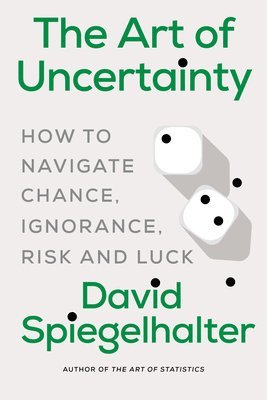
How dangerous is our diet? How much of sports falls into the realm of luck? When authorities categorize a given event as “highly likely”—how likely is that, really? Whether we’re trying to decide if the benefits of a new medication are worth the chance of side effects or if artificial intelligence truly threatens humanity, our lives are riddled with uncertainties both everyday and existential—yet it can be difficult to know how to properly weigh all those unknowns. Luckily for us, renowned statistician David Spiegelhalter has spent his career dissecting data to resolve the apparently random and decode the many decisions we face with imperfect information. In The Art of Uncertainty, he shows how we can become better at dealing with what we don’t know to make smarter choices in a world so full of puzzling variables.
In lucid, lively prose, Spiegelhalter guides us through the principles of probability, illustrating how they can help us think more analytically about everything from medical advice to sports to climate change forecasts. He demonstrates how taking a mathematical approach to phenomena we might otherwise attribute to fate or luck can help us sort hidden patterns from mere coincidences, better evaluate cause and effect, and predict what’s likely to happen in the future. Along the way, we learn how a misinterpretation of a probability contributed to the infamous Bay of Pigs fiasco, why a ship twice the size of the Titanic sank without a trace, and why we can be so confident that no two properly shuffled decks of cards have ever been in the same order.
Sparkling with wit and fascinating real-world examples, this is an essential guide to navigating uncertainty while also retaining the humility to admit what we don’t, or simply cannot, know.
417 kr
Skickas inom 3-6 vardagar
443 kr
Skickas inom 3-6 vardagar
457 kr
Skickas inom 3-6 vardagar
495 kr
Skickas inom 3-6 vardagar
308 kr
Skickas inom 3-6 vardagar
443 kr
Skickas
619 kr
Skickas inom 3-6 vardagar
256 kr
Skickas inom 11-20 vardagar
203 kr
Skickas
263 kr
Skickas inom 3-6 vardagar
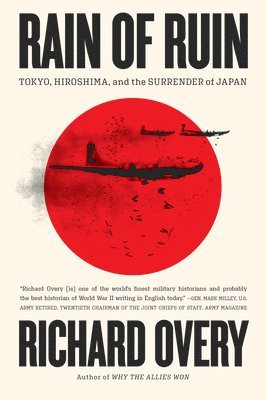
With the development of the B-29 "Superfortress" in summer 1944, strategic bombing, a central component of the Allied war effort against Germany, arrived in the Pacific theater. In 1945 Japan experienced the three most deadly bombing attacks of the war. The firebombing of Tokyo in March burned the city's most densely populated sector, killed some 85,000 residents, and left more than one million homeless. The attack was part of a months-long campaign of incendiary bombing that destroyed almost two-thirds of Japan's cities. The two atomic blasts in August killed hundreds of thousands in Hiroshima and Nagasaki, most of them civilians. The bombing brought a destabilizing devastation that, combined with a declaration of war by the Soviet Union, induced Japan, as they put it, to terminate the war.
Many at the time and since have credited American air power, and especially the two atomic bombs, with Japan’s surrender. But Richard Overy tells a different, more dimensional story. Drawing on his expertise on the war and its bombing campaigns, he delivers a precise recounting of these aerial attacks, and a balanced, informed assessment of how and why they occurred. Overy is astute on the Allied decision-making, and, notably, integrates the Japanese leadership as well. He ably navigates the dramatic endgame of the war, which featured factional infighting within the Japanese cabinet, a scramble by American officials to formulate an acceptable version of “unconditional surrender,” and the crucial role played by the emperor, Hirohito. The atomic bombing emerges as impactful but not decisive in this rich, multilayered history
250 kr
Skickas inom 3-6 vardagar
376 kr
411 kr
Skickas inom 3-6 vardagar
283 kr
Skickas inom 3-6 vardagar
394 kr
Skickas inom 3-6 vardagar
227 kr
Skickas inom 3-6 vardagar
444 kr
Skickas inom 3-6 vardagar
186 kr
Skickas inom 3-6 vardagar
353 kr
Skickas inom 3-6 vardagar
222 kr
Skickas inom 3-6 vardagar
281 kr
Skickas inom 3-6 vardagar
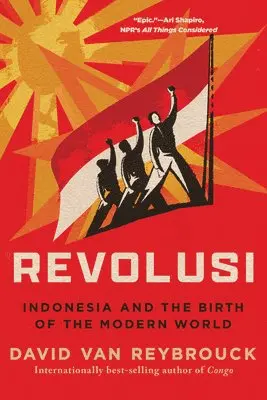
On a sunny Friday morning in August 1945, a handful of people raised a homemade cotton flag and, on behalf of 68 million compatriots, announced the birth of a new nation. With the fourth largest population in the world, inhabiting islands that span an eighth of the globe, Indonesia became the first country to rid itself of colonial rule after World War II.
In this vivid history, renowned scholar and celebrated author of Congo David Van Reybrouck captures a period of extraordinary tumult and chaos to tell the story of Indonesia’s momentous revolution, known as the “Revolusi.” Encompassing several hundred years of history, he details the formation of the Dutch East Indies, the Japanese invasion that followed, and the young rebels who engaged in armed resistance once the occupation ended. British and Dutch troops were sent to restore order and keep peace, but instead ignited the first modern war of decolonization. America, too, became embroiled with the Indonesians’ fierce struggle for freedom. That struggle inspired independence movements in Asia, Africa, and the Arab world, especially in the wake of Indonesia’s monumental 1955 Bandung Conference, the first global conference without the West. The whole world had become involved in Revolusi, and the whole world was changed by it.
Drawing on hundreds of interviews and eyewitness testimonies, David Van Reybrouck turns this vast and complex story into an utterly gripping narrative, written with remarkable historical clarity and filled with tragedy and passion. A landmark history, Revolusi cements Indonesia’s struggle for independence as one of the defining dramas of the twentieth century and entirely reframes our understanding of post-colonialism.