
Inbunden, Engelska, 2027
368 kr
Kommande
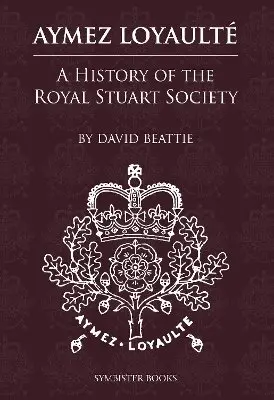
The book sets the Royal Stuart Societyin the context of the numerous but varying precursor organisations in theVictorian and Edwardian eras. It then narrates the history of the Societyitself and describes some of the extraordinary characters who have beenassociated with it, including its founder Henry Wheatly Crowe. Although sometimesclose to disaster, the Society has always rallied and over the years has promoteda serious body of research.In the final chapter the authorsets out his personal views on the advantages of hereditary Monarchy, which hesees not as a mere heirloom but as a living, pervasive presence embodying thepast, present and future of a nation. Stable yet flexible, it is a moderating,unifying and civilising force in politics and society as a whole, and as suchis an institution which helps constitutional order and social cohesion toflourish in a volatile and often brutal world. Monarchy is not a contradictionof democracy but one of its greatest safeguards at a time when it is underexternal and internal attack.The book will appeal to membersof the Royal Stuart Society and kindred organisations at home and abroad. Itwill also interest students of Monarchy as an institution, students of historyand students of human nature as reflected in the Society’s rich gallery ofpersonalities over the years.The Royal Stuart Society, theUnited Kingdom’s oldest monarchist organisation, was founded in 1926 by CaptainHenry Stuart Wheatly Crowe. He conceived it as a permanent national memorial tothe Royal House of Stuart, but also as an active monarchist organisation for moderntimes. It was never a neo-Jacobite body. Since the death of the last legitimatemale Stuart (Henry Benedict, Cardinal York) in 1807 none of the genealogicalheirs of that dynasty has ever purported to lay claim to a British throne. The Society is non-political and non-sectarian.It is open to all who have an interest in the Royal House of Stuart, theirdescendants and supporters. It arranges commemorative and social events andpromotes relevant research, lectures and publications. One hundred years afterits foundation it continues to revere the Stuarts and the loyalty of theirsupporters, and to advocate the cause of traditional hereditary Monarchy.