298 kr
Skickas inom 10-15 vardagar
298 kr
Skickas inom 10-15 vardagar
558 kr
Skickas inom 10-15 vardagar
1 995 kr
Läs direkt efter köp
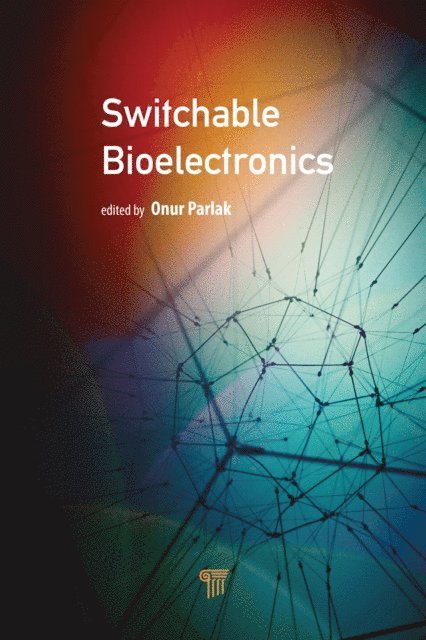
This book reviews the rapidly emerging field of switchable interfaces and its implications for bioelectronics. The authors piece together early breakthroughs and key developments and highlight the future of switchable bioelectronics by focusing on bioelectrochemical processes based on mimicking and controlling biological environments with external stimuli as well as responsive systems for drug delivery. All chapters in the book strive to answer the fundamental question: How do living systems probe and respond to their surroundings? Following on from that, how can one transform these concepts to serve the practical world of bioelectronics? The central obstacle to this vision is the absence of versatile interfaces that are able to control and regulate the means of communication between biological and electronic systems. This book summarizes the overall progress made to date in building such interfaces at the level of individual biomolecules and focuses on the latest efforts to generate device platforms that integrate biointerfaces with electronics.
Chapter 1 introduces the general concept of dynamic interfaces for bioelectronics and gives an overview of the importance of materials and systems for switchable bioelectronics, introducing the reader to different biointerfaces. Chapter 2 pieces together different types of stimuli-responsive polymers and applications. Chapter 3 lays special emphasis on stimuli-responsive polymers with tunable release kinetics and describes the importance of polymer design for delivery applications. Chapter 4 reviews the field of conformational switching in nanofibers for gas-sensing applications. Finally, Chapter 5 focuses on molecular imprinting polymers as recognition elements for sensing applications.
As informative as it is lucid, this handbook makes an essential resource for advanced undergraduate- and graduate-level students in chemistry, as well as researchers in polymer science and electrochemistry, especially those with an interest in responsive polymers and biosensors.
2 069 kr
Läs direkt efter köp
Analyzing the harmony and form of musical compositions remains a valuable tool for students of music, performers, composers, and musicologists. Yet many traditional approaches tend to focus on how complex features can be reduced into simpler categories and questions of unity and coherence. This book advocates an alternative tonal narrative approach, which uses a framework of polarities in dynamic interaction and interdependence to elucidate the life forces animating tonal compositions. Drawing on the writings of Arnold Schoenberg, Donald Francis Tovey, Charles Rosen, and others, the approach identifies three sets of polarities—centrifugal/centripetal, sharp/flat, and spatial/temporal—that interact in works by composers such as Mozart, Beethoven, and Schubert. The approach suggests the methods by which the reader may delve into these polarities and thereby deeper into the meaning of masterworks. It proposes several tonal narrative functions, including intensifications to culminations and counterbalancing leading to completeness of harmonic space, which aim at helping the interpreter perceive the overall shape and narrative dynamics of a work.
2 003 kr
Läs direkt efter köp
Analyzing the harmony and form of musical compositions remains a valuable tool for students of music, performers, composers, and musicologists. Yet many traditional approaches tend to focus on how complex features can be reduced into simpler categories and questions of unity and coherence. This book advocates an alternative tonal narrative approach, which uses a framework of polarities in dynamic interaction and interdependence to elucidate the life forces animating tonal compositions. Drawing on the writings of Arnold Schoenberg, Donald Francis Tovey, Charles Rosen, and others, the approach identifies three sets of polarities—centrifugal/centripetal, sharp/flat, and spatial/temporal—that interact in works by composers such as Mozart, Beethoven, and Schubert. The approach suggests the methods by which the reader may delve into these polarities and thereby deeper into the meaning of masterworks. It proposes several tonal narrative functions, including intensifications to culminations and counterbalancing leading to completeness of harmonic space, which aim at helping the interpreter perceive the overall shape and narrative dynamics of a work.
1 364 kr
Läs direkt efter köp
1 364 kr
Läs direkt efter köp
2 667 kr
Läs direkt efter köp
2 648 kr
Läs direkt efter köp
2 407 kr
Läs direkt efter köp
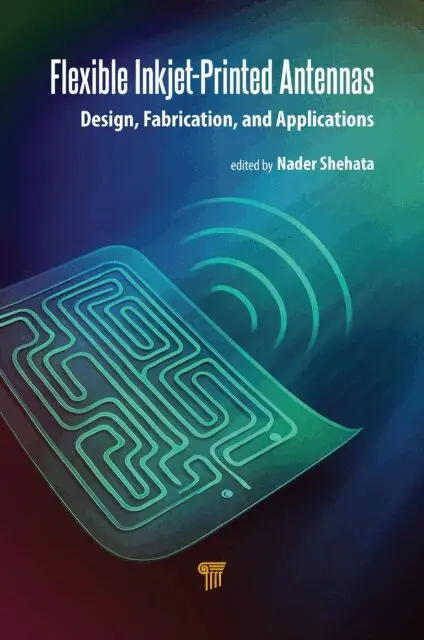
Flexible inkjet-printed antennas are lightweight, low-cost radio-frequency components fabricated by depositing conductive inks onto flexible substrates such as polyimide, polyethylene terephthalate, paper, or textiles. This additive manufacturing method enables rapid prototyping without masks or etching, significantly reducing material waste and production time. Conductive inks—often based on silver nanoparticles, copper, or conductive polymers—are patterned with high precision to form antenna geometries for applications across Wi-Fi, RFID, NFC, Bluetooth, and emerging IoT systems for wearable electronics, smart packaging, biomedical devices, and soft robotics. This textbook presents the basic knowledge of printed inkjet antenna on flexible substrates, including fabrication techniques, substrates used, most important characterizations, and different applications such as wireless sensor networks, wearable electronics, and smart textiles. It provides professionals and graduate students an optimum literature survey of the basic knowledge beyond the flexible printed antennas and circuits in general.
6 865 kr
Läs direkt efter köp
6 865 kr
Läs direkt efter köp
2 425 kr
Läs direkt efter köp
2 425 kr
Läs direkt efter köp
654 kr
Läs direkt efter köp
658 kr
Läs direkt efter köp
929 kr
Läs direkt efter köp
935 kr
Läs direkt efter köp
663 kr
Läs direkt efter köp
678 kr
Läs direkt efter köp
3 342 kr
Läs direkt efter köp
3 319 kr
Läs direkt efter köp
656 kr
Läs direkt efter köp
678 kr
Läs direkt efter köp
3 245 kr
Läs direkt efter köp
3 342 kr
Läs direkt efter köp
1 714 kr
Läs direkt efter köp
This might be the first book that deals mostly with the 3D technology computer-aided design (TCAD) simulations of major state-of-the-art stress- and strain-engineered advanced semiconductor devices: MOSFETs, BJTs, HBTs, nonclassical MOS devices, finFETs, silicon-germanium hetero-FETs, solar cells, power devices, and memory devices. The book focuses on how to set up 3D TCAD simulation tools, from mask layout to process and device simulation, including design for manufacturing (DFM), and from device modeling to SPICE parameter extraction. The book also offers an innovative and new approach to teaching the fundamentals of semiconductor process and device design using advanced TCAD simulations of various semiconductor structures. The simulation examples chosen are from the most popular devices in use today and provide useful technology and device physics insights. To extend the role of TCAD in today’s advanced technology era, process compact modeling and DFM issues have been included for design–technology interface generation.
Unique in approach, this book provides an integrated view of silicon technology and beyond—with emphasis on TCAD simulations. It is the first book to provide a web-based online laboratory for semiconductor device characterization and SPICE parameter extraction. It describes not only the manufacturing practice associated with the technologies used but also the underlying scientific basis for those technologies. Written from an engineering standpoint, this book provides the process design and simulation background needed to understand new and future technology development, process modeling, and design of nanoscale transistors.
The book also advances the understanding and knowledge of modern IC design via TCAD, improves the quality in micro- and nanoelectronics R&D, and supports the training of semiconductor specialists. It is intended as a textbook or reference for graduate students in the field of semiconductor fabrication and as a reference for engineers involved in VLSI technology development who have to solve device and process problems. CAD specialists will also find this book useful since it discusses the organization of the simulation system, in addition to presenting many case studies where the user applies TCAD tools in different situations.

1 479 kr
Läs direkt efter köp
The properties of strongly correlated electrons confined in two dimensions are a forefront area of modern condensed matter physics. In the past two or three decades, strongly correlated electron systems have garnered a great deal of scientific interest due to their unique and often unpredictable behavior. Two of many examples are the metallic state and the metal–insulator transition discovered in 2D semiconductors: phenomena that cannot occur in noninteracting systems. Tremendous efforts have been made, in both theory and experiment, to create an adequate understanding of the situation; however, a consensus has still not been reached.
Strongly Correlated Electrons in Two Dimensions compiles and details cutting-edge research in experimental and theoretical physics of strongly correlated electron systems by leading scientists in the field. The book covers recent theoretical work exploring the quantum criticality of Mott and Wigner–Mott transitions, experiments on the metal–insulator transition and related phenomena in clean and dilute systems, the effect of spin and isospin degrees of freedom on low-temperature transport in two dimensions, electron transport near the 2D Mott transition, experimentally observed temperature and magnetic field dependencies of resistivity in silicon-based systems with different levels of disorder, and microscopic theory of the interacting electrons in two dimensions. Edited by Sergey Kravchenko, a prominent experimentalist, this book will appeal to advanced graduate-level students and researchers specializing in condensed matter physics, nanophysics, and low-temperature physics, especially those involved in the science of strong correlations, 2D semiconductors, and conductor–insulator transitions.