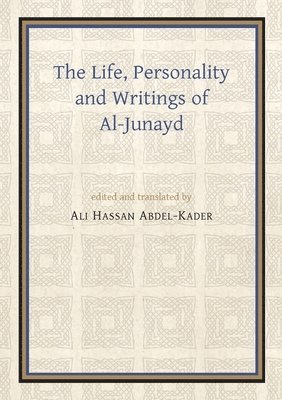
Al-Junayd (d. 910) was one of the most significant figures of the formative period of Islamic mystical thought and practice in the third to ninth centuries. This volume contains an account of his life, personality and writings; his doctrine; and both Arabic text and translation of his Rasa'il .
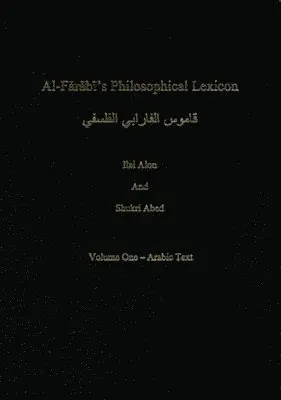
Al-Farabi (d. 950 AD), was perhaps the most original and influential of all Muslim philosophers of the Middle Ages. His intellectual activity spanned over areas as different as music, medicine, political theory, linguistics, logic, metaphysics, religion and philosophy at large. Great thinkers within the Islamic world from Ibn Bajjah to Ibn Rushd, as well as many outside it, such as Maimonides, St Thomas Aquinas and Spinoza refer to his works with great deference. Al-Farabis main contribution is the co-systematization of various spiritual disciplines in Islamic non-traditional culture, using them in a sophisticated manner for promoting a universalistic world-view. This edition consists of two volumes; volume one quotes the Arabic text of al-Farabi's philosophical definitions and those of parallel authors, and volume two contains an English translation, an interpretative essay on al-Farabi and detailed indices.
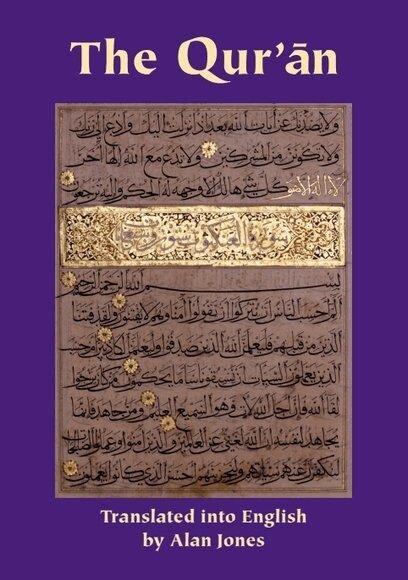
The Qur'an is the sacred book of Islam. For Muslims it is the word of God revealed in Arabic by the archangel Gabriel to the Prophet Muhammad, and thence to mankind. Originally it was delivered orally: traditional sources indicate that Muhammad always recited his message.
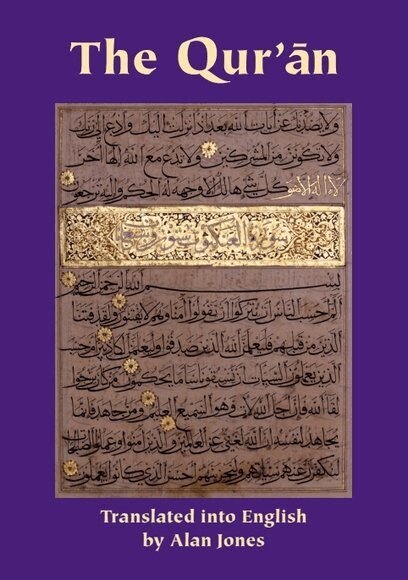
The Qur'an is the sacred book of Islam. For Muslims it is the word of God revealed in Arabic by the archangel Gabriel to the Prophet Muhammad, and thence to mankind. Originally it was delivered orally: traditional sources indicate that Muhammad always recited his message.
Written in the middle of the 12th century for a member of the Ghurid family of Bamiyan (in modern Afghanistan) the Four Discourses are concerned with four professions necessary at the Prince's court, those of scribe, poet, astrologer and physician. After describing the natural qualities and training required for each of them, Nizami 'Arudi relates anecdotes, mostly exemplifying the vicissitudes of life in the profession and the conditions that lead to success. The work is a particularly interesting and charming example of early ornamental prose in Persian. Edward G. Browne was a Former Fellow of Pembroke College, Cambridge.