
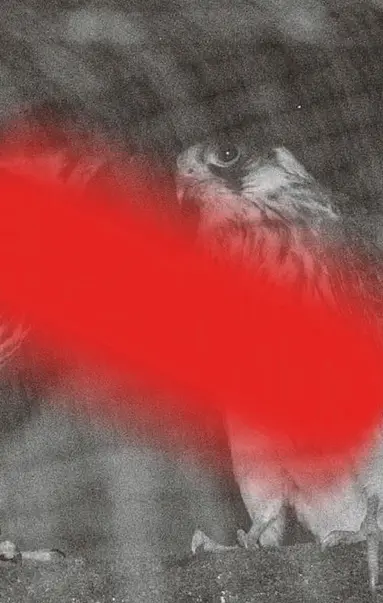
The World Is Mine For The Taking
225 kr
Kommande. Bevaka för att få ett mejl när produkten kan beställas.
Beskrivning
The life of Letizia Battaglia, the trailblazing photographer who risked everything to document the Sicilian Mafia's "Years of Lead."
The World Is Mine for the Taking is the life of Letizia Battaglia (1935–2022), the photographer who documented the mafia’s war on Palermo, told in her own words and completed by Sabrina Pisù’s reporting on her work. Battaglia was a sickly child, close to death for most of her first year. One rainy day her mother held her up on the balcony, begging God to save her daughter as a band below announced a sacred procession. Soon after, she was well.
Few photographers of her century have stood so close to danger, and none gave back to their hometown more than Battaglia, the most decorated Italian photojournalist of the twentieth century. Beginning and ending in Palermo, Battaglia recounts a life driven by defiance: a childhood through the Second World War, her escape from a repressive marriage, her years as a city councillor fighting corruption, and the day she found, in her own archive, a photograph of seven-time Prime Minister Giulio Andreotti beside a man he claimed never to have met. It became evidence at his trial.
She did not pick up a camera until her mid-thirties. Working for the Palermo daily L’Ora, she photographed the Cosa Nostra’s internal wars from the pavement, from the assassination of regional president Piersanti Mattarella to the funerals and the families left behind, producing images of such forensic and emotional power that they came to define the era. She called it her “archive of blood,” built with only her camera and an unshakeable sense of what was just.
Produktinformation
Utforska kategorier
Recensioner i media
Hoppa över listan




Du kanske också är intresserad av
Feminism in Revolt – An Anthology
Carla Lonzi, Luisa Lorenza Corna, Jamila M. H. Mascat, Matthew Hyland, Cristina Viti, Luisa Lorenza Corna, Jamila M H Mascat
Häftad, 2023
243 kr