

- Nyhet
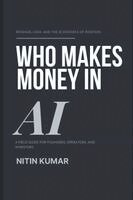
Who Makes Money in AI?
E-bok
Engelska, 2026151 kr
Läs direkt i Bokus Reader – eller ladda ned till din enhet
Fler format och utgåvor
Beskrivning
Who makes money in AI?How to invest for Venture Capital and Private EquityBetween the last trading day of 2022 and now, roughly nine trillion dollars ($9T) of market value went to the companies that design and fabricate silicon. The software companies that own the systems of record, the businesses nearly every strategy framework had named as the winners, added two hundred and forty-six billion ($246B) and trailed the index.An AI company's ceiling is set by where it stands in the stack. Position determines gross margin, how much capital a dollar of forward revenue requires, when cash arrives relative to when it is spent, and how often the underlying asset has to be rebuilt. Execution decides where a company lands inside that band. Position decides which band it is in, and the bands barely overlap. Two companies with identical revenue, growth and churn can be entirely different financial objects, and nothing on a standard metrics dashboard separates them.Who Makes Money in AI maps twelve positions in the stack and puts a price on each one.• Where every dollar of end-customer spend ends up, tier by tier, and how much each layer keeps• How long each position's advantage lasts, with the observable that tells you the clock is running out. The shortest one on the board is three to four months.• Why revenue and cash are different numbers in this market, and where the gap between them kills companies that are growing fast• What one accelerator earns against what it cost, and the single number no operator in the industry discloses• How much capital each position needs, from whom, and in which instrument• What a lender will advance against recurring revenue, and the covenant that quietly decides who ends up owning the company• What an acquirer pays for each position, and the three observable properties that set that price• A due diligence sequence for investors: the ten questions a data room answers in an afternoon, the reporting stack to require at the first board meeting, and what still works when a company has fourteen customers and no revenue history to run the numbers onWritten for founders deciding what to build, operators running a profit and loss where the cost of goods moves every quarter, and investors and due diligence teams who can price a company and cannot yet price a position.
Produktinformation
Utforska kategorier





Hoppa över listan






Du kanske också är intresserad av
- -15% på allt
Proceedings of the International Conference on Paradigms of Communication, Computing and Data Sciences
Mohit Dua, Ankit Kumar Jain, Anupam Yadav, Nitin Kumar, Patrick Siarry
Häftad, 2022
2 202 kr