- Nyhet
Kitāb Sībawayhi: Syntax and Pragmatics
2 589 kr
Beställningsvara. Skickas inom 7-10 vardagar. Fri frakt över 249 kr.
Beskrivning
Produktinformation
- Utgivningsdatum:2009-12-08
- Mått:160 x 240 x 19 mm
- Vikt:584 g
- Format:Inbunden
- Språk:Engelska
- Serie:Studies in Semitic Languages and Linguistics
- Antal sidor:238
- Förlag:Brill
- ISBN:9789004178168
Utforska kategorier
Mer om författaren
Amal E. Marogy, Ph.D. (2007) in Oriental Languages and Cultures, is lector of Arabic at the University of Cambridge and a bilingual Arabic-Aramaic speaker.
Recensioner i media
"[L]a qualità...dell’opera che costituisce nel complesso un passo in avanti negli studi su Sībawayh e una lettura informativa e stimolante, non solo per gli studiosi interessati alla tradizione linguistica araba, ma anche per linguisti e storici della linguistica." - Antonella Ghersetti, Università Ca’ Foscari, Venezia, in: QSA no. 7 (2012), pp. 275-276
Innehållsförteckning
- CONTENTSAcknowledgements ............................................................................ ixPreface .................................................................................................. xiChapter One Historical Background ........................................... 11. Life .................................................................................................. 42. Cultural and Social Milieu .......................................................... 72.1. Al-Ḥīra: a Synoptic View .................................................... 72.2. Population ............................................................................. 112.3. Cultural history .................................................................... 152.4. Kūfa-Basṛ a Dichotomy ........................................................ 192.5. The Naḥwiyyūn .................................................................... 223. The Kitāb ....................................................................................... 273.1. Sources of the Kitāb ............................................................ 303.1.1. Qurʾān ......................................................................... 303.1.2. Ḥadīt ̠ (Prophetic Tradition) ................................... 333.1.3. Poetry ......................................................................... 343.2. Status of the Kitāb ................................................................ 353.2.1. Arab Grammarians .................................................. 373.2.1.1. az-Zajjājī (d. 337/949) ............................... 383.2.1.2. as-Sīrāfī (d. 368/979) ................................. 393.2.1.3. ar-Rummānī (d. 384/994) ......................... 393.2.1.4. Ibn Jinnī (d. 392/1002) ............................. 393.2.1.5. Ibn al-ʾAnbārī (d. 577/1181) .................... 403.2.1.6. Ibn Hišām (d. 761/1360) .......................... 403.2.2. Western Scholars ...................................................... 40Summary ............................................................................................. 44Chapter Two Complementarity .................................................... 471. Utterance Tuning Parameters ..................................................... 492. Complementarism ........................................................................ 552.1. Communication act as an event ........................................ 612.2. Istiqāma, Grammaticality and the Speaker’s Intention ... 742.3. Negotiability and Motivation ............................................. 792.3.1. Negotiability in Sībawayhi ...................................... 812.3.2. Motivated Use of Case Endings ............................. 822.3.3. Motivated Reduction ............................................... 842.4. Conventionality .................................................................... 882.4.1. Absolute Conventionality ....................................... 892.4.2. Motivated Conventionality ..................................... 91Summary ............................................................................................. 94Chapter Three Definiteness and Identifiability .......................... 951. Preliminary Observations ........................................................... 962. Definiteness in the Kitāb ............................................................. 992.1. Criteria of Adjectival Qualifiability .................................. 1042.2. Proper Nouns ....................................................................... 1082.3. Hierarchy of Definiteness ................................................... 1173. Definiteness and Non-Arbitrariness of Word Order .............. 1233.1. Word Order in Arabic Nominal Sentences ..................... 1253.1.1. Indefinite Nouns and the Initial Position ............ 1303.1.2. Kāna and its Sisters ‘Kāna wa ’Aḫawātuhā’ .......... 1363.2. Verbs and the Initial Position ............................................ 143Summary ............................................................................................. 148Chapter Four Mubtadaʾ, Topic and Theme ................................ 1511. Introductory Remarks ................................................................. 1522. Three Structural-Functional Theories ....................................... 1572.1. Dik’s Functional Grammar ................................................. 1572.2. Information Structure and Role and ReferenceGrammar ............................................................................... 1602.3. Systemic Functional Grammar .......................................... 1642.3.1. Downing’s view on Topic, Theme and the ‘Initial’Position ...................................................................... 1672.3.2. Participant’s Role in Identifying Topics ................ 1713. Mubtadaʾ and Ibtidāʾ: an Alternative Approach to an OldProblem .......................................................................................... 1783.1. Inverted Nominal Sentence and Types of Ḫabars .......... 1833.2. Reversibility of the Three Types of Ḫabars ..................... 1913.3. ʾInna and its Related Particles ........................................... 193Summary ............................................................................................. 200Chapter Five Conclusion ............................................................... 203Bibliography ........................................................................................ 217Index .................................................................................................... 229
Mer från samma serie
General Linguistics and the Teaching of Dead Hamito-Semitic Languages
J.H. Hospers
Häftad, 1978
1 957 kr
The Syriac Language of the Peshitta and Old Syriac Versions of Matthew
Jan Joosten
Inbunden, 1996
4 699 kr
Jewish Life in Arabic Language and Jerusalem Arabic in Communal Perspective
Moshe Piamenta
Inbunden, 2000
2 579 kr
The Phonological Structure of the Verbal Roots in Arabic and Hebrew
Bernard Bachra
Inbunden, 2001
3 291 kr
Du kanske också är intresserad av
- Signerad!
- -52%
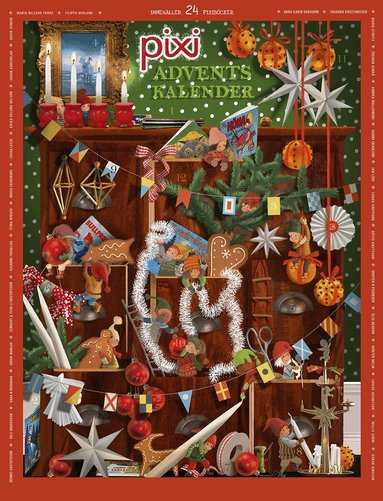
Pixi adventskalender 2025 : Med böcker av Maria Trolle, Maria Nilsson Thore, Johan Anderblad, Filippa Widlund, Mårten Melin Elsa Beskow, Lotta Olsson mfl
Flera Författare
Häftad, 2025
129 kr269 kr
- -28%
- -30%
- Signerad!
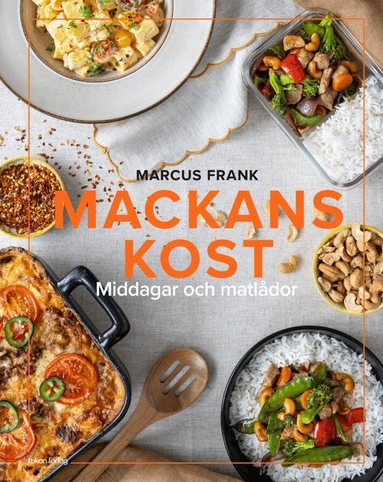
SIGNERAD - Mackans kost : Middagar och matlådor
Marcus Frank
Inbunden, 2026
269 kr
- -48%
Pixi adventskalender - Filippa Widlund
Bonnier Carlsen
Häftad, 2023
129 kr249 kr
- -48%
Pixi adventskalender – Mattias Andersson
Bonnier Carlsen
Häftad, 2024
129 kr249 kr
- Signerad!
SIGNERAD - Woka ur! Handbok i sydost- och östasiatisk matlagning
Vendela Wikström
Kartonnage, 2026
259 kr