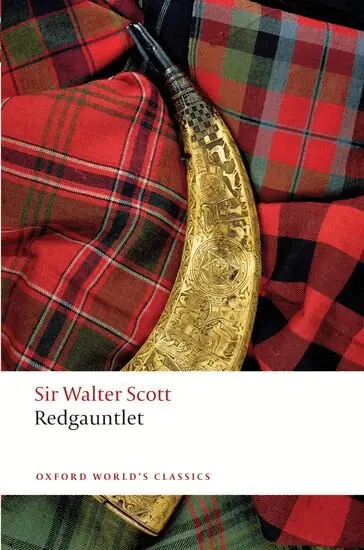
Two young men on the Solway sands in 1765, a laird with a fatal family face, and a third Jacobite rising that history does not record — because, Scott suggests, it fizzled out in a Solway inn with nobody willing to draw a sword. Half the book is letters, half is narrative, and the last chapter is the quietest death of a cause in English fiction. Scott put more of his own youth into it than into any other novel. Fifty-eight plates of eighteenth-century soldiers, volunteers and alms-giving, among them work by Gainsborough and Copley, answer the novel''s own world of wavering loyalties and men who will not draw a sword.