
Cell Culture Engineering
E-bok
PDF, Engelska, 20063 978 kr
Läs direkt i Bokus Reader – eller ladda ned till din enhet (PDF kräver ofta zoom och scroll på små skärmar).
Fler format och utgåvor
Beskrivning
Since the introduction of recombinant human growth hormone and insulin a quarter century ago, protein therapeutics has greatly broadened the ho- zon of health care. Many patients suffering with life-threatening diseases or chronic dysfunctions, which were medically untreatable not long ago, can attest to the wonder these drugs have achieved. Although the ?rst generation of p- tein therapeutics was produced in recombinant Escherichia coli, most recent products use mammalian cells as production hosts. Not long after the ?rst p- duction of recombinant proteins in E. coli, it was realized that the complex tasks of most post-translational modi?cations on proteins could only be ef?ciently carried out in mammalian cells. In the 1990s, we witnessed a rapid expansion of mammalian-cell-derived protein therapeutics, chie?y antibodies. In fact, it has been nearly a decade since the market value of mammalian-cell-derived protein therapeutics surpassed that of those produced from E. coli. A common characteristic of recent antibody products is the relatively large dose required for effective therapy, demanding larger quantities for the treatment of a given disease. This, coupled with the broadening repertoire of protein drugs, has rapidly expanded the quantity needed for clinical applications. The increasing demand for protein therapeutics has not been met exclusively by construction of new manufacturing plants and increasing total volume capacity. More - portantly the productivity of cell culture processes has been driven upward by an order of magnitude in the past decade.
Produktinformation
Utforska kategorier
Hoppa över listan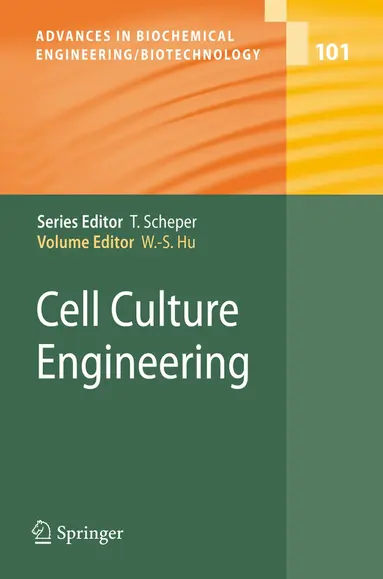

Du kanske också är intresserad av
Del 101
Cell Culture Engineering
Gyun Min Lee, Gyun Min Lee, Helene Faustrup Kildegaard
Inbunden, 2019
1 940 kr
- Signerad!
SIGNERAD - Woka ur! Handbok i sydost- och östasiatisk matlagning
Vendela Wikström
Kartonnage, 2026
259 kr
- Signerad!
- Signerad!
- Nyhet