
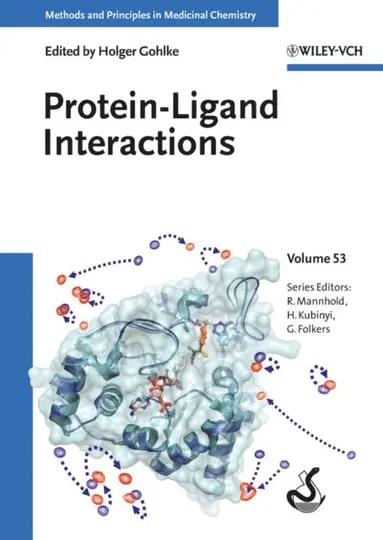
Protein-Ligand Interactions
From Molecular Recognition to Drug Design
AvGisbert Schneider,Hans-Joachim B hm
E-bok
PDF, Engelska, 20061 841 kr
Läs direkt i Bokus Reader – eller ladda ned till din enhet (PDF kräver ofta zoom och scroll på små skärmar).
Fler format och utgåvor
Beskrivning
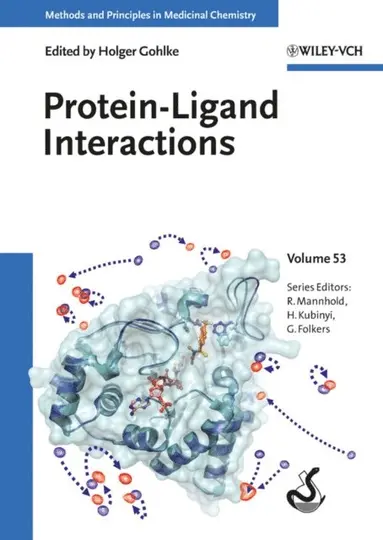
The lock-and-key principle formulated by Emil Fischer as early as the end of the 19th century has still not lost any of its significance for the life sciences. The basic aspects of ligand-protein interaction may be summarized under the term ''molecular recognition'' and concern the specificity as well as stability of ligand binding.
Molecular recognition is thus a central topic in the development of active substances, since stability and specificity determine whether a substance can be used as a drug. Nowadays, computer-aided prediction and intelligent molecular design make a large contribution to the constant search for, e. g., improved enzyme inhibitors, and new concepts such as that of pharmacophores are being developed.
An up-to-date presentation of an eternally young topic, this book is an indispensable information source for chemists, biochemists and pharmacologists dealing with the binding of ligands to proteins.
Produktinformation
Utforska kategorier
Hoppa över listan

Du kanske också är intresserad av
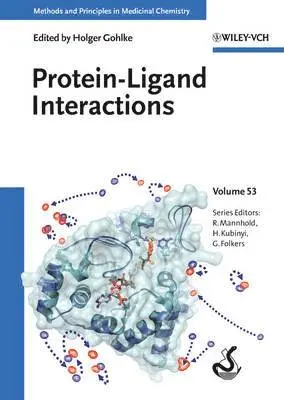
Del 53
Del 2263
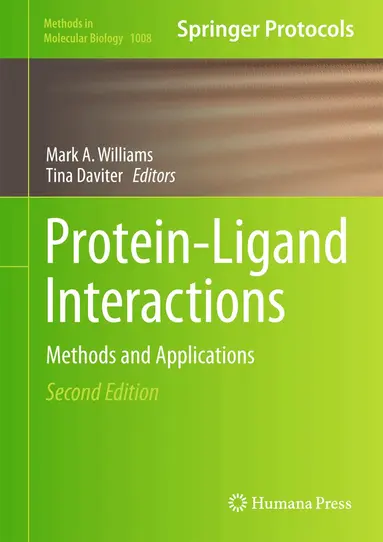
Protein-Ligand Interactions
Tina Daviter, Christopher M. Johnson, Stephen H. McLaughlin, Mark A. Williams
Häftad, 2021
1 468 kr
Protein-Ligand Interactions
Mark A. Williams, Stephen H. McLaughlin, Christopher M. Johnson, Tina Daviter
E-bok
20211 913 kr