

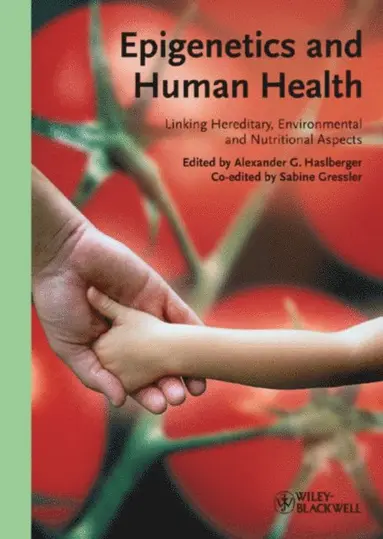
Epigenetics and Human Health
Linking Hereditary, Environmental and Nutritional Aspects
AvAlexander Haslberger,Alexander Haslberger
Inbunden, Engelska, 2009
1 433 kr
Tillfälligt slut. Bevaka för att få ett mejl när produkten kan beställas.
Fler format och utgåvor
Beskrivning
After first introducing the concept of epigenetics, this handbook and ready reference provides an overview of the main research on epigenetics. It adopts a multidisciplinary approach, involving molecular biology, molecular epidemiology and nutritional science, with a special focus of the book is on disease prevention and treatment. Of interest to all healthcare-related professionals as well as nutritionists, and the medical community focusing on disease prevention.
Produktinformation
- Utgivningsdatum:2009-11-11
- Mått:175 x 242 x 24 mm
- Vikt:706 g
- Format:Inbunden
- Språk:Engelska
- Antal sidor:316
- Förlag:Wiley-VCH Verlag GmbH
- ISBN:9783527324279
Utforska kategorier
Mer om författaren
Alexander G Haslberger is group leader at the Department for Nutritional Sciences at the University of Vienna where he also received his academic degrees. He worked in research groups of the Sandoz Research Inst., the University of Minnesota, the WHO in Geneva and headed a group at the Fed. Ministry of Health, Vienna. He participated in the preparation of the WHO report on modern food biotechnology, the UN Millennium Ecosystem Assessment, the preparation of the OECD conference on genetic testing, Vienna 2000, the Public Health Genomic EC network, EC research projects and in WHO expert groups.
Recensioner i media
"... The editors have succeeded in compiling some fascinating aspects of epigenetic control mechanisms. The book can be recommended to everyone enjoying a profound intellectual insight into facets of conventional genetics and molecular biology and varied influences of lifestyle and the environment." (Pharmazie in unserer Zeit; review in English)
Innehållsförteckning
- Preface xvList of Contributors xviiPart I General Introduction1 The Research Program in Epigenetics: The Birth of a New Paradigm 3Paolo VineisReferences 52 Interactions Between Nutrition and Health 7Ibrahim Elmadfa2.1 Introduction 72.2 Epigenetic Effects of the Diet 82.3 Current Nutrition Related Health Problems 8References 93 Epigenetics: Comments from an Ecologist 11Fritz SchiemerReferences 124 Interaction of Hereditary and Epigenetic Mechanisms in the Regulation of Gene Expression 13Thaler Roman, Eva Aumüller, Carolin Berner, and Alexander G. Haslberger4.1 Hereditary Dispositions 134.2 The Epigenome 144.3 Epigenetic Mechanisms 154.3.1 Methylation 154.3.2 Histone Modifications 184.3.3 Micro RNAs 204.4 Environmental Influences 204.4.1 Nutritional and Environmental Effects in Early Life Conditions 204.4.2 Environmental Pollution and Toxins 224.5 Dietary Effects 224.5.1 Nutrition and the Immune System 264.5.2 Nutrition and Aging 264.6 Inheritance and Evolutionary Aspects 284.7 Conclusion 29References 30Part II Hereditary Aspects5 Methylenetetrahydrofolate Reductase C677T and A1298C Polymorphisms and Cancer Risk: A Review of the Published Meta-Analyses 37Stefania Boccia5.1 Key Concepts of Population-Based Genetic Association Studies 375.1.1 Definition and Goals of Genetic Epidemiology 375.1.2 Study Designs in Genetic Epidemiology 385.1.3 The Human Genome 385.1.4 Meta-Analysis in Genetic Epidemiology 395.1.5 Human Genome Epidemiology Network 405.1.6 “Mendelian Randomization” 415.2 Methylenetetrahydrofolate Reductase Gene Polymorphisms (C677T and A1298C) and Its Association with Cancer Risk 415.2.1 Gene and Function 415.2.2 C677T and A1298C Gene Variants 435.2.3 Gene–Environment Interaction 435.3 Meta-Analyses of Methylenetetrahydrofolate Reductase C677T and A1298C Polymorphisms and Cancer 44References 476 The Role of Biobanks for the Understanding of Gene–Environment Interactions 51Christian Viertler, Michaela Mayrhofer, and Kurt Zatloukal6.1 Background 516.1.1 What Purpose Do Different Biobank Formats Serve? 526.1.2 Why Do We Need Networks of Biobanks? 536.2 The Investigation of Gene–Environment Interactions as a Challenge for Biobanks 556.2.1 How to Evaluate Risk Factors for Metabolic Syndrome and Steatohepatitis? 586.2.2 Why Are Biobanks Needed in This Context and What Challenges Do They Have to Face? 58References 607 Case Studies on Epigenetic Inheritance 63Gunnar Kaati7.1 Introduction 647.2 Methodology 657.2.1 On the Study of Epigenetic Inheritance 657.2.2 The Ideal Study Design 667.2.3 The Överkalix Cohorts of 1890, 1905 and 1920 677.2.4 The ALSPAC Data Set 687.2.5 The Proband’s Childhood 687.2.6 Food Availability 697.2.7 Ancestors’ Experience of Crises 697.2.8 Growth Velocity 697.3 Patterns of Transgenerational Responses 707.3.1 The Social Context 707.3.2 The Ancestors’ Nutrition 717.3.3 Longevity and Paternal Ancestors’ Nutrition 717.3.4 The Influence of Nutrition During the Slow Growth Period on Cardiovascular and Diabetes Mortality 727.3.5 Is Human Epigenetic Inheritance Mediated by the Sex Chromosomes? 737.3.5.1 Paternal Initiation of Smoking and Pregnancy Outcome 757.3.6 Epigenetic Inheritance, Early Life Circumstances and Longevity 757.3.7 How to Explain the Effects of Food Availability During SGP on Human Health? 767.3.7.1 Genetic Selection Through Differential Survival or Fertility? 767.3.7.2 Chromosomal Transmission of Nutritionally Induced Epigenetic Modifications 767.4 Epigenetic Inheritance 777.4.1 Fetal Programming and Epigenetic Inheritance 787.5 Future Directions 807.6 Conclusions 81References 83Part III Environmental and Toxicological Aspects8 Genotoxic, Non-Genotoxic and Epigenetic Mechanisms in Chemical Hepatocarcinogenesis: Implications for Safety Evaluation 89Wilfried Bursch8.1 Introduction 908.2 Genotoxic and Non-Genotoxic Chemicals in Relation to the Multistage Model of Cancer Development 918.2.1 Tumor Initiation 918.2.2 Tumor Promotion 928.2.3 Tumor Progression 938.2.4 Cellular and Molecular Mechanisms of Tumor Initiation and Promotion 938.2.5 Epigenetic Effects of Genotoxic and Non-Genotoxic Hepatocarcinogens 968.2.6 How Carcinogens Alter the Microenvironment – Crucial Roles of Inflammation 978.3 Concluding Remarks 97References 999 Carcinogens in Foods: Occurrence, Modes of Action and Modulation of Human Risks by Genetic Factors and Dietary Constituents 105M. Mišík, A. Nersesyan, W. Parzefall, and S. Knasmüller9.1 Introduction 1059.2 Genotoxic Carcinogens in Human Foods 1069.2.1 Polycyclic Aromatic Hydrocarbons 1079.2.2 Nitrosamines 1079.2.3 Heterocyclic Aromatic Amines (HAAs) and Other Thermal Degradation Products 1089.2.4 Mycotoxins 1099.2.5 Food Additives and Carcinogens in Plant-Derived Foods 1099.2.6 Alcohol 1119.3 Contribution of Genotoxic Dietary Carcinogens to Human Cancer Risks 1119.4 Protective Effects of Dietary Components Towards DNA-Reactive Carcinogens 1129.5 Gene Polymorphisms Affecting the Metabolism of Genotoxic Carcinogens 1149.6 Concluding Remarks, Epigenetics and Outlook 118References 118Part IV Nutritional Aspects10 From Molecular Nutrition to Nutritional Systems Biology 127Guy Vergères10.1 Impact of Life Sciences on Molecular Nutrition Research 12710.2 Nutrigenomics 12910.2.1 Genomics and Nutrition Research 12910.2.2 Transcriptomics and Nutrition Research 13010.2.3 Proteomics and Nutrition Research 13110.2.4 Metabolomics and Nutrition Research 13210.3 Nutrigenetics 13310.4 Nutri-Epigenetics 13510.5 Nutritional Systems Biology 13710.6 Ethics and Socio-Economics of Modern Nutrition Research 137References 13911 Effects of Dietary Natural Compounds on DNA Methylation Related to Cancer Chemoprevention and Anticancer Epigenetic Therapy 141Barbara Maria Stefanska and Krystyna Fabianowska-Majewska11.1 Introduction 14111.2 DNA Methylation Reaction 14211.3 Implication of the Selected Natural Compounds in DNA Methylation Regulation 14411.3.1 ATRA, Vitamin D3 , Resveratrol, and Genistein 14411.3.1.1 Involvement of p21 WAF1/CIP1 and Rb/E2F Pathway in Regulation of DNMT1 14711.3.1.2 Involvement of the AP-1 Transcriptional Complex in Regulation of DNMT1 14811.3.2 Polyphenols with a Catechol Group 14911.4 Conclusions and Future Perspectives 151References 15212 Health Determinants Throughout the Life Cycle 157Petra Rust12.1 Introduction 15712.2 Pre- and Postnatal Determinants 15912.3 Determinants During Infancy and Adulthood 16012.4 Determinants in Adults and Older People 16012.5 Interactions Throughout the Lifecycle 16112.6 Intergenerational Effects 161References 162Part V Case Studies13 Viral Infections and Epigenetic Control Mechanisms 167Klaus R. Huber13.1 The Evolutionary Need for Control Mechanisms 16713.2 Control by RNA Silencing 16813.3 Viral Infections and Epigenetic Control Mechanisms 16913.3.1 RNA Silencing in Plants 16913.3.2 RNA Silencing in Fungi 17013.3.3 RNA Silencing in Mammals 17013.4 Epigenetics and Adaptive Immune Responses 171References 17114 Epigenetics Aspects in Gyneacology and Reproductive Medicine 173Alexander Just and Johannes HuberReferences 17815 Epigenetics and Tumorigenesis 179Heidrun Karlic and Franz Varga15.1 Introduction 17915.2 Role of Metabolism Within the Epigenetic Network 18115.3 Epigenetic Modification by DNA Methylation During Lifetime 18315.4 Interaction of Genetic and Epigenetic Mechanisms in Cancer 18415.5 DNA Methylation in Normal and Cancer Cells 18515.6 Promoter Hypermethylation in Hematopoietic Malignancies 18615.7 Hypermethylated Gene Promoters in Solid Cancers 18715.8 Interaction DNA Methylation and Chromatin 188References 19016 Epigenetic Approaches in Oncology 195Sabine Zöchbauer-Müller and Robert M. Mader16.1 Introduction 19516.2 DNA Methylation, Chromatin and Transcription 19616.3 Methods for Detecting Methylation 19716.4 The Paradigm of Lung Cancer 19816.4.1 Frequently Methylated Tumor Suppressor Genes and Other Cancer-Related Genes in Lung Carcinomas 19916.4.2 Monitoring of DNA Methylation in Blood Samples 20016.5 Epigenetics and Therapy 20016.6 Epigenetic Alterations Under Cytotoxic Stress 20116.7 Therapeutic Applications of Inhibitors of DNA Methylation 20216.8 How May Methylation Become Relevant to Clinical Applications? 20316.9 Conclusions 204References 20517 Epigenetic Dysregulation in Aging and Cancer 209Despina Komninou and John P. Richie17.1 Introduction 21017.2 The Cancer-Prone Metabolic Phenotype of Aging 21017.3 Age-Related Epigenetic Silencing Via DNA Methylation 21217.4 Inflammatory Control of Age-Related Epigenetic Regulators 21417.5 Lessons from Anti-Aging Modalities 21517.6 Conclusions 217References 21818 The Impact of Genetic and Environmental Factors in Neurodegeneration: Emerging Role of Epigenetics 225Lucia Migliore and Fabio Coppedè18.1 Neurodegenerative Diseases 22518.2 The Role of Causative and Susceptibility Genes in Neurodegenerative Diseases 22618.3 The Contribution of Environmental Factors to Neurodegenerative Diseases 23118.4 Epigenetics, Environment and Susceptibility to Human Diseases 23318.5 Epigenetics and Neurodegenerative Diseases 23418.6 The Epigenetic Role of the Diet in Neurodegenerative Diseases 23718.7 Concluding Remarks 238References 23919 Epigenetic Biomarkers in Neurodegenerative Disorders 245Borut Peterlin19.1 Introduction 24519.2 Epigenetic Marks in Inherited Neurological and Neurodegenerative Disorders 24619.3 Epigenetic Dysregulation in Neurodegenerative Disorders 24719.4 Gene Candidates for Epigenetic Biomarkers 24819.5 Conclusions 249References 25020 Epigenetic Mechanisms in Asthma 253Rachel L. Miller and Julie Herbstman20.1 Introduction 25320.2 Epigenetic Mechanisms 25520.3 Fetal Basis of Adult Disease 25520.4 Fetal Basis of Asthma 25620.5 Experimental Evidence 25720.6 Epigenetic Mechanisms in Asthma 25720.7 Cell-Specific Responses 25920.8 Conclusion 259References 260Part VI Ways to Translate the Concept21 Public Health Genomics – Integrating Genomics and Epigenetics into National and European Health Strategies and Policies 267Tobias Schulte in den Bäumen and Angela Brand21.1 Public Health and Genomics 26721.2 The Bellagio Model of Public Health Genomics 26821.3 The Public Health Genomics European Network 27121.4 From Public Health Genomics to Public Health and Epigenetics/ Epigenomics 27221.5 Health in All Policies – Translating Epigenetics/Epigenomics into Policies and Practice 27221.6 Health in All Policies as a Guiding Concept for European Policies 27321.7 Relative Risk and Risk Regulation – A Model for the Regulation of Epigenetic Risks? 27421.8 Attributable Risks and Risk Regulation 27521.9 Translating Attributable Risks into Policies 27521.10 Limits to the Concept of Health in All Policies in Genomics and Epigenetics 27721.11 Conclusion 278References 27822 Taking a First Step: Epigenetic Health and Responsibility 281Astrid H. Gesche22.1 Introduction 28122.2 Responding to Epigenetic Challenges 28222.3 Responsibility and Public Health Care Policy 28322.4 Conclusion 284References 285Index 287
Hoppa över listan
Mer från samma författare
Sustainable food production and ethics
Werner Zollitsch, Christoph Winckler, Susanne Waiblinger, Alexander Haslberger
Häftad, 2007
1 983 kr
Hoppa över listan




Du kanske också är intresserad av
- -15% på allt
Sustainable food production and ethics
Werner Zollitsch, Christoph Winckler, Susanne Waiblinger, Alexander Haslberger
Häftad, 2007
1 983 kr
- -15% på allt
- -15% på allt
- -29%
Jul i Bullerbyn
Astrid Lindgren
Inbunden, 2018
4,7 utav 5 stjärnor. Totalt antal röster:(19)
119 kr168 kr
- Signerad!
SIGNERAD - Mackans kost : Middagar och matlådor
Marcus Frank
Inbunden, 2026
4,8 utav 5 stjärnor. Totalt antal röster:(1098)
269 kr