
The Eucharist
Mystery of Presence, Sacrifice, and Communion
Inbunden, Engelska, 2018
683 kr
Tillfälligt slut. Bevaka för att få ett mejl när produkten kan beställas.
Beskrivning
The Eucharist explores the three ends of the Sacrament of Sacraments: God's true presence, His redemptive sacrifice, and spiritual nourishment through communion with Him. In this follow-up to his groundbreaking work, Faith Comes From What Is Heard, Lawrence Feingold constructs a biblical vision of the Eucharist from its prefigurement in the Old Testament to its fulfilment in the New and presents the Eucharistic theology of the Church Fathers, St. Thomas Aquinas, and magisterial teaching from centuries past through today. The Eucharist is a masterful text, both challenging and spiritually rich, that comprehensively examines the unspeakable mystery that is the Eucharist.
Produktinformation
- Utgivningsdatum:2018-04-30
- Mått:152 x 229 x 53 mm
- Vikt:1 277 g
- Format:Inbunden
- Språk:Engelska
- Antal sidor:706
- Förlag:Emmaus Academic
- ISBN:9781945125720
Utforska kategorier
Mer om författaren
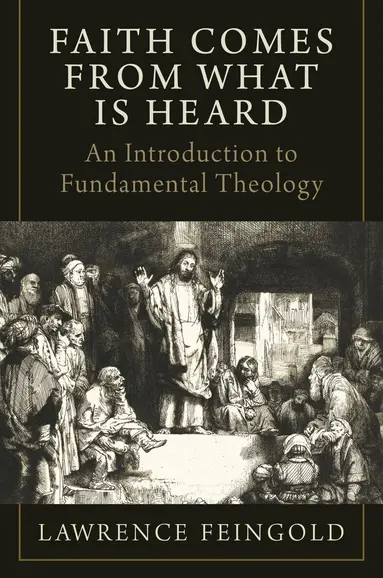
Dr. Lawrence Feingold is Associate Professor of Theology and Philosophy at Kenrick-Glennon Seminary in St. Louis. In 1999 he earned a doctorate in theology from the Pontifical University of the Holy Cross in Rome. He is the author of Faith Comes From What is Heard: An Introduction to Fundamental Theology, The Natural Desire to See God according to St. Thomas Aquinas and His Interpreters, and a three-volume series entitled The Mystery of Israel and the Church.
Recensioner i media
In addition to being a Catholic theologian of the highest rank, Professor Lawrence Feingold is also one of the very finest teachers in the Catholic academy today. Like his intellectual and spiritual master, St. Thomas Aquinas, Feingold not only sees deeply into Catholic truth, he also unlocks for his students the wise order by which the faith is most fully intelligible. His book on the Eucharist showcases Professor Feingold at the height of his theological and pedagogical powers. Professors of sacramental theology now have a resource that is sure to enrich their courses and the spiritual lives of their students." - Roger W. Nutt, Associate Professor of Theology and Director of the MA Program in Theology, Ave Maria University"A stunning achievement. Lawrence Feingold's up-to-date study of the Eucharist is truly comprehensive, taking the reader from the book of Genesis through the Upper Room and all the way to Pope Francis. The result is a biblical, patristic, medieval, modern, and thoroughly Catholic study of the sacrament that is the 'source and summit of the Christian life.' And all this in clear and accessible prose! This work will be essential reading for anyone interested in Eucharistic theology for decades to come." - Brant Pitre, Professor of Sacred Scripture, Notre Dame Seminary"I believe The Eucharist: Mystery of Presence, Sacrifice, and Communion is one of the most complete and faithful guides to the Holy Eucharist available today. Dr. Feingold has written a masterful summary of the Catholic theology of the Eucharist that integrates scriptural and patristic foundations with scholastic and magisterial teachings on Eucharistic presence, the Mass as sacrifice, the participation of the faithful in the sacrifice of the Mass, the fruits of the Eucharist, adoration of the Eucharist, and contemporary canonical–pastoral questions regarding the worthy reception of Holy Communion. Drawing upon St. Thomas Aquinas and other eminent theologians, Dr. Feingold provides a treatment of the Holy Eucharist that is ideal for Catholic university and seminary classes on 'the most august sacrament.'" - Robert L. Fastiggi, Professor of Systematic Theology, Sacred Heart Major Seminary
Innehållsförteckning
- Abbreviations xxiii Introduction xxvii Structure of the Work xxx Part I: Foundations 1 Chapter One: Why Did Christ Institute the Eucharist? 3 Reasons of Fittingness for the Eucharist 3 Sacrament of Spiritual Nourishment 3 Sacrament of Charity 5 Presence 6 Sacrificial Love 7 Intimate Union 8 Three Ends of the Eucharist 8 Christ Instituted the Eucharist for the Same Reasons That He Became Man 10 1. Presence 12 Divine Condescension Wishing to Dwell with Us 12 Teaching Perfect Virtue 14 The Merit of Faith 16 2. Sacrifice 18 Expiatory Sacrifice of Atonement 18 Full Revelation of the Divine Love 19 3. Communion 20 Divinization of Man 20 The Eucharist Is the Principal Means of Divinization 23 Dignity of Man 26 The Eucharist Is the Nuptials of the Lamb with His Church 27 The Eucharist and the Giving of the Holy Spirit 28 Mary and the Eucharist 29 The Eucharist Was Instituted to Be the Summit of the Sacramental Economy 31 Uniqueness of the Eucharist Compared with the Other Sacraments 34 The Eucharist and the New Covenant 36 The Eucharist and the Mysteries of Christ 36 Study Questions 38 Suggestions for Further Reading 38 Chapter Two: The Eucharist Prefigured in the Old Testament 39 Figure of the Real Presence of Christ in the Eucharist: The Shekhinah 40 Figures of the Sacrifice of the Eucharist 45 Priesthood and Sacrifice before the Mosaic Law 46 Priesthood and Sacrifice in the Law of Moses 49 Different Kinds of Old Testament Sacrifice 49 Solemnity and Quantity of Sacrifice in the Temple 52 The Passover 55 Sealing of the Old Covenant 57 Figures of the Eucharist as Spiritual Nourishment under the Sacramental Signs of Bread and Wine 58 Manna 58 The Offering of Melchizedek 62 The Bread of the Presence 63 Unleavened Bread of the Passover and the Four Cups of Wine 66 The Tree of Life 67 Yearning of the Prophets for Union with God 68 Unity of Presence, Sacrifice, and Spiritual Nourishment 68 Study Questions 69 Suggestions for Further Reading 69 Chapter Three: The Eucharist in the New Testament 71 The Bread of Life Discourse in John 6 71 Four Accounts of the Institution of the Eucharist 81 Synopsis of the Accounts of the Last Supper 83 Preparation for the Last Supper 83 Betrayal of Judas Announced 84 Announcement That Jesus Would Not Eat Another Passover 85 The Institution Narrative 85 The Setting: Preparing the Passover 86 Why Did Christ Choose the Last Supper as the Time to Institute the Eucharist? 89 The Date of the Last Supper according to John 90 Four Positions on the Date of the Last Supper in John and the Synoptics 93 Synoptic Hypothesis 93 Johannine Hypothesis 94 Essene Calendar Hypothesis 96 Passover Hypothesis 99 Significance of the Passover as the Setting for the Last Supper 103 The Passover Seder Described in Luke’s Account 104 Sacrificial Connotations of the Words of Institution 106 “My Body Given for You” 107 “Do This in Remembrance of Me” 108 Blood Poured Out for the Forgiveness of Sins 111 Blood of the Covenant / New Covenant in My Blood 114 Christ’s Knowledge of His Sacrifice 117 Other References to the Eucharist in the New Testament 117 1 Corinthians 11:23–32 117 1 Corinthians 5:6–8 and 10:16–21 118 The Eucharist in Luke 24 and the Acts of the Apostles 120 Hebrews 122 Revelation 123 Study Questions 127 Suggestions for Further Reading 128 Chapter Four: The Eucharist according to the Fathers of the Church 129 The Didache 129 St. Ignatius of Antioch 133 The Real Presence 133 Sacrament of Ecclesial Unity 134 St. Justin Martyr 135 Description of the Liturgy of the Eucharist 135 The Real Presence 137 Substantial Conversion 138 The Mass Is a Sacrifice 139 St. Irenaeus 140 Real Presence and Eucharistic Conversion 140 Spiritual Nourishment 141 New Oblation of the New Covenant 143 The Eucharistic Prayer of the Apostolic Tradition 144 St. Cyprian 147 St. Athanasius 149 St. Cyril of Jerusalem 150 St. Hilary of Poitiers 152 St. Ambrose 153 The Real Presence and the Eucharistic Conversion 153 The Eucharistic Sacrifice 156 Description of the Canon 156 St. Augustine 157 St. Gregory Nazianzen and St. Gregory of Nyssa 162 St. John Chrysostom 163 Theodore of Mopsuestia 168 St. Cyril of Alexandria 170 St. Leo the Great 172 St. Gregory the Great 173 St. John Damascene 174 Conclusion 175 Study Questions 176 Suggestions for Further Reading 177 Chapter Five: Essential Elements of the Eucharist 179 Three Levels in the Eucharist: Outward Sign, Inward Reality and Sign, and the Reality of Grace 179 Sacramental Signs as Instruments of Christ 184 The Sacraments Are Instrumental Causes 184 External and Conjoined Instruments 188 Matter of the Eucharist 190 Matter and Form in the Sacraments 190 Fittingness of Bread and Wine 192 Wheat Bread 194 Bread Is Unleavened in the Latin Rite 195 Wine of the Grape 196 Mixture of Water with the Wine 196 The Eucharist Must Be Consecrated under Both Species 198 The Essential Form of the Eucharist 199 Patristic Witness on the Words of Consecration 201 St. Thomas on the Form of the Eucharist 203 Magisterial Teaching on the Essential Form of the Eucharist 205 The Epiclesis and the Words of the Institution Narrative 208 The Anaphora of Addai and Mari 212 How Can a Eucharistic Prayer Be Valid without the Words of Institution? 217 Did the Anaphora of Addai and Mari Ever Have an Institution Narrative? 219 Hypothesis That the Institution Narrative Is a Later Development 222 Minister of the Eucharist 225 Luther on the Minister of the Eucharist 225 Study Questions 228 Suggestions for Further Reading 228 Part II: The Real Presence and Transubstantiation 231 Chapter Six: The Berengarian Controversy and Development of Eucharistic Theology 233 St. Paschasius Radbertus 233 Berengarius of Tours 238 Consequences of the Berengarian Controversy for Eucharistic Theology 243 Substantial Conversion 244 Arguments for Substantial Conversion from Scripture and Tradition 245 Distinction of Substance and Accidents 246 Miraculous and Unique Conversion 247 Transubstantiation 249 Christ Remains Whole and Entire 250 Concomitance 252 Res et Sacramentum: Three Levels in the Eucharist 254 Fruits of the Controversy 257 Study Questions 257 Suggestions for Further Reading 258 Chapter Seven: The Doctrine of Transubstantiation according to St. Thomas 259 The Distinction between Substance and Accidents 259 The Eucharistic Conversion: Transubstantiation 261 Presence through Conversion or Local Movement? 261 Transubstantiation Is Not Annihilation 267 The Substantial Conversion Is Instantaneous 268 The Appearances of Bread and Wine Remain 268 Transubstantiation Is above Reason but Not against Reason 273 Comparison between Transubstantiation, Natural Change, and Creation 276 Sacramental Mode of Christ’s Presence 278 The Whole Christ Is Present under Each Part of the Sacred Species 279 Christ Is Not Present in the Mode of Quantity 281 Concomitance 282 The Accidents of Christ’s Body Are Made Present by Concomitance 285 The Cessation of Christ’s Presence When the Sacred Species Are Corrupted 288 Transubstantiation Does Not Imply Any Change in Christ 290 Study Questions 291 Suggestions for Further Reading 292 Chapter Eight: Transubstantiation in Dispute: The Reformation and Its Legacy 293 Protestant Views on the Presence of Christ in the Eucharist 293 Martin Luther’s Position on the Real Presence 293 Huldrych Zwingli 300 John Calvin 303 Anglican View 306 The Council of Trent on Christ’s Presence in the Eucharist 308 Summary of the Principal Truths on the Real Presence Defined by the Council of Trent 312 Jansenism 313 Twentieth-Century Challenge to Transubstantiation: “Transsignification” 314 Study Questions 319 Suggestions for Further Reading 320 Part III: Sacrifice 321 Chapter Nine: The Sacrifice of the Mass 323 Sacrifice Is a Fundamental Act of Religion 323 Sacrifice and Oblation 327 The Offering of Sacrifice to God Belongs to Natural Law 329 The Priesthood, Mediation, and Sacrifice 331 The Sacrifice of Calvary 332 The Sacrifice of the Church 335 Trinitarian Dimension of the Sacrifice of Calvary and the Mass 337 Theological Reflection on the Sacrifice of the Mass 339 The Fathers and Medieval Theologians on the Sacrifice of the Mass 339 St. Thomas on the Sacrifice of the Mass 343 The Mass Is the “Representative Image” of the Passion 343 The Sacrifice of the Mass Applies the Effects of the Passion 348 Cardinal Cajetan on the Sacrifice of the Mass 351 The Council of Trent on the Sacrifice of the Mass 353 Post-Tridentine Catholic Theories on What Constitutes the Sacrifice of the Mass 355 Mediator Dei on the Sacrifice of the Mass 361 Three Levels of the Eucharistic Sacrifice 364 Christ’s Sacrifice Transcends Time 366 The Mass Makes Present the Whole of the Paschal Mystery: Death, Resurrection, and Ascension 370 Study Questions 372 Suggestions for Further Reading 373 Chapter Ten: Objections to the Sacrificial Nature of the Mass 375 Objections of Luther and Calvin to the Sacrifice of the Mass 376 Argument from the Definition of a Sacrament and the Rejection of “Works” 376 Argument from the Eucharist as Christ’s Testament 381 Objection That the Eucharist Is a Banquet Rather Than a Sacrifice 383 Argument That the Mass as Sacrifice Implies an Angry God in Need of Appeasement 387 Objection That the Sacrifice of the Mass Implies That Christ Would Be Killed Again in Every Mass 388 Objection That the Sacrifice of the Mass Would Detract from Calvary 390 Reactions against the Sacrificial Nature of the Mass in Theology of the Last Century 393 Is the Mass a Banquet Rather Than a Sacrifice? 393 Has Christ Done Away with Cultic Sacrifice? 395 Is the Sacrificial Aspect of the Mass a Later Development? 399 Study Questions 403 Suggestions for Further Reading 404 Chapter Eleven: The Participation of the Faithful in Offering the Sacrifice of the Mass 405 The Common Priesthood of the Faithful 405 Communal Nature of Sacrifice 405 The Common Priesthood of the Faithful in Israel 407 The Common Priesthood of the Faithful in the New Covenant 408 Spiritual Sacrifices of the Common Priesthood 409 The Common and the Ministerial Priesthood according to Lumen Gentium 414 The Common Priesthood in the Prayers of the Eucharistic Liturgy 415 The Sacrifices of the Faithful Are Offered on the Altar of the Body of Christ 420 Magisterial Texts on the Common Priesthood and Active Participation in the Mass 423 Pius XII’s Mediator Dei on the Participation of the Faithful in the Mass 423 Active Participation in the Mass according to Vatican II 425 Active Participation in the Mass and the New Evangelization 430 Ars Celebrandi and Active Participation 432 Sunday Mass: Obligation and Glory 434 Participation of the Faithful and Church Architecture 437 The Domus Ecclesiae 437 Symbolic Significance of “Orientation” in the Liturgy 438 Study Questions 448 Suggestions for Further Reading 449 Chapter Twelve: Fruits of the Sacrifice of the Mass 451 The Merits of the Sacrifice of Calvary Are Applied by the Mass 451Four Ends of the Sacrifice of the Mass 454 Sacrifice of Praise 454 Sacrifice of Thanksgiving 455 Sacrifice of Impetration 456 The Mass Is a Propitiatory Sacrifice Benefitting the Living and the Dead 456 Particular Fruits of the Sacrifice of the Mass 462 Why Does the Church Celebrate Many Masses If Every Mass Has Infinite Value? 465 The Logic of Superabundance 469 Martin Luther’s Rejection of the Fruits of the Mass 469 The Value of “Private” Masses 470 Eucharistic Concelebration 472 Concelebration and the Fruits of the Mass 474 Vatican II and Post-Conciliar Magisterial Texts on Concelebration 481 Study Questions 482 Suggestions for Further Reading 483 Part IV: Communion 485 Chapter Thirteen: Effects of Holy Communion 487 Communion and Sacrifice 487 Effects of Holy Communion 490 Witness of Eucharistic Prayers on the Graces of Communion 490 Sacramental Grace 491 Sacramental Grace and Docility to God’s Inspirations 495 Connection between Sacramental Grace and the “Inward Reality and Sign” 497 St. Thomas on the Effects of Communion 498 The Eucharist Sanctifies by Substantially Containing Christ 498 The Eucharist Makes Present Christ’s Passion 500 The Eucharist Sanctifies by Way of Spiritual Nourishment 500 The Eucharist Is the Sacrament of Ecclesial Charity 501 Increase of Sanctifying Grace 502 Increase of Charity 503 Increase of Faith, Hope, the Infused Moral Virtues, and Gifts of the Holy Spirit 505 Communion and the Forgiveness of Sins 506 Holy Communion and Spiritual Consolation 509 Indwelling of the Trinity and Holy Communion 510 Sacrament of Ecclesial Unity 516 Corpus Mysticum and Corpus Verum 520The State of Glory as an Effect of Communion 522 Spiritual Communion 526 Is Spiritual Communion Possible for a Person in a State of Mortal Sin? 530 Study Questions 532 Suggestions for Further Reading 532 Chapter Fourteen: Holy Communion Presupposes Ecclesial Communion, Invisible and Visible 533 Holy Communion Presupposes Ecclesial Communion 533 Why Being in a State of Grace Is a Necessary Condition for Receiving Communion 534 Judas as an Example of Unworthy Communion 537 Recipients of Holy Communion and Unworthy Communion: Canons 916 and 915 of the Code of Canon Law 540 Canon 916 540 Canon 915 542 Post-Conciliar Magisterium on Communion for the Divorced and Civilly Remarried 544 John Paul II, Familiaris Consortio, §84 544 Pastoral Solicitude for the Divorced and Civilly Remarried 547 Pope Benedict XVI, Sacramentum Caritatis, §29 550 Pope Francis, Amoris Laetitia 551 Intercommunion (Communicatio in Sacris) 555 Study Questions 558 Suggestions for Further Reading 559 Chapter Fifteen: Reception of Holy Communion 561 Frequency of Communion 561 Early Church 561 Medieval Period 563 The Sixteenth Century and the Council of Trent 565 St. Pius X 567 Communion for Children 569 Viaticum 573 The Reception of Communion 574 Communion under Both Species 574 Communion in the Hand according to the Instruction Memoriale Domini 578 Reception of Communion according to the General Instruction of the Roman Missal 581 Extraordinary Ministers of Holy Communion 582 Thanksgiving after Communion 583 Study Questions 585 Suggestions for Further Reading 585 Chapter Sixteen: Eucharistic Adoration 587 Eucharistic Adoration and the Three Ends of the Eucharist 587 Objections to Eucharistic Adoration and a Response by Joseph Ratzinger 589 Magisterial Texts on Eucharistic Adoration 592 Paul VI 592 St. John Paul II 593 Benedict XVI, Sacramentum Caritatis 597 Pope Francis on Adoration 598 The Tabernacle 599 Study Questions 601 Suggestions for Further Reading 602 Conclusion 603 The Eucharist and the Sacred Heart 603 Bibliography 609 Magisterial Texts 609 Patristic Sources 612 Medieval Sources 614 Reformation and Renaissance Sources 616 Secondary Sources 617 Index of Subjects and Names 645 Scripture Index 667
Hoppa över listan
Mer från samma författare
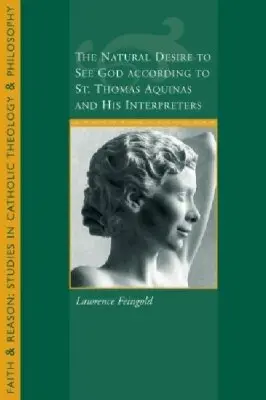
The Natural Desire to See God According to St. Thomas and His Interpreters
Lawrence Feingold
Häftad, 2004
446 kr
Hoppa över listan


Du kanske också är intresserad av
- Nyhet
Del 1
The Natural Desire to See God According to St. Thomas and His Interpreters
Lawrence Feingold
Häftad, 2004
446 kr
- -52%
Pixi adventskalender 2025 : Med böcker av Maria Trolle, Maria Nilsson Thore, Johan Anderblad, Filippa Widlund, Mårten Melin Elsa Beskow, Lotta Olsson mfl
Flera Författare
Häftad, 2025
4,5 utav 5 stjärnor. Totalt antal röster:(11)
129 kr269 kr
- Signerad!
SIGNERAD - ADHD: Det är inte ditt fel att det blir kaos (med unikt digitalt extramaterial)
Björn Nordberg
Inbunden, 2026
249 kr