

The Imperial Childhood of World Art
Inbunden, Engelska, 2027
416 kr
Kommande. Bevaka för att få ett mejl när produkten kan beställas.
Beskrivning
How Germany’s first comparative exhibition of world art turned childhood into an argument for empire.In 1914 the German historian Karl Lamprecht staged a monumental exhibition designed to reveal the history of humanity through its art. At a time when the study of art remained overwhelmingly Eurocentric, the Leipzig show displayed photographs of works ranging from Tang paintings and Maya reliefs to the European avant-garde, with a scope that speaks directly to today’s efforts to make art history global. Yet this uncommon breadth was meant to prove an evolutionary thesis. Convinced that the growing child retraces the mental development of the species, Lamprecht opened his exhibition with children’s drawings from around the world. The historian conceived of childhood as a stage that his own nation had long outgrown and others never would, casting Germany as the world’s schoolmaster and its colonial subjects as perpetual pupils.The Imperial Childhood of World Art follows Lamprecht’s project from Leipzig to Japan, China, and German East Africa, where children served not only as evidence for a hierarchy of peoples but also as targets of colonial policy. The book uncovers how the exhibition’s cosmopolitan reach and imperial politics drew on the same comparative method, a legacy with which global art history is still reckoning.
Produktinformation
Utforska kategorier
Mer om författaren
Recensioner i media
Innehållsförteckning
Hoppa över listan





Du kanske också är intresserad av
- -15% på allt
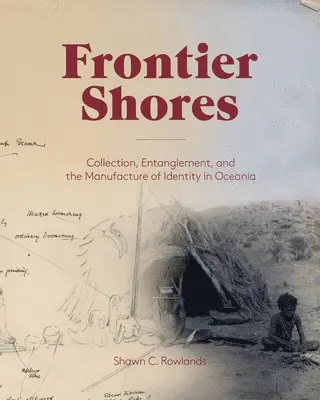
Frontier Shores – Collection, Entanglement, and the Manufacture of Identity in Oceania
Shawn Rowlands
Häftad, 2016
225 kr
The Anthropology of Expeditions – Travel, Visualities, Afterlives
Erin L. Hasinoff, Joshua A. Bell, Joshua Bell, Erin L. Hasinoff, Joshua A. Bell, Erin L Hasinoff, Joshua A Bell
Inbunden, 2015
569 kr