

Gender and Generation in a Yorùbá Town
1 359 kr
Kommande. Bevaka för att få ett mejl när produkten kan beställas.
Beskrivning
A strong historical document on gender, labour and sociality in south-western Nigeria woven together with honest reflections on what anthropology has become in the first decades of the twenty-first century.What does it take to live a good life? Love? Sex? Money? Security? This book offers an anthropological study of a small town in southwestern Nigeria in the early 1990s, a time of crisis marked by the imposition of structural adjustment and the shockwaves of a cancelled election and a return to military rule. Through a mix of historical material, narrative biographies, oral interviews and ethnographic description, the book touches on many dimensions of what it means to be human: how we deal with austerity and precarity, how we navigate intimate and social relations, how we care for children, how we form our identities. Written in the ethnographic present, the book is an account of an ethnographic past, of a time before the Aids epidemic took hold and the colonial period was still within living memory. The book focusses on Yoruba women's relationships - with partners, co-wives, relatives, colleagues and friends - the economic opportunities open to them and the implications of childbearing and childlessness. It also examines changing ideas of manliness and how acute financial and political uncertainty affected men's identities and relationships with women. The introduction and conclusion to the book reflect on re-visiting a study set in a particular time from the vantage point of the present, situating it within the author's own life experiences and present concerns with the violent legacies of empire and decolonising anthropology.
Produktinformation
Utforska kategorier
Mer om författaren
Innehållsförteckning
Hoppa över listan





Mer från samma författare
Del 3
Gender Myths and Feminist Fables
Cornwall, Andrea Cornwall, Elizabeth Harrison, Ann Whitehead
Häftad, 2008
302 kr
Hoppa över listan


Mer från samma serie
Del 3
Del 4
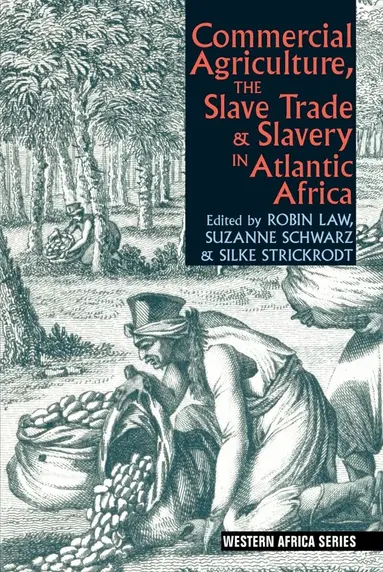
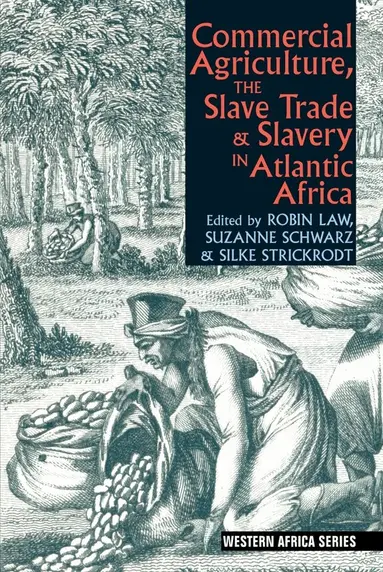
Commercial Agriculture, the Slave Trade & Slavery in Atlantic Africa
Schwarz Suzanne, Strickrodt Silke, Robin Law, Suzanne Schwarz, Silke Strickrodt
Inbunden, 2013
1 291 kr
Del 11
Del 5
Del 6
Del 7
Commercial Agriculture, the Slave Trade and Slavery in Atlantic Africa
Suzanne Schwarz, Silke Strickrodt, Robin Law, Suzanne Schwarz, Silke Strickrodt
Häftad, 2016
372 kr
Del 9
Del 9
Del 8
Del 10
Hoppa över listan



Du kanske också är intresserad av
- -15% på allt
Researching Sex and Sexualities
Charlotte Morris, Paul Boyce, Andrea Cornwall, Hannah Frith, Laura Harvey, Yingying Huang
Inbunden, 2018
1 262 kr
Researching Sex and Sexualities
Charlotte Morris, Paul Boyce, Andrea Cornwall, Hannah Frith, Laura Harvey, Yingying Huang
E-bok
2018361 kr
Masculinities under Neoliberalism
Andrea Cornwall, Frank G. Karioris, Nancy Lindisfarne
E-bok
2016381 kr
Women, Sexuality and the Political Power of Pleasure
Susie Jolly, Andrea Cornwall, Kate Hawkins
E-bok
2013387 kr