Kommande. Bevaka för att få ett mejl när produkten kan beställas.
Beskrivning
Elitecraft delivers the first comprehensive analysis of elitism as ideology-revealing how "the elite" became the most powerful political faction of our time. It distinguishes three forms of anti-elitism-emancipatory, liberal, and reactionary-and traces how they developed, converged, and collided after 2008. Most crucially, it reconstructs an emancipatory anti-elitism capable of breaking through liberal complacency and reactionary resentment-one that can anchor a renewed egalitarian, anti-capitalist politics for the twenty-first century.
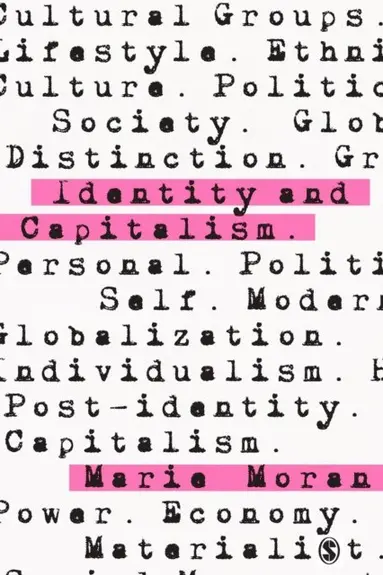
Marie Moran is Associate Professor in Equality Studies at UCD, specialising in critical social theory, ideology and the politics of inequality. She is the author of Identity and Capitalism and the forthcoming Equality Today. Drawing on the Marxist legacy of Raymond Williams, she has developed a cultural materialist approach to identity, elites and cultural politics, writing regularly on the role of political language in shaping struggles for equality. A former Fulbright Scholar, her work is widely published internationally. She lives in Dublin and is active in Left social movements.
Innehållsförteckning
Chapter 1. The Problem of 'Elites' for Left Politics1.1. Introduction: 'Populist Politics reject a world designed by elites'1.2. The curious overlap of left and right anti-elitisms in a time of crisis1.3. Why this is not another book about populism1.4. On Seeing People as 'Elites': The troublesome anatomy of a concept1.5. Towards a Radical Anti-elitism for the Left: Overview of bookChapter 2. Elites as Ideology2.1. Introduction2.2. Extended Keywords Analysis2.2.1. Origins2.2.2. The early social science of elites2.2.3. Fascism and the Idea of Elites2.2.4. Elites and the justification of inequality2.2.5. The emergent pejorative sense2.2.6. 'Elites' out of fashion once more2.2.7. The return of elites2.3. The Differentia Specifica of the concept of an elite2.4. Elites as Ideology2.4.1. The legitimacy of elite power2.4.2. The nature of elite power2.5. ConclusionChapter 3. Mapping the Political Terrain: Varieties of anti-elitism3.1. Introduction3.2. Finding Terra Firma: Left, Right and Mainstream as orientations to equality3.2.1. Cleavages and coordinates: Approaches to defining Left and Right3.2.2. The case for an expansive conception of equality3.2.3. Rethinking the 'centre', political 'extremes' and the role of 'freedom'3.3. The Politics of Privilege3.3.1 A Brief Etymology of Privilege3.3.2 Conservative and Progressive Orientations to Privilege3.3.3 Privilege and Equality: Uneasy bedfellows3.3.4 Challenging Privilege on Left and Right3.4. Varieties of Anti-Elitism: A Framework for analysis3.4.1. Emancipatory anti-elitism and the Emancipatory Mind3.4.2. Reactionary Anti-Elitism and the Reactionary Mind3.4.3. Liberal anti-elitism and the Liberal Mind3.5. ConclusionChapter 4. A Practical History of Anti-Elitisms4.1. Introduction4.2. Challenging privilege in a world of elites: the origins of emancipatory and reactionary anti-elitism4.2.1. The contradictions of the American People's Party4.2.2. A Post-Depression politics of hope4.2.3. A fascist harbinger of reactionary anti-elitisms to come4.3. The issue is Privilege!: Reactionary anti-elitism consolidates4.3.1. A 'privileged' New Left under fire4.3.2. Anti-elitism shifts to the Right: The perfected reactionary anti-elitism of Wallace, Nixon, Reagan, Thatcher4.4. Neoliberal hegemony and Liberal Anti-elitism: and the curious case of anti-elitist elites4.5. ConclusionChapter 5. The Return of Elites: Competing Anti-elitisms in New Populist Times5.1 Introduction: Meltdown! Global Financial Crisis and the Return of Elites5.2 A New (Old) Enemy: The Financial Elite Reappears5.3 Competing 'Populisms' on Left and Right5.3.1 The Emancipatory Impulse Flourishes: The Movements of the Squares5.3.2 Right-wing populisms on the march5.3.3 The Case for a Left Populism5.4 Emancipatory Hopes, Reactionary Gains5.4.1 From Corbyn and Sanders to Brexit and Trump5.4.2 Convergence and Confusion Reigns5.5 Reclaiming the language of the Left5.6 On the value of Left Populism for an Emancipatory anti-elitism5.7 Conclusion: Beyond PopulismChapter 6. Dilemmas of Anti-Elitism for the Left6.1. Introduction: Converging anti-elitisms in a post-populist moment6.2. On Liberal Elites and The Paradox of Liberal Anti-Elitism6.2.1. 'Clean' and 'Dirty' Meritocracy6.2.2. Check your privilege!: Deference politics as liberal anti-elitism6.2.3. Beyond Lawn Placard Politics6.3. On 'Reaction' on the Left and Right6.3.1. Liberals, 'Wokes' and 'symbolic analysts': The strange puzzle of social justice 'elites'6.3.2. From anti-elitism to an attack on social justice7.3.3. Getting to the Heart of Reaction: Defending Social Justice6.4. On the 'White Working Class' and the 'Left Behind'6.4.1. On questions of economic hardship and cultural disdain6.4.2. Towards a Left intervention6.4.3. Defending worker's rights and the welfare state6.5. Conclusion: Towards an Emancipatory Anti-ElitismChapter 7. Rescuing a Concept of Elites for Emancipatory Anti-elitism7.1. Introduction: Overcoming Slippage and Limits; Rethinking the concept of an 'elite'7.2. Rethinking Elite Power7.2.1. Questions of agency and pluralism7.2.2. Harnessing Left Scholarship to reclaim a critical concept of an elite7.3. Aligning elite analysis with class analysis7.3.1. Some reflections on privilege as a bridging concept7.3.2. Back to the ruling class: Aligning elite analysis with Marxist class analysis7.4. Towards a popular emancipatory anti-elitism for the LeftChapter 8. An Emancipatory Anti-Elitism for the Left 8.1. Introduction8.2. Sketching an emancipatory anti-elitism for the twenty-first century8.2.1. Developing a Critique of 'Liberal Elites' without throwing out social justice8.2.2. A Leftist re-articulation of the Left Behind8.2.3. On anti-capitalism and class politics, again8.3. Emancipatory anti-elitism and left politics: some final reflections