
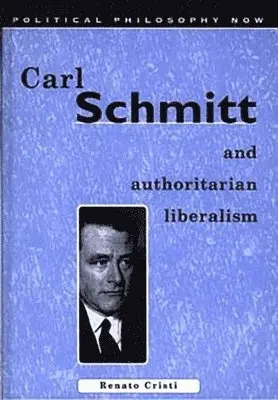
Schmitt, Hobbes, Hegel
Philosophical Roots of Authoritarian Liberalism
1 383 kr
Kommande. Bevaka för att få ett mejl när produkten kan beställas.
Beskrivning
Carl Schmitt occupied a central intellectual and political role in the constitutional crisis of the Weimar Republic, which contributed to the erosion of its democratic institutions. In the republic’s final years, authoritarian liberalism emerged as a powerful ideological challenge to democracy. Alongside German neoliberals such as Wilhelm Röpke, Schmitt argued that a strong state was the necessary precondition for a free economy. To trace the intellectual roots of Schmitt’s political and constitutional thought, this study begins with Thomas Hobbes. For Hobbes, market morality and the web of social relations that depend upon it are viable only insofar as the sovereign guarantees the security necessary for the freedom of contract. The study then examines G. W. F. Hegel, who situates market morality within civil society while likewise maintaining that a strong state, headed by a decisionist monarch, is necessary to preserve contractual freedom. At the same time, Hegel introduces ethical dispositions (Sittlichkeit) as a way to transcend the limitations of market morality.
Produktinformation
Utforska kategorier
Mer om författaren
Recensioner i media
Innehållsförteckning


Hoppa över listan


Du kanske också är intresserad av
- -15% på allt
Del 2
Del 1
- -15% på allt
Del 2
- -27%
Del 1
Bakom Nissedörren : en guide till nissens sagolika värld
Alexia Staaf, Christine Billinger
Inbunden, 2024
159 kr218 kr