- Nyhet
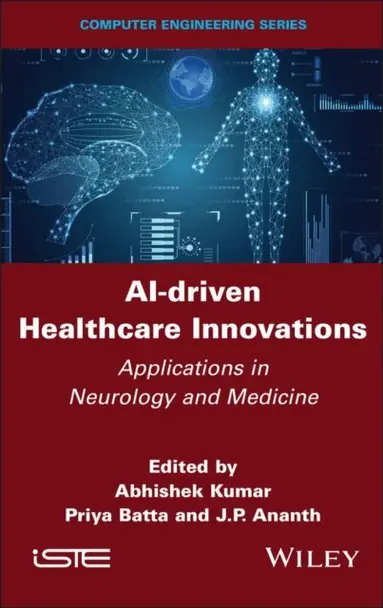
AI-driven Healthcare Innovations 2
Applications in Ophthalmology
1 904 kr
Beställningsvara. Skickas inom 7-10 vardagar. Fri frakt över 249 kr.
Fler format och utgåvor
Beskrivning
Produktinformation
- Utgivningsdatum:2026-11-16
- Mått:156 x 234 x 24 mm
- Vikt:851 g
- Format:Inbunden
- Språk:Engelska
- Serie:ISTE Invoiced
- Antal sidor:432
- Förlag:ISTE Ltd
- ISBN:9781836691532
Utforska kategorier
Mer om författaren
Abhishek Kumar is a senior IEEE member and Professor at Chandigarh University, Mohali, India. His expertise spans AI, renewable energy and image processing.Priya Batta is an Associate Professor at Amity School of Engineering and Technology, Amity University Punjab, Mohali, India. Her research specializes in AI, blockchain and the IoT.J. P. Ananth, Dayananda Sagar University, Bengaluru, Karnataka, India.
Innehållsförteckning
- Preface xxvAbhishek KUMAR, Priya BATTA and J.P. ANANTHIntroduction xxviiAbhishek KUMAR, Priya BATTA and J.P. ANANTHChapter 1. ML-driven Early Detection of Retinal Diseases in Primary Care Settings 1V.H. KARAMBELKAR and Patil Ashish N.1.1. Introduction 11.2. Burden of retinal diseases and importance of early detection 31.3. ML approaches for retinal disease detection 51.4. Applications in primary care settings 81.5. Validation and clinical implementation studies 111.6. Challenges and limitations 131.7. Future directions and emerging trends 151.8. Conclusion 161.9. References 17Chapter 2. Explainable AI in Ophthalmology: Building Trust in Automated Diagnosis 21B.S. JOSHI and Jujar Komal M.2.1. Introduction 212.2. Foundations of explainable AI 232.3. Applications of XAI in ophthalmology 262.4. Challenges in implementing explainable AI in ophthalmology 282.5. Future directions and opportunities 302.6. Conclusion 342.7. References 35Chapter 3. Federated Learning Approaches for Privacy-Preserving Ophthalmic AI Models 39Girish Arun GADRE and Pawar Atul NAMDEV3.1. Introduction 393.2. Fundamentals of FL in healthcare 413.3. Applications of FL in ophthalmology 443.4. Technical challenges in ophthalmic FL 463.5. Privacy and security enhancements in ophthalmic FL 503.6. The future of FL in ophthalmology and clinical applications 523.7. Conclusion 543.8. References 54Chapter 4. AI-Powered Screening for Diabetic Retinopathy in Underserved Populations 57Anjali PATIL and Kadam Shrikant RANGRAO4.1. Introduction 574.2. Overview of AI in medical imaging 594.3. AI-powered DR screening technologies 604.4. Applications in underserved populations 644.5. Challenges and limitations 664.6. Future directions 684.7. Conclusion 694.8. References 70Chapter 5. Deep Learning for Multimodal Integration in Retinal Disease Classification 73Gaurav PARANJPE and Inamdar Sharifnawaj Y.5.1. Introduction 735.2. Retinal diseases: clinical and imaging perspectives 745.3. Imaging modalities in retinal disease classification 765.4. Deep learning in ophthalmology 785.5. Multimodal integration strategies 805.6. Challenges and limitations 845.7. Emerging trends and future directions 855.8. Conclusion 865.9. References 87Chapter 6. Optimizing Ophthalmic Surgery Outcomes Using Predictive ML Algorithms 91D.B. SHIRKE and Patil Zunjar V.6.1. Introduction 926.2. Overview of ML in ophthalmology 936.3. Applications of predictive ML in specific ophthalmic surgeries 966.4. Methodological frameworks of predictive ML models 996.5. Imaging, EHR and cloud-based integration 1006.6. Benefits in clinical practice 1026.7. Challenges and limitations 1046.8. Future directions 1056.9. Conclusion 1076.10. References 107Chapter 7. The Role of Reinforcement Learning in Adaptive Vision Therapy 111Sanvedya KADAM and Shinde Patil Girisha SURESH7.1. Introduction 1117.2. Overview of adaptive vision therapy 1137.3. Fundamentals of RL for healthcare applications 1147.4. RL in adaptive vision therapy: applications and case studies 1167.5. Challenges and future directions 1207.6. Conclusion 1227.7. References 123Chapter 8. Augmenting Human Expertise: AI Decision Support Systems in Ophthalmology Clinics 127Prajakta PATIL and Natu Milind A.8.1. Introduction 1288.2. Evolution of AI decision support in ophthalmology 1298.3. Core AI technologies in ophthalmology decision support systems 1308.4. Clinical applications of AI decision support systems in ophthalmology 1328.5. AI DSS implementation in ophthalmology clinics 1338.6. Ethical, legal and privacy concerns in AI DSS for ophthalmology 1358.7. Challenges and limitations of AI DSS in ophthalmology 1388.8. Future prospects of AI DSS in ophthalmology 1408.9. Conclusion 1428.10. References 142Chapter 9. Transfer Learning Applications for Rare Ocular Disease Detection 145Sonali PATIL and Shinde Rutuja P.9.1. Introduction 1459.2. Fundamentals of transfer learning in medical imaging 1479.3. Transfer learning applications in rare ocular disease detection 1499.4. Challenges and limitations 1539.5. Future directions and clinical translation 1559.6. Conclusion 1589.7. References 158Chapter 10. Real-Time AI Assistance in Slit-Lamp Examination and Diagnosis 163Renuka SARWATE and Deshmukh Manoj JANARDHAN10.1. Introduction 16310.2. Technological foundations of real-time AI in slit-lamp examination 16610.3. Clinical applications of real-time AI in slit-lamp examination 16810.4. Ethical complications and challenges in real-system AI-assisted slit-lamp examination 17210.5. Future prospects and opportunities of real-time AI-assisted slit-lamp examination 17410.6. Conclusion 17710.7. References 178Contents xvChapter 11. Unsupervised Learning Techniques for Discovery of Novel Retinal Biomarkers 181V.H. KARAMBELKAR and Sonake Vanita V.11.1. Introduction 18111.2. Unsupervised learning methodologies for retinal imaging 18311.3. Applications of unsupervised learning in retinal biomarker discovery 18611.4. Challenges and limitations 19011.5. Future directions 19211.6. Conclusion 19411.7. References 195Chapter 12. Developing Robust AI Models Against Bias in Ophthalmic Datasets 199B.S. JOSHI and Naikawadi Swapnil SANJAY12.1. Introduction 19912.2. Sources of bias in ophthalmic datasets 20112.3. Approaches to bias detection and quantification 20412.4. Strategies for mitigating bias in ophthalmic AI models 20612.5. Clinical and ethical implications 20912.6. Future directions 21112.7. Conclusion 21212.8. References 213Chapter 13. Self-Supervised Learning for Retinal Image Feature Extraction in Low-Label Settings 217Girish Arun GADRE and Patil Monika VIRENDRA13.1. Introduction 21813.2. Principles of SSL in medical imaging 21913.3. Retinal image feature extraction by methods of SSL 22113.4. Applications of SSL in retinal image analysis 22513.5. Challenges, limitations and future directions 22713.6. Conclusion 23013.7. References 231Chapter 14. ML-Enhanced OCT Image Segmentation for Glaucoma Progression Monitoring 235Anjali PATIL and Patil Milin D.14.1. Introduction 23514.2. OCT in glaucoma diagnosis and monitoring 23714.3. Principles of ML for medical image segmentation 23914.4. ML-enhanced OCT segmentation: techniques and architectures 24114.5. Applications in glaucoma progression monitoring 24514.6. Challenges and limitations 24714.7. Future directions 24914.8. Conclusion 25114.9. References 251Chapter 15. Predictive Modeling of Myopia Progression in Children Using AI 255Gaurav PARANJPE and Petkar Rajendra VASANTRAO15.1. Introduction 25515.2. Epidemiology and burden of childhood myopia 25715.3. Risk factors in myopia progression 25815.4. Traditional prediction methods and limitations 26115.5. AI in ophthalmology 26215.6. AI techniques for predictive modeling of myopia 26315.7. Applications of AI models in predicting myopia progression 26615.8. Intervention with clinical decision-making and personalized care 26715.9. Challenges and limitations of AI-based prediction 26915.10. Future directions in AI-driven myopia prediction 27015.11. Conclusion 27115.12. References 272Chapter 16. Combining Genomics and Imaging Data in Ophthalmology Using Multimodal AI 275D.B. SHIRKE and Garagate Amruta K.16.1. Introduction to multimodal AI in ophthalmology 27616.2. Genomics in ophthalmology 27716.3. Advances in ophthalmic imaging for AI applications 28016.4. Integration of genomics and imaging data using multimodal AI 28216.5. Challenges, limitations and future directions 28516.6. Conclusion 28816.7. References 288Chapter 17. Benchmarking Ophthalmology AI Models: Challenges in Dataset Standardization 293Sanvedya KADAM and Bardol Shabana M.17.1. Introduction 29317.2. The role of AI in ophthalmology 29517.3. Current practices in dataset development 29717.4. Challenges in dataset standardization 29917.5. Benchmarking ophthalmology AI models 30317.6. Recent initiatives toward standardization 30517.7. Regulatory and ethical considerations 30617.8. Conclusion 30817.9. References 308Chapter 18. NLP for Clinical Note Analysis in Ophthalmic Practice 313Prajakta PATIL and Kadam Shweta A.18.1. Introduction 31318.2. Evolution of NLP in healthcare and relevance to ophthalmology 31518.3. Challenges of clinical note analysis in ophthalmology 31718.4. Applications of NLP in ophthalmology 32018.5. Emerging trends in ophthalmic NLP 32318.6. Ethical, privacy and practical considerations 32518.7. Future directions 32618.8. Conclusion 32818.9. References 329Chapter 19. Using ML to Analyze Eye Movement Patterns in Neurological and Psychiatric Diagnosis 333Sonali PATIL and Kale Amruta B.19.1. Introduction 333Contents xxiii19.2. The window of mental activity of the brain is the eye movement 33519.3. Eye-tracking technologies and data acquisition 33819.4. Machine learning for eye movement analysis 34019.5. Applications in neurological disorders 34319.6. Applications in psychiatric disorders 34419.7. Challenges and limitations 34619.8. Future directions 34719.9. Conclusion 34819.10. References 349Chapter 20. AI for Personalized Drug Response Prediction in Age-related Macular Degeneration 353Renuka SARWATE and Patil Ashish N.20.1. Introduction 35420.2. AI in ophthalmology: a brief overview 35520.3. Pathophysiology of AMD and drug response variability 35620.4. Current therapeutic landscape in AMD 35820.5. Personalized medicine in ophthalmology 35920.6. AI approaches for drug response prediction in AMD 36020.7. Challenges in data, bias and model generalizability 36420.8. The actual purpose of AI 36520.9. Future directions 36620.10. Conclusion 36720.11. References 368List of Authors 371Index 375
Mer från samma författare
Artificial Intelligence for Renewable Energy systems
Ashutosh Kumar Dubey, Sushil Narang, Abhishek Kumar, Vicente Garc�a-D�az, Arun Lal Srivastav
Häftad, 2022
2 698 kr
Artificial Intelligence for Renewable Energy systems
Arun Lal Srivastav, Vicente Garcia-Diaz, Abhishek Kumar, Sushil Narang, Ashutosh Kumar Dubey
3 649 kr
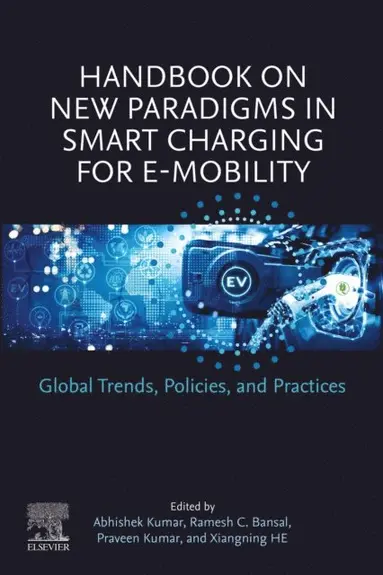
Handbook on New Paradigms in Smart Charging for E-Mobility
Kumar,Abhishe, Abhishek Kumar, Ramesh C. Bansal, Praveen Kumar, Xiangning He
Häftad, 2025
1 820 kr
Handbook on New Paradigms in Smart Charging for E-Mobility
Xiangning He, Praveen Kumar, Ramesh C. Bansal, Abhishek Kumar
2 302 kr
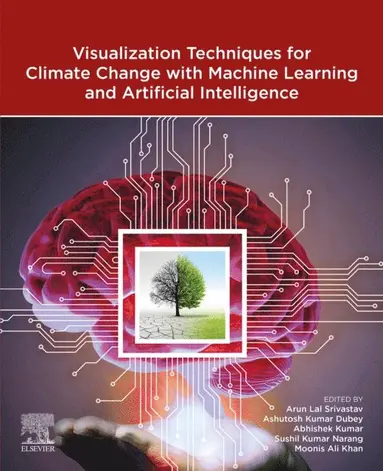
Visualization Techniques for Climate Change with Machine Learning and Artificial Intelligence
Ashutosh Kumar Dubey, Abhishek Kumar, Sushil Kumar Narang, Moonis Ali Khan, Arun Lal Srivastav
Häftad, 2022
1 626 kr
Visualization Techniques for Climate Change with Machine Learning and Artificial Intelligence
Arun Lal Srivastav, Moonis Ali Khan, Sushil Kumar Narang, Abhishek Kumar, Ashutosh Kumar Dubey
2 278 kr
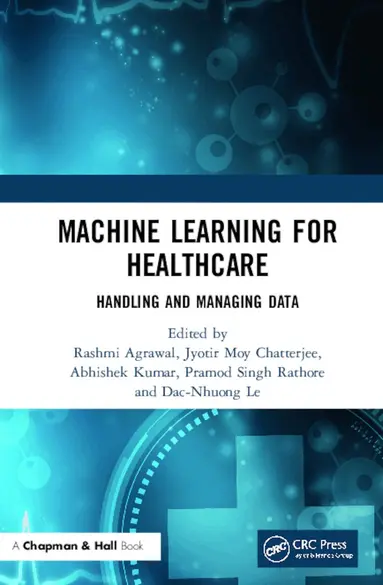
Machine Learning for Healthcare
Rashmi Agrawal, Jyotir Moy Chatterjee, Abhishek Kumar, Pramod Singh Rathore, Dac-Nhuong Le
Inbunden, 2020
1 851 kr
Machine Learning for Healthcare
Rashmi Agrawal, Jyotir Moy Chatterjee, Abhishek Kumar, Pramod Singh Rathore, Dac-Nhuong Le
Häftad, 2025
730 kr
Machine Learning Approaches and Applications in Applied Intelligence for Healthcare Data Analytics
Abhishek Kumar, Ashutosh Kumar Dubey, Sreenatha G. Anavatti, Pramod Singh Rathore
Inbunden, 2022
2 620 kr
Mer från samma serie
Tourist Destinations According to Stakeholder Strategies
Pierre Louart, Jérôme Piriou, Philippe Violier
Inbunden, 2024
1 847 kr
Nanotechnologies and Nanomaterials Applied to Chemical Sensors and Biosensors
Pierre Camille Lacaze, Benoît Piro, Jean-Christophe Lacroix
Inbunden, 2024
1 793 kr
Smart Grids and Buildings for Energy and Societal Transition
Benoît Robyns, Laure Dobigny, Dhaker Abbes, Benoit Durillon, Hervé Barry, Christophe Saudemont
Inbunden, 2024
1 847 kr
Optimization in the Agri-Food Supply Chain
Mayssa Koubaa, Mayssa Koubaa, Mohamed Haykal Ammar, Diala Dhouib, Sirine Mnejja
Inbunden, 2024
1 793 kr
- Nyhet
The Effect of the Environment on the Fatigue Behavior of Textile Organic Matrix Composite Materials for Aircraft Applications
Federico Foti, Yannick Pannier, Marco Gigliotti
Inbunden, 2026
1 849 kr
Advanced Studies in the Mathematical Theory of Scattering, Volume 3
Jean-Michel L. Bernard
Inbunden, 2025
1 785 kr
Du kanske också är intresserad av
- -15% på allt
- Nyhet
Nature-Inspired Intelligence for Complex Problems
T. Ananth Kumar, S. Oswalt Manoj, J. P. Ananth, Priya Batta, Abhishek Kumar
2 767 kr
Nature-Inspired Intelligence for Complex Problems
T. Ananth Kumar, S. Oswalt Manoj, J. P. Ananth, Priya Batta, Abhishek Kumar
2 726 kr
Nature-Inspired Intelligence for Complex Problems
Abhishek Kumar, Priya Batta, J. P. Ananth, S. Oswalt Manoj, T. Ananth Kumar
Inbunden, 2026
2 431 kr
Physiotherapy Using Artificial Intelligence
S. Oswalt Manoj, J. P. Ananth, Sachin Ahuja, T. Ananth Kumar, Abhishek Kumar
3 267 kr
Physiotherapy Using Artificial Intelligence
Abhishek Kumar, T. Ananth Kumar, Sachin Ahuja, J. P. Ananth, S. Oswalt Manoj
Inbunden, 2026
2 741 kr