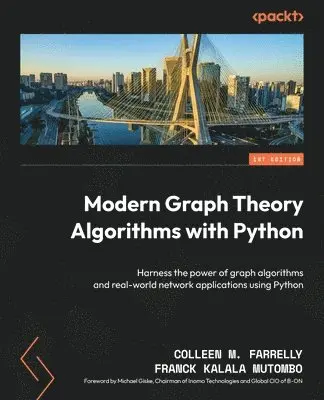
Modern Graph Theory Algorithms with Python
Colleen M. Farrelly, Franck Kalala Mutombo
Häftad, 2024
619 kr
AvFranck Kalala Mutombo,Colleen M. Farrelly
422 kr
Läs direkt i Bokus Reader – eller ladda ned till din enhet
Solve challenging and computationally intensive analytics problems by leveraging network science and graph algorithms
Key Features
Book Description
We are living in the age of big data, and scalable solutions are a necessity. Network science leverages the power of graph theory and flexible data structures to analyze big data at scale.This book guides you through the basics of network science, showing you how to wrangle different types of data (such as spatial and time series data) into network structures. You’ll be introduced to core tools from network science to analyze real-world case studies in Python. As you progress, you’ll find out how to predict fake news spread, track pricing patterns in local markets, forecast stock market crashes, and stop an epidemic spread. Later, you’ll learn about advanced techniques in network science, such as creating and querying graph databases, classifying datasets with graph neural networks (GNNs), and mining educational pathways for insights into student success. Case studies in the book will provide you with end-to-end examples of implementing what you learn in each chapter.By the end of this book, you’ll be well-equipped to wrangle your own datasets into network science problems and scale solutions with Python.What you will learn
Who this book is for
If you’re a researcher or industry professional analyzing data and are curious about network science approaches to data, this book is for you. To get the most out of the book, basic knowledge of Python, including pandas and NumPy, as well as some experience working with datasets is required. This book is also ideal for anyone interested in network science and learning how graph algorithms are used to solve science and engineering problems. R programmers may also find this book helpful as many algorithms also have R implementations.
Colleen M. Farrelly, Franck Kalala Mutombo
Häftad, 2024
619 kr

Colleen M. Farrelly, Franck Kalala Mutombo
Häftad, 2024
619 kr




Flera Författare
Häftad, 2025
129 kr269 kr