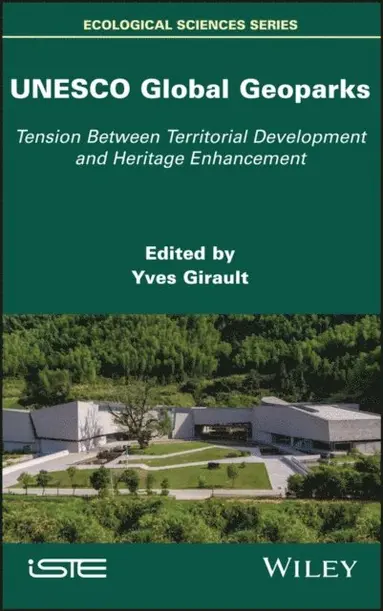
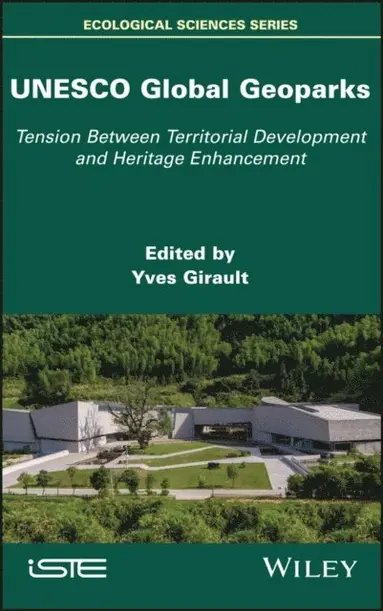
UNESCO Global Geoparks
Tension Between Territorial Development and Heritage Enhancement
Inbunden, Engelska, 2019
1 935 kr
Beställningsvara. Skickas inom 7-10 vardagar. Fri frakt över 249 kr.
Fler format och utgåvor
Beskrivning
Recently, UNESCO has gradually started to recognize world geoparks ? territorial spaces with a geological heritage of international importance. This classification presents real challenges. Development strategies must align with the recommendations advocated by various non-governmental organizations. It is also necessary to involve the local actors, both in the preparation of application forms and in the implementation of a management plan that is suitable for sustainable global development. Managing the tensions and asymmetries that exist between the different groups of actors (politicians, managers, scientists, representatives of local populations) constitutes another major issue. It is in this context and through various case studies that this book questions the aims of the UNESCO global geoparks ? in terms of heritage inventory and conservation, the participation of local populations, the local development of a territory and its enhancement through heritage interpretation.
Produktinformation
- Utgivningsdatum:2019-10-25
- Mått:163 x 241 x 33 mm
- Vikt:907 g
- Format:Inbunden
- Språk:Engelska
- Antal sidor:288
- Förlag:ISTE Ltd and John Wiley & Sons Inc
- ISBN:9781786304858
Utforska kategorier
Mer om författaren
Yves Girault is Professor at the French National Museum of Natural History, and co-editor of the International Journal of Geoheritage and Parks. From 2015 to 2018, he led the European research program H2020 RISE on Geoparks. His most recent work is on the geopolitics of museums.
Innehållsförteckning
- Introduction xiYves GIRAULTPart 1. Objectives, Issues and Tensions Related to the Patrimonialization of Nature 1Chapter 1. Natural Heritage, Participatory Democracy and UNESCO: a Structure of Disillusionment? 3Igor BABOU1.1. Introduction 31.2. The participation in question 41.3. A brief history of participatory mechanisms and environmental democracy 41.4. Critical assessments of participatory mechanisms and environmental democracy 71.5. Points of tension within protected natural areas 111.5.1. The significant dimension of the devices 131.5.2. The proliferation and professionalization of intermediaries 141.5.3. Standardization of participation models 151.6. The example of the Lanzarote geopark: top-down approach and brand logic 151.7. Conclusion: the democratic consequences of the contradictions of participation 171.8. References 19Chapter 2. The Ambivalences of the Co-construction of a Mental Territory: a Case Study on Spanish UGGs 23Catalina GONZALEZ TEJADA and Yves GIRAULT2.1. Introduction 232.2. Problematic issues 242.3. Methodology and construction of the corpus 272.4. The construction of the story of the mental territory of the Spanish geoparks 282.4.1. First initiatives to protect geological aspects in Spain 292.4.2. Various definitions of geological heritage in Spain 312.4.3. Cultural enhancement of geological heritage: a disciplinary approach between protection and dissemination of geology 352.5. Conclusion 472.6. References 48Chapter 3. The History of the Earth as a New Form of Territorial Marketing: the Case of the Geopark of the Tremp-Montsec Basin (Spain) 53Fabien VAN GEERT3.1. Introduction 533.2. Economic development and the use of heritage in the Catalan Pyrenees 553.3. The protection of Catalan geological heritage and its valorization through geoparks 573.4. The Tremp-Montsec Basin Geopark Project and the creation of a territory brand 633.5. The declaration of the Tremp Geopark and the definition of its future challenges 713.6. References 74Chapter 4. Patrimonialization and the Geopark Label: for Which Development Model in the South? The Case of Morocco 77Ouidad TEBAA and Saïd BOUJROUF4.1. Introduction 774.2. Geopark in Morocco: new label, new territory and new heritage process 784.2.1. The relationship to heritage and patrimonialization in Morocco: between identity, museumization and commodification 784.2.2. What is the debate on the social acceptability and local utility of geoparks? 794.3. Challenges in the territorial construction of geoparks and their heritage development 824.3.1. Challenges in the fight against poverty and/or heritage preservation 834.3.2. Challenges of intersectoral articulation and integration 844.3.3. Governance challenges for geoparks projects: involving residents 864.4. Questions and reservations about the contribution of a UNESCO model of geoparks for development in the South 884.5. References 90Chapter 5. The Evolution of the Economics of Culture and its Influence on the Development of Geoparks 91François MAIRESSE5.1. Introduction 915.2. Museums and heritage sites in the market economy 925.3. The economic discourse on heritage 955.4. Economic evaluation 975.5. From the cultural economy to the creative economy 995.6. The economic challenges of geopark development 1025.7. References 104Part 2. Heritage Inventory and Conservation 109Chapter 6. Methodological Proposal for the Valorization of the Geodiversity of Rural Areas Comparable with the Zat Valley 111Joan POCH, Antonio TEIXELL, David GÓMEZ-GRAS, Francisco José MARTÍNEZ, Esteve CARDELLACH and José Luis BRIANSÓ6.1. Introduction 1116.2. Geological context of the study area 1116.3. Objectives 1166.4. Methodology 1166.5. SWOT analysis and diagnosis 1166.6. Results: methodological proposal 1186.6.1. Geoethics framework 1186.6.2. Assessment of the geodiversity 1196.6.3. Selection of sites of geological interest for scientific, didactic or tourist use 1236.6.4. Geosites of scientific interest: fostering scientific research 1266.6.5. Geosites of didactic interest: fostering the teaching of geology 1266.6.6. Geosites of geotourism interest: fostering sustainable tourism 1276.7. Discussion and conclusion 1286.8. References 129Chapter 7. Interpreting Landscapes from a Socioecological Perspective: a Methodological Approach from the Zat Valley (Morocco) 133Martí BOADA JUNCÀ, Roser MANEJA ZARAGOZA, Jaume MARLÈS MAGRE, Josep Antoni PUJANTELL ALBÓS, Sònia SÀNCHEZ-MATEO and Carles BARRIOCANAL LOZANO7.1. Introduction 1337.2. Methodology 1367.2.1. Chromatic assessment and identification of landscape units 1367.2.2. Socioecological transects 1367.2.3. Study area: Zat Valley (Atlas Mountains, Morocco) 1387.3. Results and discussion 1397.3.1. Chromatic assessment 1397.4. Conclusions 1427.5. Acknowledgments 1437.6. References 143Chapter 8. The Feeling of Archaeology and the Sense of History in the Mixteca Alta Geopark 147Francisco VALDEZ8.1. Introduction 1478.2. The park 1498.3. The people 1538.4. Archaeology: the marks of history 1588.4.1. A communal feast 1628.5. Conclusion 1658.6. References 166Chapter 9. One of the First Rock Art Sites Discovered and Now Protected in Morocco: the Case of Azrou Iklane (Assa Region, Morocco) 169Gwenola GRAFF, Maxence BAILLY, Abdelhadi EWAGUE and Martin LOYER9.1. Introduction: presentation of the site and scientific interest 1699.2. Contemporary situation of the site 1719.3. History of searches on the site 1729.4. Work of the French team and interest from local authorities 1729.5. Rock art, a source of regional enhancement, and the dynamics of the integration of rock art into Moroccan heritage 1749.6. The World Heritage nomination process for the Tighmert Oasis and its surroundings 1769.7. Contribution of recent work to the preservation of remote and fragile archaeological sites 1779.8. References 178Part 3. Geotourism and Education 181Chapter 10. Visualizing the Heritage of the Zat Valley Through a Virtual Museum 183Élisabeth HABERT and Ali AOUDA10.1. Introduction 18310.2. From GIS to the virtual museum 18410.2.1. Constructing a coherent and readable approach to the territory 18410.2.2. The virtual museum: a virtual reality or an imaginary space? 18510.2.3. Which model for the Zat Valley? 18610.3. The Virtual Museum of the Zat Valley: an innovation at the service of local heritage 18710.3.1. A virtual museum: why? 18710.3.2. The case of geoparks 18810.3.3. A virtual museum: for whom? 18910.4. The Zat Valley Geopark Project: a story of a territory through an application 19010.4.1. Overview of available tools 19110.4.2. Methodology and tools 19210.5. Conclusion 19510.6. References 196Chapter 11. Web Communication of French Geoparks in Education: the Expression of Their Legitimacy 199Aurélie ZWANG11.1. Introduction: the value of a study of communication in education in French geoparks 19911.2. A semiological and content analysis of communication in terms of website education for four French geoparks 20011.3. Legitimizing by making a site: the enunciation of the educational territory 20311.4. Legitimizing by making sense: the statement of ESD in schools 20711.5. Conclusion 21011.6. References 21111.7. Documents cited from the corpus 212Chapter 12. The Architectural Mediation of Geoparks Museums in China: Between Tensions and Hybridization of Cultures 215Yi DU and Yves GIRAULT12.1. Introduction 21512.2. Architects’ perspectives on the integration of museums in the territory 21712.2.1. Analysis of architectural mediation 21812.3. Geopark museums in China 21912.4. Presentation of the three geoparks selected 22112.4.1. The Taishan UGG 22212.4.2. The Fangshan UGG 22712.4.3. The Dali Mt Cangshan UGG 23112.5. Conclusion 23512.6. References 235List of Authors 237Index 241
Hoppa över listan


Mer från samma författare
Ambivalences patrimoniales au Sud
Yves Girault, Dominique Juhe-Beaulaton, Dominique Guillaud, Marie-Christine Cormier-Salem
E-bok
2016416 kr
Hoppa över listan




Du kanske också är intresserad av
Ambivalences patrimoniales au Sud
Yves Girault, Dominique Juhe-Beaulaton, Dominique Guillaud, Marie-Christine Cormier-Salem
E-bok
2016416 kr
- Signerad!