- -15% på allt
European Judicial Systems as a Challenge for Democracy
AvUniversity of Bialystok - School of Law,Elzbieta Kuzelewska
Del 3 i serien European Integration and Democracy Series
868 kr
Beställningsvara. Skickas inom 7-10 vardagar. Fri frakt över 249 kr.
Beskrivning
Produktinformation
- Utgivningsdatum:2015-06-18
- Mått:160 x 240 x 18 mm
- Vikt:450 g
- Format:Häftad
- Språk:Engelska
- Serie:European Integration and Democracy Series
- Antal sidor:244
- Förlag:Intersentia Ltd
- ISBN:9781780683164
Utforska kategorier
Mer om författaren
Elzbieta Kuzelewska is Associate Professor at the Faculty of Law, University of Bialystok, Poland, where since October 2019 she holds a position of Vice-Dean for Science. She is a Chair of the Centre for Direct Democracy Studies (CDDS) at the Faculty of Law, University of Bialystok, she holds a master's degree in law and a PhD degree and a habilitation in political science. Her research fields include constitutional law, direct democracy, European integration and contemporary political systems. She has been teaching in several European universities within the Erasmus+ programme as well as other bilateral agreements, and she has held visiting positions at Michigan State University School of Law (September 2018), among others. She is Co-Editor-in-Chief of European Integration and Democracy Series, published by Intersentia Cambridge. Dr Dariusz (Darek) Kloza is a senior researcher at the Human Rights Centre (HRC) at Ghent University. His expertise concentrates on international fundamental rights law, especially the fundamental rights to privacy and personal data protection.He earned a PhD in Law from the Vrije Universiteit Brussel (VUB; 2019) with a thesis on the concept of impact assessment in European privacy and personal data protection law. He holds an LL.M. in Law and Technology (2010) from the Tilburg Institute for Law, Technology, and Society (TILT) at Tilburg University (with distinction) and a master's degree in law from the University of Bialystok (2008), including a student exchange at the University of Copenhagen (2007-08).Previously, he was a researcher at the Research Group on Law, Science, Technology and Society (LSTS; 2011-21) at the VUB, where he co-founded the Brussels Laboratory for Data Protection & Privacy Impact Assessments (d.pia.lab). He held in parallel a part-time research position at Peace Research Institute Oslo (PRIO; 2015-17) and visiting fellowships, among others, at Bond University (Australia; 2016).He also freelances at the Centre for Direct Democracy Studies (CDDS) at the University of Bialystok (Poland), where he is co-editor of the 'European Integration and Democracy' Series (Intersentia). Izabela Krasnicka - lecturer at the Faculty of Law, University of Bialystok, Poland and a member of the Centre for Direct Democracy Studies. She holds a PhD degree in law and her main research areas include public international law (air law), constitutional legal system of the United States in comparative perspective with the European Union as well as legal education. Franciszek Strzyczkowski - lecturer at the Faculty of Law and Administration, University of Ldz, Department of Theory and Philosophy of Law, he holds both PhD and LL.M. degrees in law. His main research interest focuses on constitutionalization theories of the European integration, international public law and comparative constitutional law.
Innehållsförteckning
- Foreword by Prof. Maciej Szpunar Preface List of Abbreviations PART ONE. THE COURT OF JUSTICE OF THE EUROPEAN UNION1. Democracy in Constitutional Politics of European Courts: An Overview of Selected IssuesBogusia Puchalska 1. Introduction 2. The ECJ and national courts: power struggle or cooperation? 2.1. European Court of Justice: its own master? 2.2. The main tenets of ECJ's constitutional politics 2.3. The enduring attraction of the concept of sovereignty in relationsbetween the ECJ and NCs 2.4. Beyond 'sovereignty': power struggle, or power-posturing? 3. The supremacy of EU economic policy 3.1. What is the model of economic policy entrenched in the Treaties? 3.2. The ECJ and the EU's 'democratic deficit' 3.3. Entrenchment of the EU economic policy, TTIP, and the role of the courts 3.3.1. Democratic deficit of economic policy and the courts a. Investor-state dispute settlement 4. Conclusions Bibliography 2. The Institutional Balance as CJEU's Contribution to Democracy in the Union: Selected IssuesTomasz Dubowski 1. Introduction 2. The CJEU and the traces of institutional balance in the Treaties 3. Institutional balance as a general principle of EU (EC) law? The Court's role 4. Institutional balance and democracy in the EU - visible links 5. Conclusion Bibliography 3. From Judicial Dialogue Towards Constitutional Spill-Over? The Economic Analysis of Preliminary Reference Procedure and the Application of the EU Charter of Fundamental RightsMariusz J. Golecki 1. Introduction 2. Constitutional courts and the preliminary reference procedure: judicial dialogue and judicial spill-over 3. Towards an economic analysis of breach of the EU Charter of Fundamental Rights by the national constitutional court 4. Tentative conclusion Bibliography 4. Towards the Democratization of the EU? Strengthening prerogatives of the European Parliament in the case law of the Court of Justice of the European UnionAgnieszka Piekutowska 1. Introduction 2. The defence of the prerogatives of the European Parliament before the CJEU. Pre-Lisbon case-law . 3. Post-Lisbon judgments of the CJEU on the EP's prerogatives 4. Conclusion Bibliography 5. Democratic Values in the Court of Justice Adjudication on the Private Enforcement of the European Union Competition LawFranciszek Strzyczkowski 1. Introduction 2. The influence of the American experience on private enforcement of the European antitrust law 3. The importance of the reform of the EU competition law enforcement 3.1. Towards fostering private damages actions - proposals of the European Commission 4. The position of the European Courts 5. Locus standi to claim damages under European Union competition law 6. Concluding remarks Bibliography 6. Judicial Control of Monetary and Fiscal Decisions in theEuropean UnionFilip Krepelka 1. Introduction 2. Traditional and emerging roles of judiciary 3. Rules and institutions for monetary and fiscal policy 4. A single currency for the integration in the European Union 5. Original legal framework for the euro 6. Onset of the debt crisis and its causes 7. Alleviation of the crisis and prevention of its escalation8. Political consequences of the crisis 9. Legal aspects of remedies and reinterpretation of rules 10. Judicial involvement in the crisis 11. Conclusions Bibliography 7. How CJEU's "Privacy Spring" Construed the Human Rights Shield in the Digital AgeGabriela Zanfir 1. Introduction 2. The relationship between individuals and the state in the digital world: Digital Rights Ireland 2.1. Preliminary observation: there is a wide societal interest in protecting human rights against the bulk collection and retention of metadata 2.2. Bulk retention of metadata touches on the freedom of expression, not only on privacy 2.3. Clarification on the differences in content between Articles 7 and 8 of the Charter 2.4. Requirements for data retention legislation to comply with fundamental rights 3. The relationship between individuals and private bodies in the digitalworld: Google v. Spain 3.1. Internet search engines are data controllers and their activity involves processing of personal data 3.2. "Global" territorial scope of Directive 95/46/EC3.3. The right to erasure applies when the processing does not comply with the provisions of Directive 95/46/EC 3.4. Criteria for the balance of rights 4. Conclusion Bibliography 8. The Supremacy of the EU Law as Interpreted by the Polish Constitutional TribunalElzbieta Kuzelewska and Dariusz Kuzelewski 1. Introduction 2. Specificity of the constitutional review in Poland 3. The primacy of the EU law over national law 4. The principle of supremacy in the light of the Polish Constitutional Tribunal's judicature 5. Conclusions Bibliography 9. Reception of EU Law in Polish Courts - A Case of "Teddy Bear" LawIzabela Krasnicka 1. Introduction 2. The principle of supremacy, the principle of direct effect and the principle of indirect effect of EU law 3. "Working time" under the Polish law and EU law 4. Czeslaw Mis' arguments in the light of the ECJ case law 5. Arguments of the Polish courts 6. The final decision and its consequences 7. Closing remarks Bibliography 10. Enforcing Europe's Foundational Values in Central and Eastern Europe: A Case in PointTine Carmeliet and Georgia Christina Kosmidou1. Introduction 2. Shortcomings of the EU's institutional framework 2.1. Article 7 TEU 2.1.1. Procedural obstacles 2.1.2. Substantive obstacles 2.1.3. Conclusion 2.2. Legal creativity to protect the European foundational values 2.2.1. Infringement actions by the European Commission 2.2.2. Social pressure and issue linkage 3. Policy recommendations 3.1. In search for a definition of liberal democracy 3.2. A stronger role for the CJEU 4. Concluding observations Bibliography PART TWO. THE EUROPEAN COURT OF HUMAN RIGHTS11. Protocol 16 to the ECHR: A Convenient Tool for Judicial Dialogue and Better Domestic Implementation of the Convention?Wladyslaw Jozwicki 1. Introduction 2. Protocol 16 - background 3. The new advisory opinion mechanism - basic characteristics3. Protocol 16 and the chances it opens 3.1. A step towards enhancing domestic implementation of the ECHR 3.2. A step towards more harmonious and up-to-date interpretation of the Convention 4. Protocol 16 and its drawbacks 4.1. ECtHR - victim of its success revisited? 4.2. The optional and nonbinding character of the AOs and some practical concerns 4.3. Protocol 16 and the EU 5. Conclusion Bibliography 12. The EU's Parliamentary Representation in the Light of the StrasbourgCourt's Sejdic and Zornic Standards: Is there Tendency for a New Parliamentary Order in the EU?Fisnik Korenica and Dren Doli 1. Introduction 2. EU's constitutional architecture with regard to parliamentary representation 3. A note on the concept of parliamentary representation in the light of Sejdic and Zornic: European Parliament of the EU people or European Parliament of the EU Member States peoples 4. Thresholds on EU Parliament and 'regressive proportionality' model of electoral system: is there an objective system of electoral criteria? 5. Concluding remarks and a general forthcoming outlook Bibliography 13. The European Concept of a Fair Trial and the Legal Admissibility of Assessors in the Polish Judicial SystemKarol Pachnik and Jakub Krajewski 1. Introduction 2. The position of an assessor in Polish common courts 3. Standards of a fair trial 4. Amending the organisation of courts 5. Regulations on assessors in Polish administrative courts - possible solutions 6. Conclusion Bibliography
Du kanske också är intresserad av
Disinformation and Digital Media as a Challenge for Democracy, Volume 6
Georgios Terzis, Dariusz Kloza, Elzbieta Kuzelewska, Daniel Trottier
Häftad, 2020
1 348 kr
Irregular Migration as a Challenge for Democracy
Elzbieta Kuzelewska, Amy Weatherburn, Dariusz Kloza, Elzbieta Kuzelewska, Amy Weatherburn, Dariusz Kloza
Häftad, 2018
1 464 kr
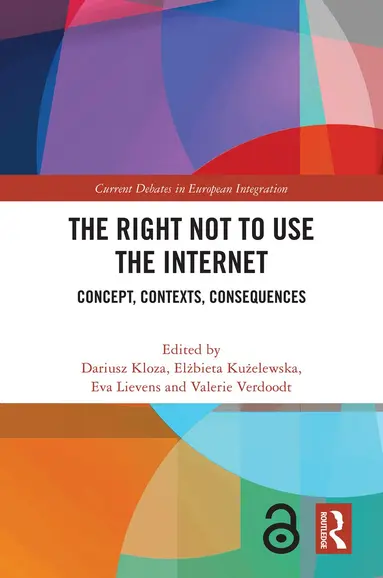
The Right Not to Use the Internet
Dariusz Kloza, Elżbieta Kużelewska, Eva Lievens, Valerie Verdoodt
Inbunden, 2025
2 552 kr
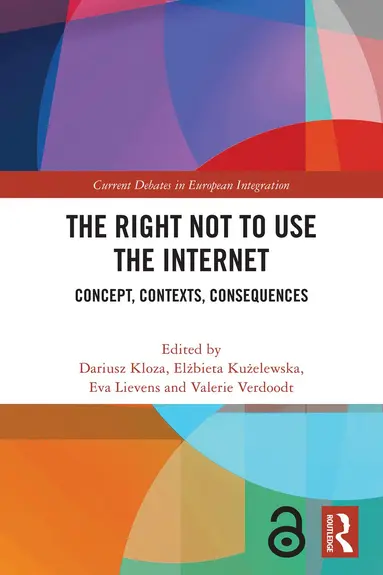
The Right Not to Use the Internet
Dariusz Kloza, Elżbieta Kużelewska, Eva Lievens, Valerie Verdoodt
Häftad, 2026
660 kr
Trans-Atlantic Data Privacy Relations as a Challenge for Democracy
Dariusz Kloza, Dan Svantesson
Häftad, 2017
1 711 kr

Smart Grid Security
Sanjay Goel, Yuan Hong, Vagelis Papakonstantinou, Dariusz Kloza
Häftad, 2015
513 kr