

Millets Matter
Strengthening Food and Nutritional Security for Sustainable Social Development
AvBal Krishna,Priyanka Upadhyay
Inbunden, Engelska, 2027
2 470 kr
Kommande. Bevaka för att få ett mejl när produkten kan beställas.
Beskrivning
Millets have emerged as crops of global significance, providing resilience in agriculture and enhancing food security. Millets are not only known for their adaptability to harsh environments but also for their minimal input requirements, making them ideal for cultivation in semi-arid and drought-prone regions and positioning them as critical assets for sustainable development. This new book, Millets Matter: Strengthening Food and Nutritional Security for Sustainable Social Development, offers a comprehensive exploration of the diverse multifaceted role of millets in global agriculture and sustainable development. It provides an in-depth exploration of their genetic diversity, breeding advancements, agronomic practices, nutritional security, and economic resilience.The volume first delves into the global significance of millets in agriculture, shedding light on their unique ability to thrive in marginal environments where other staple crops fail. The historical and contemporary relevance of these grains, emphasizing their resilience to climate variability and their pivotal role in ensuring food security for millions, is covered, as are recent biotechnological breakthroughs, such as marker-assisted selection and genomic editing, showcasing their potential to enhance crop performance, nutritional quality, and stress resilience. The book also looks at the breeding of minor millets for quality traits, focusing on their superior nutritional profiles, including high fiber, protein, and micronutrient content, which play a pivotal role in combating malnutrition and promoting health.The transformative potential of millet-based cropping systems, particularly in resource-constrained regions, is highlighted, demonstrating how millet integration can enhance farm profitability, improve soil health, and optimize water usage, thus contributing to sustainable agricultural intensification. Also described are innovative crop management strategies, including precision agriculture, intercropping, and conservation tillage, tailored to maximize millet productivity. Agronomic practices for millet cultivation, including innovative crop management techniques and organic farming methods, are detailed, demonstrating how millets can be seamlessly incorporated into diverse sustainable agricultural systems. The role of millets as both human food and animal forage is emphasized, highlighting their versatility and importance in sustainable feed production.Also covered is the nutritional superiority of millets and their potential to address the dual burdens of malnutrition and noncommunicable diseases. The book underscores the role of millets in preventing chronic diseases such as diabetes, cardiovascular disorders, and obesity. It also showcases the technological advancements in processing that have expanded the culinary applications of millets, enabling the production of diverse value-added products.The evolving dynamics of the global millet market are analyzed, identifying both the challenges and opportunities in promoting millets as mainstream crops, with a particular focus on value chain development and market access. Finally, the book addresses the critical role of policies and programs in promoting millet cultivation and utilization, emphasizing the need for supportive government initiatives, public awareness campaigns, and international collaborations to revitalize millet farming and ensure its integration into global agricultural systems.Through a comprehensive examination of these parts, Millets Matter: Strengthening Food and Nutritional Security for Sustainable Social Development offers invaluable insights for researchers, policymakers, agricultural practitioners, and stakeholders committed to fostering a sustainable, resilient, and nutritionally secure future.
Produktinformation
Utforska kategorier
Mer om författaren
Innehållsförteckning
Hoppa över listan
Mer från samma författare
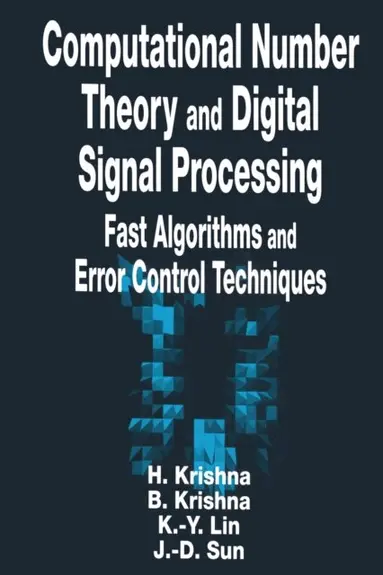
Computational Number Theory and Digital Signal Processing
Jenn-Dong Sun, Kuo-Yu Lin, Bal Krishna, Hari Krishna
E-bok
20261 052 kr
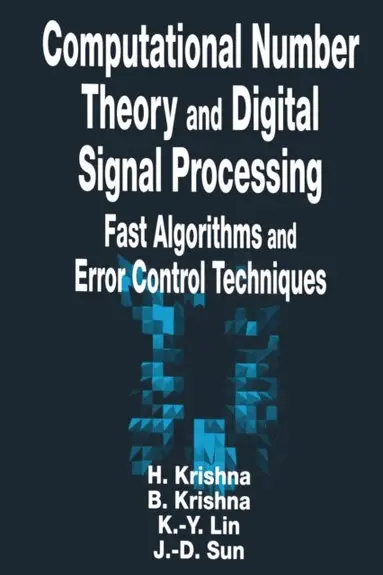
Computational Number Theory and Digital Signal Processing
Jenn-Dong Sun, Kuo-Yu Lin, Bal Krishna, Hari Krishna
E-bok
20261 052 kr
Hoppa över listan


Du kanske också är intresserad av
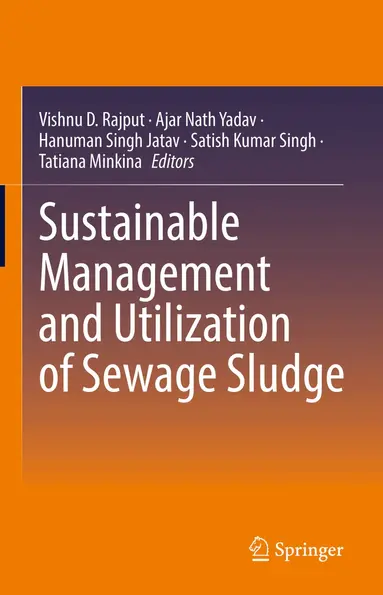
Sustainable Management and Utilization of Sewage Sludge
Vishnu D. Rajput, Ajar Nath Yadav, Hanuman Singh Jatav, Satish Kumar Singh, Tatiana Minkina
Inbunden, 2021
1 972 kr
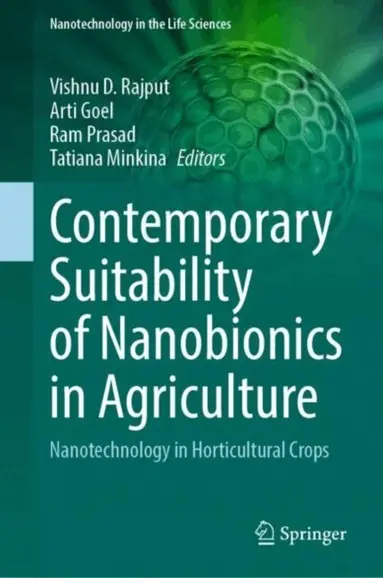
Contemporary Suitability of Nanobionics in Agriculture
Tatiana Minkina, Ram Prasad, Arti Goel, Vishnu D. Rajput
E-bok
20252 543 kr
Nano-Omics for Sustainable Agriculture and Food Security
Vishnu D. Rajput, Abhishek Singh, Karen Ghazaryan, Tatiana Minkina
Inbunden, 2028
2 641 kr
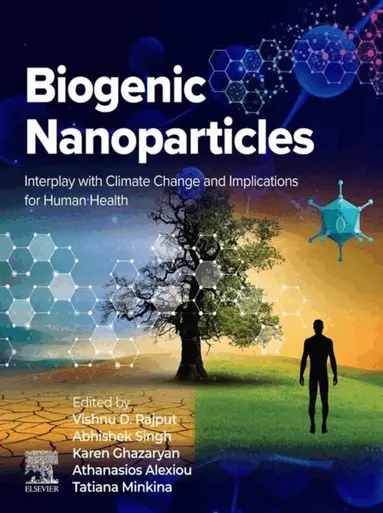
Biogenic Nanoparticles
Tatiana Minkina, Athanasios Alexiou, Karen Ghazaryan, Abhishek Singh, Vishnu D. Rajput
E-bok
20251 923 kr
Sustainable Management and Utilization of Sewage Sludge
Tatiana Minkina, Satish Kumar Singh, Hanuman Singh Jatav, Ajar Nath Yadav, Vishnu D. Rajput
E-bok
20222 581 kr
Smart Technologies in Sustainable Agriculture
Anil Kumar Singh, Tatiana Minkina, Vishnu D. Rajput, Abhishek Singh, Pradeep Kumar
E-bok
20253 049 kr
Nano-Biofortification for Human and Environmental Health
Vishnu D. Rajput, Hassan El-Ramady, Sudhir K. Upadhyay, Tatiana Minkina, Bilal Ahmed, Saglara Mandzhieva
Häftad, 2024
1 862 kr
Nano-Biofortification for Human and Environmental Health
Saglara Mandzhieva, Bilal Ahmed, Tatiana Minkina, Sudhir K. Upadhyay, Hassan El-Ramady, Vishnu D. Rajput
E-bok
20232 437 kr