- -15% på allt
Saint Thomas Aquinas Commentary on the Sentences: Book II, Distinctions 21–44
Volume 4 Latin/English Edition of the Works of St. Thomas Aquinas
Inbunden, Engelska, 2026
688 kr
Tillfälligt slut. Bevaka för att få ett mejl när produkten kan beställas.
Beskrivning
The Sentences of Peter Lombard was the standard theological text from the twelfth through the fifteenth century. Thomas Aquinas's Commentary on the Sentences (ca. 1252–1256) was written by a young Aquinas in fulfilling the qualifications for becoming a teaching master at the University of Paris; it is perhaps the most comprehensive and detailed of all his works. The Commentary on the Sentences is not a commentary in the sense of a line-by-line analysis of the Lombard's text, but instead, it is the product of lively classroom discussion, in which Aquinas enjoys the liberty to take up any inquiry inspired by the text, treating topics not found anywhere else in his opus. The second book of the Sentences is concerned with questions revolving around creation. Notes on the Text: The Latin text used in this volume is based on the 1929 edition prepared by R. P. Mandonnet, O.P. The English translation was prepared by Dr. Christopher Decaen. Translations of the Sentences of Peter Lombard have been adapted from The Sentences, Book 2: On Creation (Toronto: Pontifical Institute of Mediaeval Studies, 2008), translated by Giulio Silano.

Produktinformation
- Utgivningsdatum:2026-03-27
- Mått:216 x 279 mm
- Vikt:1 647 g
- Format:Inbunden
- Språk:Engelska
- Antal sidor:640
- Förlag:Emmaus Academic
- ISBN:9781623400354
- Översättare:Christopher Decaen, Dylan Schrader, Beth Mortensen
Utforska kategorier
Mer om författaren
An intellectual giant of the 13th century, Thomas Aquinas is best known for the clarity of thought in his philosophical and theological writings. His primary occupation at the University of Paris was as a theologian and a commentator on Sacred Scripture, and his philosophical work was always at the service of his Scriptural meditations. The writings of Thomas Aquinas remain widely influential to this day. “In his thinking, the demands of reason and the power of faith found the most elevated synthesis ever attained by human thought.” (John Paul II, Fides et Ratio)
Innehållsförteckning
- 13 2. Whether the sin of Adam was graver than all other sins 16 3. Whether in the state of innocence Adam could have sinned venially 18 Exposition of the text 23 Distinction 22 – First sin of man 25 Division of the text 25 Q. 1 – The first sin of man 1. Whether man’s first sin was pride 29 2. Whether man’s sin was that he desired to be just like God 32 3. Whether the woman sinned more gravely than the man 35 Q. 2 – Ignorance 1. Whether ignorance is a sin 37 2. Whether ignorance excuses sin 39 Exposition of the text 45 Distinction 23 – Divine permission of the first sin. 47 Division of the text 47 Q. 1 – The divine permission of the first sin 1. Whether a natural inability to sin could have been conferred on a created nature 49 2. Whether God should have permitted man to be tempted or to sin 52 vii Q. 2 – The knowledge of man in his original state 1. Whether Adam saw God in his essence 55 2. Whether Adam had perfect knowledge of things from his creation 59 3. Whether in the first state man could be deceived 62 Exposition of the text 65 Distinction 24 – Natural power of man in his original state 67 Division of the first part of the text 67 Q. 1 – Free decision 1. Whether free decision is a habit 69 2. Whether free decision indicates one power or more than one 72 3. Whether free decision is a power distinct from will and reason. 75 4. Whether Adam could have avoided sin through free decision in the first state 78 Q. 2 – The powers connected to free decision 1. Whether the definition of sensuality set forth in the text is fitting . 81 2. Whether higher and lower reason are a single power 84 3. Whether synderesis is a habit or a power . 89 4. Whether conscience is an act 92 Exposition of the first part of the text 97 Division of the second part of the text 99 Q. 3 – How there can be sin in the parts of the soul 1. Whether the motion of sensuality and of higher and lower reason are fittingly and sufficiently assigned in the text . 101 2. Whether there is sin in sensuality 104 3. Whether there can be sin in reason. 107 4. Whether there can be mortal sin in lower reason’s delight 110 5. Whether there can be venial sin in higher reason 113 6. Whether venial sin can become mortal 116 Exposition of the second part of the text 121 viii Distinction 25 – Conditions of free decision. 123 Division of the text. 123 Q. 1 – Conditions of free decision 1. Whether there is free decision in God 127 2. Whether free decision can be compelled 131 3. Whether free decision extends to all human works 134 4. Whether freedom of decision is increased or diminished 136 5. Whether there is a threefold distinction in free decision138 Exposition of the text 143 Distinction 26 – Grace 145 Division of the text. 145 Q. 1 – Grace 1. Whether grace is something created in the soul.147 2. Whether grace is an accident 151 3. Whether grace is in a power of the soul as in a subject 153 4. Whether grace is a virtue 157 5. Whether grace is fittingly distinguished into operating and cooperating grace 160 6. Whether grace in the soul is manifold 163 Exposition of the text 167 Distinction 27 – Virtue 169 Division of the text. 169 Q. 1 – Virtue 1. Whether virtue is a habit 173 2. Whether the definition of virtue posited by Augustine is fitting 176 3. Whether one can merit eternal life condignly through an act of virtue 180 4. Whether one can merit grace 182 5. Whether one can merit an increase of grace185 6. Whether one can merit the first grace for another 187 Exposition of the text 191 ix Distinction 28 – Errors about grace 193 Division of the text . 193 Q. 1 – Errors about grace 1. Whether there is any good that man can do without grace 195 2. Whether without grace man can avoid sin. 198 3. Whether without grace man can fulfill God’s precepts 202 4. Whether without some grace man can prepare himself for grace 204 5. Whether there is any truth that man can know without grace 208 Exposition of the text 213 Distinction 29 – Grace in the original state of man 215 Division of the text 215 Q. 1 – Grace in the original state of man 1. Whether nature in the state of innocence needed grace 217 2. Whether man before sin had grace 220 3. Whether man in the first state would have had as much grace as he had after sin 223 4. Whether man’s works are more efficacious for meriting grace after sin than before sin 226 5. Whether the expulsion from paradise and the privation of original justice is a fitting punishment for the first transgression 230 Exposition of the text 233 Distinction 30 – Original sin 235 Division of the text 235 Q. 1 – Original sin 1. Whether the deficiencies we experience are like a punishment for us for the sin of the first man 239 2. Whether a deficiency that comes to us through our origin has the account of a fault 243 3. Whether original sin is concupiscence 247 Q. 2 – The passing down of the flesh 1. Whether food passes into true human nature 251 2. Whether seed is extracted from what is generated from food 263 Exposition of the text 273 Distinction 31 – Principle of original sin. 275 Division of the text. 275 Q. 1 – The passing down of original sin 1. Whether original sin can pass into offspring by way of the flesh’s origin 277 2. Whether it is necessary for all men to be born in original sin 281 Q. 2 – The subject of original sin 1. Whether original sin is in a power after the manner of a subject 287 2. Whether the generative power is more infected than the other powers 289 Exposition of the text 293 Distinction 32 – Remission of original sin 295 Division of the text. 295 Q. 1 – How original sin is taken away 1. Whether original sin is taken away through baptism 297 2. Whether the punishment of original sin ought to remain after baptism 301 3. Whether the fomes is found to be greater in one person than in another 304 Q. 2 – The cause of the infection of original sin 1. Whether the infection of original sin is from God 307 2. Whether it befits the divine wisdom to infuse a soul into a body from which it will contract a stain 310 3. Whether souls are equal at their creation 312 Exposition of the text 317 Distinction 33 – Number of original sin 319 Division of the text. 319 Q. 1 – The unity of original sin 1. Whether one contracts the stain from his immediate parents 323 2. Whether the fault of the immediate parents redounds to their children as far as punishment is concerned 326 3. Whether original sin is only one 329 Q. 2 – The punishment of original sin 1. Whether a sensible punishment is due to original sin in itself 333 2. Whether unbaptized children feel spiritual affliction in their soul 336 Exposition of the text 341 xi Distinction 34 – Actual sin as regards the account of evil 345 Division of the text 345 Q. 1 – Actual sin as regards the account of evil 1. Whether there is evil 347 2. Whether evil is a kind of positive being 350 3. Whether good is the cause of evil 355 4. Whether evil is in good as a subject 359 5. Whether evil can corrupt the whole good 362 Exposition of the text 367 Distinction 35 – Evil of fault 369 Division of the text 369 Q. 1 – The evil of fault 1. Whether evil is sufficiently divided into evil of fault and evil of punishment 373 2. Whether the definitions of sin proposed here are fitting 376 3. Whether there is an act in every sin 379 4. Whether there is sin in the external act 383 5. Whether the soul’s powers are in some way corrupted by sin 385 Exposition of the text 389 Distinction 36 – Sin and punishment 393 Division of the text 393 Q. 1 – Sin and punishment 1. Whether one sin can be the cause of another sin 395 2. Whether a passion can be a sin 398 3. Whether one sin can be the punishment for another sin 400 4. Whether every punishment is inflicted for a sin 404 5. Whether the distinction of goods is fitting 407Exposition of the text 411xii Distinction 37 – Cause of sin and punishment 413 Division of the text 413 Q. 1 – The existence of sin 1. Whether sin is a substance or some nature 415 2. Whether every being is from God 418 Q. 2 – The cause of sin 1. Whether God is the cause of sin simply 423 2. Whether the action of sin, precisely as an action, is from God .425 Q. 3 – The cause of punishment 1. Whether punishment is from God 429 2. Whether “evil” is said of punishment with greater priority than fault 432 br>Exposition of the text 437 Distinction 38 – The act of the will 439 Division of the text. 439 Q. 1 – The act of the will 1. Whether there is only a single end of right wills 441 2. Whether beatitude or charity is the common and single end of right wills 444 3. Whether intention is an act of the will 447 4. Whether it is by one and the same act that the will wills the end and what is directed to the end 450 5. Whether the will should be judged as right on the basis of the end 452 Exposition of the text 455 Distinction 39 – How sin can be in the will 457 Division of the text. 457 Q. 1 – Whether sin is in the will 1. Whether the will can be perverted by sin 459 2. Whether there can be sin in the act of the intellect and powers other than the will 462 Q. 2 – How man naturally wills the good 1. Whether man naturally wills the good 467 2. Whether the will whereby man naturally wills good is the same as that whereby he wills evil 469 xiii Q. 3 – The higher spark of reason 1. Whether the higher spark of reason can be extinguished . 473 2. Whether conscience ever errs 476 3. Whether an erring conscience binds 479 Exposition of the text 485 Distinction 40 – How external acts are good or evil 487 Division of the text 487 Q. 1 – How external acts are good or evil 1. Whether “good” and “evil” are essential differences of action 489 2. Whether action should be judged as good or evil simply on the basis of the will 492 3. Whether the external act adds any goodness or malice over and above the goodness or malice of the will 494 4. Whether the same action can be good and evil 498 5. Whether there is human action that is indifferent 501 Exposition of the text 509 Distinction 41 – The act of sin in comparison to the intention and the will 511 Division of the text 511 Q. 1 – The act of sin in comparison with intention 1. Whether faith universally has the property of directing intention 513 2. Whether any act of a faithless man can be good 515 Q. 2 – The act of sin in comparison with the will 1. Whether sin is voluntary 519 2. Whether every sin is in the will 521 Exposition of the text 525 xiv Distinction 42 – Parts and modes of sin 527 Division of the first part of the text 527 Q. 1 – The integral parts of sin 1. Whether the will and act of sin are two sins 529 2. Whether the guilt of sin remains after sin 532 3. Whether sin is fittingly divided into “mortal” and “venial” 535 4. Whether venial sin is distinguished from mortal sin 537 5. Whether mortal and venial sin differ by eternal and temporal punishment 541 Exposition of the first part of the text 545 Division of the second part of the text 547 Q. 2 – Divisions of sins 1. Whether sins are distinguished on the basis of the roots 549 2. Whether sin is fittingly divided 552 3. Whether the division of the capital vices is suitable 557 4. Whether the species of pride are fittingly assigned 562 5. Whether all sins are equal 565 Exposition of the second part of the text 571 Distinction 43 – The sin against the Holy Spirit 573 Division of the text. 573 Q. 1 – The sin against the Holy Spirit 1. Whether there is a sin against the Holy Spirit 575 2. Whether the sin against the Holy Spirit is a determinate genus of sin 578 3. Whether the species of sin against the Holy Spirit are fittingly assigned in the text 581 4. Whether sin against the Holy Spirit can be forgiven 585 5. Whether one can sin against the Holy Spirit in the first act of sin 589 6. Whether Adam sinned against the Holy Spirit 591 Exposition of the text 595 Distinction 44 – The power to sin 597 Division of the text 597 Q. 1 – The power to sin 1. Whether the power to sin is from God 599 2. Whether all preeminence is from God 602 3. Whether there would have been dominion in the state of innocence 604 xv Q. 2 – Obedience to prelates 1. Whether obedience is a virtue. 607 2. Whether Christians are bound to obey secular powers, particularly tyrants 611 3. Whether professed religious are bound to obey their prelates in all things 614 Exposition of the text 619
Hoppa över listan


Du kanske också är intresserad av
- -15% på allt
St. Thomas Aquinas Commentary on the Sentences: Book II, Distinctions 1–20
Thomas Aquinas
Inbunden, 2026
688 kr
- -19%
Del 1
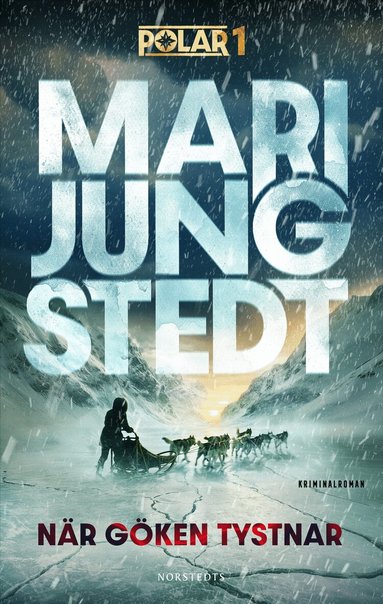
När göken tystnar
Mari Jungstedt
Inbunden, 2026
4,4 utav 5 stjärnor. Totalt antal röster:(27)
209 kr259 kr