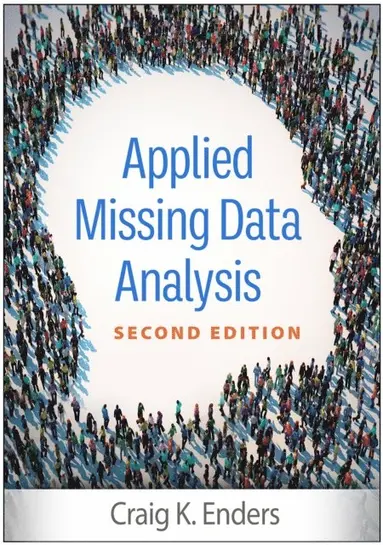
Applied Missing Data Analysis, Second Edition
1 025 kr
Beställningsvara. Skickas inom 7-10 vardagar. Fri frakt över 249 kr.
Beskrivning
Produktinformation
- Utgivningsdatum:2022-10-28
- Mått:178 x 254 x 33 mm
- Vikt:1 080 g
- Format:Inbunden
- Språk:Engelska
- Serie:Methodology in the Social Sciences
- Antal sidor:546
- Upplaga:2
- Förlag:Guilford Publications
- ISBN:9781462549863
Utforska kategorier
Mer om författaren
Craig K. Enders, PhD, is Professor and Area Chair in Quantitative Psychology in the Department of Psychology at the University of California, Los Angeles. His primary research focus is on analytic issues related to missing data analyses, and he leads the research team responsible for developing the Blimp software application for missing data analyses. Dr. Enders also conducts research in the areas of multilevel modeling and structural equation modeling, and is an active member of the Society of Multivariate Experimental Psychology, the American Psychological Association, and the American Educational Research Association.
Recensioner i media
"The second edition of Applied Missing Data Analysis is a bold, top-to-bottom revision that makes a phenomenal book even better. Enders offers a completely updated treatment, including such important topics as models with continuous and categorical variables, Bayesian missing data approaches, methods for missing not at random processes, and even a guide to how researchers should report their missing data analyses. Beyond the central focus on missing data, I can already hear myself saying, 'Go read Enders's book!' to students and colleagues with questions about how maximum likelihood estimation works, the logic of Markov Chain Monte Carlo methods, and so much more. This book is exemplary teaching that you can hold in your hands. I will recommend it with the greatest enthusiasm to students, faculty, and applied researchers alike for many years to come."--Gregory R. Hancock, PhD, Professor and Distinguished Scholar-Teacher, Department of Human Development and Quantitative Methodology, University of Maryland, College Park"Approaches for dealing with missing data have progressed greatly in the statistical and methodological literatures, and the second edition of this exemplary book thoroughly presents and synthesizes these developments. The book makes sophisticated statistics amazingly accessible and offers a great deal to a wide audience, including statisticians, data analysts, substantive researchers, and quantitative students. I learn something new (or better understand something I thought I knew) every time I pick up this book! The presentation of how to report results from a missing data analysis, which gives explicit examples of such reporting for a wide variety of scenarios, is particularly useful. With an abundance of examples, figures, and illustrations to enhance the crystal-clear exposition, this is the 'go-to' book for dealing with missing data in statistical modeling."--Donald Hedeker, PhD, Department of Public Health Sciences, University of Chicago"Thorough, cutting-edge, and far and away the clearest text available on missing data analysis. Written by a world-renowned expert who is a gifted instructor, this book is accessible enough for applied researchers with introductory statistics and regression knowledge, is an outstanding text for a missing data course, or can be used to fill gaps in methodologists’ understanding of the notoriously opaque missing data literature. For researchers who learned 'modern' missing data-handling methods years ago--much has changed. For instance, the second edition will bring you up to speed on how to accommodate missingness in conjunction with non-normal and discrete outcomes, nonlinear and interactive relationships, and multilevel structures; choose among non-model-based versus model-based multiple imputation methods; and conceptualize and implement sensitivity analyses to assess the impact of alternative missing data assumptions. Reading this book feels like being guided by the author through a comprehensive one-on-one workshop. A gift to the field!"--Sonya K. Sterba, PhD, Professor of Psychology and Director, Quantitative Methods Program, Vanderbilt University“Simply stated, this is the best textbook available on missing data analysis. The book provides comprehensive coverage, is highly accessible, and is written by one of the experts in the field. The concepts involved in missing data analysis are complex, and it is obvious that Enders takes the 'teaching mission' seriously. The writing is clear, the figures and tables are very helpful in promoting understanding, and the simulations developed for the text are helpful in conveying the strengths and weaknesses of various missing data treatments. The excellent companion website provides important, updated resources for teaching and learning. The software scripts available on the website are very useful for researchers wishing to apply the missing data methods to real data."--Keenan A. Pituch, PhD, Edson College of Nursing and Health Innovation, Arizona State University-The book is well written….The author successfully achieved the goal of helping the reader to become familiar with basic concepts in missing data analysis procedures, and to feel comfortable using these procedures in a variety of practical and social science applications. It contains very useful examples and illustrations in the applied social sciences. (on the first edition)--American Statistician, 8/1/2011
Innehållsförteckning
- 1. Introduction to Missing Data1.1 Chapter Overview1.2 Missing Data Patterns1.3 Missing Data Mechanisms1.4 Diagnosing Missing Data Mechanisms1.5 Auxiliary Variables1.6 Analysis Example: Preparing for Missing Data Handling1.7 Older Missing Data Methods1.8 Comparing Missing Data Methods via Simulation1.9 Planned Missing Data1.10 Power Analyses for Planned Missingness Designs1.11 Summary and Recommended Readings2. Maximum Likelihood Estimation2.1 Chapter Overview2.2 Probability Distributions versus Likelihood Functions2.3 The Univariate Normal Distribution2.4 Estimating Unknown Parameters2.5 Getting an Analytic Solution2.6 Estimating Standard Errors2.7 Information Matrix and Parameter Covariance Matrix2.8 Alternative Approaches to Estimating Standard Errors2.9 Iterative Optimization Algorithms2.10 Linear Regression2.11 Significance Tests2.12 Multivariate Normal Data2.13 Categorical Outcomes: Logistic and Probit Regression2.14 Summary and Recommended Readings3. Maximum Likelihood Estimation with Missing Data3.1 Chapter Overview3.2 The Multivariate Normal Distribution Revisited3.3 How Do Incomplete Data Records Help?3.4 Standard Errors with Incomplete Data3.5 The Expectation Maximization Algorithm3.6 Linear Regression3.7 Significance Testing3.8 Interaction Effects3.9 Curvilinear Effects3.10 Auxiliary Variables3.11 Categorical Outcomes3.12 Summary and Recommended Readings4. Bayesian Estimation4.1 Chapter Overview4.2 What Makes Bayesian Statistics Different?4.3 Conceptual Overview of Bayesian Estimation4.4 Bayes’ Theorem4.5 The Univariate Normal Distribution4.6 MCMC Estimation with the Gibbs Sampler4.7 Estimating the Mean and Variance with MCMC4.8 Linear Regression4.9 Assessing Convergence of the Gibbs Sampler4.10 Multivariate Normal Data4.11 Summary and Recommended Readings5. Bayesian Estimation with Missing Data5.1 Chapter Overview5.2 Imputing an Incomplete Outcome Variable5.3 Linear Regression5.4 Interaction Effects5.5 Inspecting Imputations5.6 The Metropolis–Hastings Algorithm5.7 Curvilinear Effects5.8 Auxiliary Variables5.9 Multivariate Normal Data5.10 Summary and Recommended Readings6. Bayesian Estimation for Categorical Variables6.1 Chapter Overview6.2 Latent Response Formulation for Categorical Variables6.3 Regression with a Binary Outcome6.4 Regression with an Ordinal Outcome6.5 Binary and Ordinal Predictor Variables6.6 Latent Response Formulation for Nominal Variables6.7 Regression with a Nominal Outcome6.8 Nominal Predictor Variables6.9 Logistic Regression6.10 Summary and Recommended Readings7. Multiple Imputation7.1 Chapter Overview7.2 Agnostic versus Model-Based Multiple Imputation7.3 Joint Model Imputation7.4 Fully Conditional Specification7.5 Analyzing Multiply-Imputed Data Sets7.6 Pooling Parameter Estimates7.7 Pooling Standard Errors7.8 Test Statistic and Confidence Intervals7.9 When Might Multiple Imputation Give Different Answers?7.10 Interaction and Curvilinear Effects Revisited7.11 Model-Based Imputation7.12 Multivariate Significance Tests7.13 Summary and Recommended Readings8. Multilevel Missing Data8.1 Chapter Overview8.2 Random Intercept Regression Models8.3 Random Coefficient Models8.4 Multilevel Interaction Effects8.5 Three-Level Models8.6 Multiple Imputation8.7 Joint Model Imputation8.8 Fully Conditional Specification Imputation8.9 Maximum Likelihood Estimation8.10 Summary and Recommended Readings9. Missing Not at Random Processes9.1 Chapter Overview9.2 Missing Not at Random Processes Revisited9.3 Major Modeling Frameworks9.4 Selection Models for Multiple Regression9.5 Model Comparisons and Individual Influence Diagnostics9.6 Selection Model Analysis Examples9.7 Pattern Mixture Models for Multiple Regression9.8 Pattern Mixture Model Analysis Examples9.9 Longitudinal Data Analyses9.10 Diggle–Kenward Selection Model9.11 Shared Parameter (Random Coefficient) Selection Model9.12 Random Coefficient Pattern Mixture Models9.13 Longitudinal Data Analysis Examples9.14 Summary and Recommended Readings10. Special Topics and Applications10.1 Chapter Overview10.2 Descriptive Summaries, Correlations, and Subgroups10.3 Non-Normal Predictor Variables10.4 Non-Normal Outcome Variables10.5 Mediation and Indirect Effects10.6 Structural Equation Models10.7 Scale Scores and Missing Questionnaire Items10.8 Interactions with Scales10.9 Longitudinal Data Analyses10.10 Regression with a Count Outcome10.11 Power Analyses for Growth Models with Missing Data10.12 Summary and Recommended Readings11. Wrap-Up11.1 Chapter Overview11.2 Choosing a Missing Data-Handling Procedure11.3 Software Landscape11.4 Reporting Results from a Missing Data Analysis11.5 Final Thoughts and Recommended ReadingsAppendix. Data Set DescriptionsAuthor IndexSubject IndexAbout the Author
Mer från samma serie
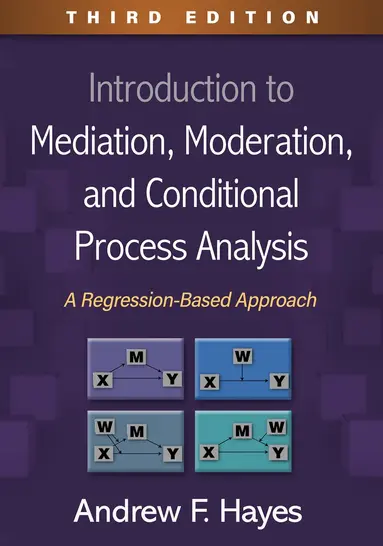
Introduction to Mediation, Moderation, and Conditional Process Analysis, Third Edition
Andrew F. Hayes
Inbunden, 2022
1 108 kr
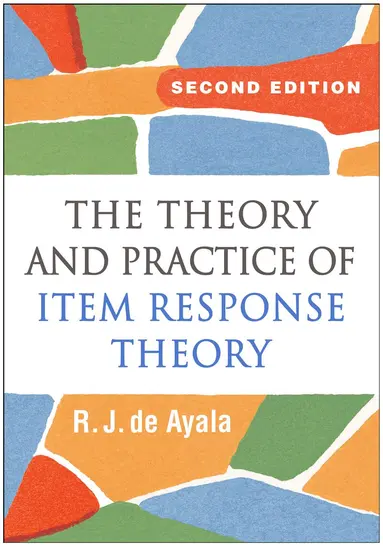
The Theory and Practice of Item Response Theory, Second Edition
R. J. de Ayala, Bruno D. Zumbo, David J. Weiss, Mark Reckase, Scott Hofer
Inbunden, 2022
1 077 kr
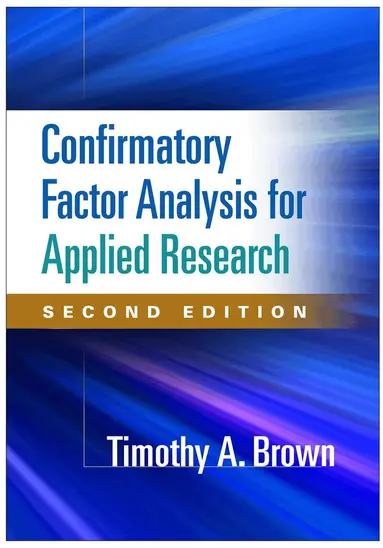
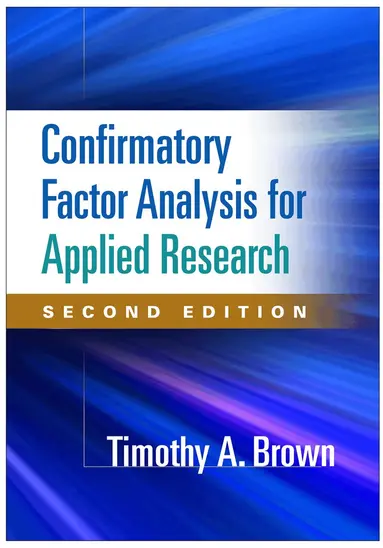
Confirmatory Factor Analysis for Applied Research, Second Edition
Timothy A. Brown
Inbunden, 2015
1 529 kr
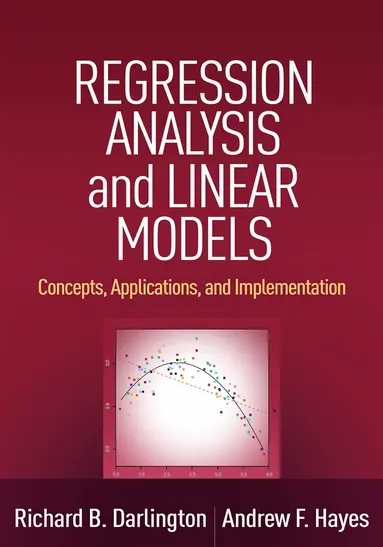
Regression Analysis and Linear Models, First Edition
Richard B. Darlington, Andrew F. Hayes
Inbunden, 2016
1 194 kr
Du kanske också är intresserad av
- Nyhet
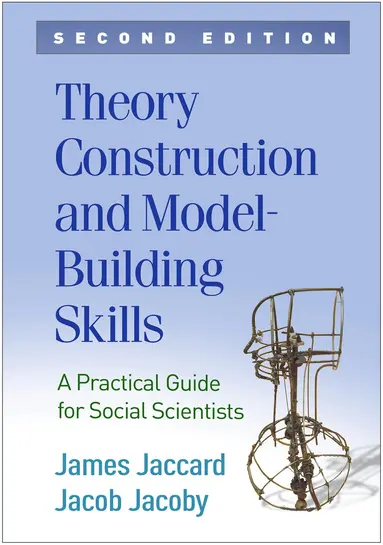
Theory Construction and Model-Building Skills, Second Edition
James Jaccard, Jacoby Jacob, Jacob Jacoby
Häftad, 2020
903 kr
- Signerad!
SIGNERAD - ADHD: Det är inte ditt fel att det blir kaos (med unikt digitalt extramaterial)
Björn Nordberg
Inbunden, 2026
249 kr
- Signerad!
Missing Data
Patrick E. McKnight, Katherine M. McKnight, Souraya Sidani, Aurelio Jose Figueredo
Inbunden, 2007
1 409 kr