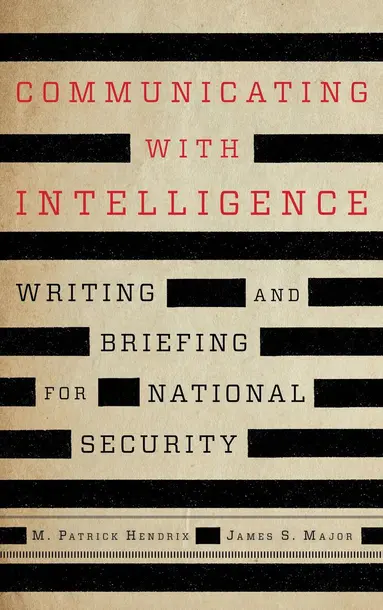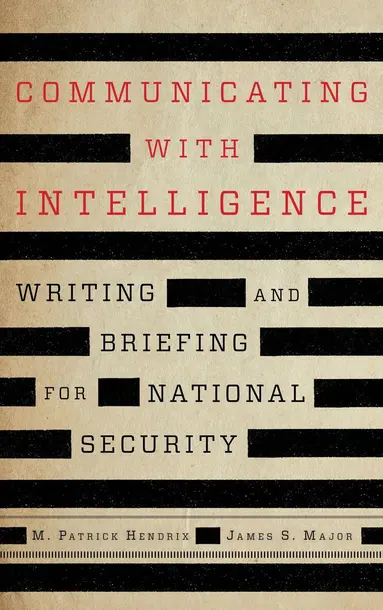
Communicating with Intelligence
Writing and Briefing for National Security
1 043 kr
Skickas . Fri frakt över 249 kr.
Beskrivning
Produktinformation
- Utgivningsdatum:2014-06-18
- Mått:148 x 225 x 24 mm
- Vikt:553 g
- Format:Häftad
- Språk:Engelska
- Serie:Security and Professional Intelligence Education Series
- Antal sidor:430
- Upplaga:2
- Förlag:Rowman & Littlefield
- ISBN:9781442226623
Utforska kategorier
Mer om författaren
James S. Major spent 40 years in intelligence, serving in both military and civilian capacity, in assignments at the tactical, operational, strategic, and national levels. He has written 15 books, all published by the U.S. government, and in 1997 he was awarded the National Intelligence Medal of Achievement.
Recensioner i media
Communication is the essence of intelligence. For without being communicated effectively, intelligence merely underwrites ignorance. This fully revised and expanded edition of the noteworthy volume Communicating with Intelligence provides intelligence practitioners with a comprehensive and detailed handbook for effective professional communications. Its chapters set out practical guidelines along with practical exercises for each element of the communications process, from the reading of intelligence source material, to the writing of intelligence reports, to the delivery of intelligence briefings, emphasizing throughout the trustworthy dissemination of intelligence information. This is indeed an encyclopedic manual that should be on the desk of intelligence analysts, managers, and policy-makers. It would also be a valuable asset for academic writers and graduate students in the Intelligence Studies domain.
Innehållsförteckning
- Foreword Preface Acknowledgments Introduction PART ONE: THE FOUNDATIONS OF GOOD INTELLIGENCE COMMUNICATIONChapter 1: What It’s All AboutSummaryGetting Started: Good Writing HabitsReader Considerations: Basic Truths of CommunicatingReading: A Basic Complement to WritingThe Style of Good Intelligence Writing: Bottom Line Up FrontDefining Methods: Telling the Reader NothingMaking the Distinction Clear for StudentsThe Three Missions of Intelligence Writing: Judge, Interpret, and SupportDifferences between Academic and Intelligence Writing: The Four EssencesAnalysts: The Voice of the Intelligence CommunityThe First Step in the Analyst’s Learning Process: Unlearn and RelearnA Framework for Analysis: The Manager’s Perspective for a New AnalystDoes It Work?A Final Thought about the MissionGetting to the ArgumentExercises in the Foundations of AnalysisChapter 2: Using Argument in Intelligence Writing SummaryWhat Is Argument?Argument Is Central to Intelligence AnalysisWhen You Argue, You Take a StandFormulating a Thesis StatementArgument Reflects How Humans ThinkSome Ways We ThinkEvaluating ArgumentsWhere Are the Truths in This Ugly Business?Putting Your Best Argument ForwardExercises in ArgumentChapter 3: Reading: Fundamental to Writing Summary Read to Write: Electronic or PrintedWho Needs It—and Why? The Forms of Intelligence: Basic, Current, and Estimative Content: Digging into the Format Evaluating Finished IntelligenceThink About Graphics as an Attention-GrabberReading for the Sake of Writing Exercises in Reading Intelligence PART TWO: WRITING WITH INTELLIGENCEChapter 4: A Tool Kit for Writing with Intelligence Summary Why Write? Clarity: Be Kind to Your ReaderConciseness: Don’t Waste Their TimeCorrectness: A Hallmark of Good WritingAppropriateness: Who, Why, and How?Completeness: The Whole Nine YardsCoherence: The “Glue” That Holds It All TogetherEnergize Your Writing with Strong VerbsWatch Out for the Wimps: Prepositional PhrasesStil-l-l Go-o-oing … Taking the Tool Kit to Work or SchoolExercises in the Basic Tools of Intelligence Writing Chapter 5: Prewriting: Warming Up Your Brain to Free Your Hand Summary Finding Your Subject: The Search for Substance Focusing on Form and Format Finding the Time and the Space Finding the Right Reference Materials Some Prewriting Tools: Building a Foundation Brainstorm: It Takes More Than One Brain to Make a StormFreewrite: Let the Mind GoOutline: Add StructureMap: Let the Journey BeginSearching, Researching Exercises in Prewriting Chapter 6: Writing the First Draft: Getting the Words on PaperSummary A Reminder about Good Writing Habits Reader Considerations: Basic to Everything We Write Keep That Bottom Line Up Front Guidelines for the Preparation of Key JudgmentsDefining Our Analytical Methods: Who Cares?Drafting: Get Right to ItThe Way You WriteMore about StyleMore than Words Can Say: Visual Aids Organizing the First Draft Writing That First Draft: Back to the PrewritingYour Main Points and the Important Topic SentenceTransitions: Moving Smoothly AheadThe Body of Your Writing Last, But Assuredly Not Least The Bottom Line: Focus Remaining Objective Evaluating Sources: Consider the Originator, Date, and PublisherPreviews of Coming Attractions: Titles, Headings, and SubheadingsBeyond the Form and the FormatOne Final Note Exercises in Writing the First Draft Chapter 7: Drafting ConclusionsSummaryThe Role of the Conclusion in Intelligence WritingFinishing StrongHow to Think About Your ConclusionsTechniques for Ending WellTwo Practical Examples: Adea and ZangaCheesy, Confusing, and Otherwise Problematic Ways to Say “The End”Some Last WordsExercises in Drafting ConclusionsChapter 8: Beyond the First Draft: Analytical Papers Summary What Intelligence Writing Should Do: Describe, Explain, & EstimateWhat Is an Analytical Paper? Focus on ConclusionsBe Relevant to the UserConcentrate on EssentialsAvoid Policy Prescription A Model Process for Reviewing an Analytical Paper E-Review: Working in the Electronic World Constraints on Review: Time, Experience, Expectations, and Attitude Styles of Review: Holistic, Top Down, or Bottom Up Review Guidelines: 14 Steps toward Better Analytical Writing Exercises in Writing Analytical Papers Chapter 9: Revision: Polishing Your Writing Summary Basic Revision Techniques Peer Review: A Means toward Revision Review of Content: Three Rs and Four SweepsThe Three “R” Method of Revision: Reread, Re-envision, and Rewrite“Four Sweeps” for Revision: Clarity, Persuasiveness, Packaging, and WritingThesis and Overview Statements: One Small Step during Revision What about Grammar-Checkers? Commonly Asked Questions about Revision Ten Questions to Help You Examine Your Own Writing Process Ending on a Positive Note Exercises in Revision Chapter 10: Additional Exercises to Hone Your Writing SkillsExercise 1: Writing a Thesis Statement Exercise 2: Writing a Paragraph Exercise 3: Writing a Summary Exercise 4: Getting the Bottom Line Up Front Exercise 5: Working with the Types of Intelligence Writing—Describe, Explain, and Estimate Exercise 6: Avoiding Passive Voice and Wordiness Exercise 7: Peer Review of Student WritingPART THREE: BRIEFING WITH INTELLIGENCEChapter 11: Briefing: The Flip Side of the Communication CoinSummaryA Disclaimer: Read and Heed, PleaseGetting the Word OutThe Learning Process: Baby Steps FirstWhy Brief?A Brief Typology of Briefings“All of the Above” or “None of the Above”?Exercises in the Types and Principles of BriefingsChapter 12: The ABCs of Good Intelligence Briefings and BriefersSummaryThe First Half: Briefings, Easy as ABCThe Second Half: The BrieferSumming Up, from A to CExercises in Good Intelligence Briefings and BriefersChapter 13: Organizing and Writing the BriefingSummaryGetting Started Means Getting OrganizedFinding Your Subject and the TimePlan Ahead: Lay the GroundworkPlan Your Milestones: One Step at a TimeOutline Your ThoughtsAnalyze Your AudienceDo Your HomeworkWriting the Briefing Script: Write the Words You Will SayTell ‘em What You’re Gonna Tell ‘em: The IntroductionFree Sample Briefing Introduction: A Brief AssignmentTell ‘em: The Body of the BriefingPutting the Words Together: Writing the Main BodyPutting the Pictures Together: Making Your Point with Visual AidsTell’em What You Told ‘em: The ConclusionPutting the Words and Pictures TogetherSumming UpExercises in Organizing and Writing the BriefingChapter 14: Fine-Tuning Your Briefing: Voice, Notes, and VisualsSummaryDon’t Take Your Voice for GrantedUse of NotesUse of Visual AidsThe Best Tip of AllExercises in Fine-Tuning Your BriefingChapter 15: Doing It!SummaryGetting Up to Brief: The Absolute NecessityRehearse First—Always!The Big Day at LastPART FOUR: A SHORT STYLE MANUAL AND CITATION GUIDEA Note to Readers: Summarizing Part FourChapter 16: A Few Guidelines for a More Readable StyleDon’t Waste WordsUse Numbers ProperlyPlurals and SingularsPunsPlacement of Titles, Headings, and SubheadingsThe Paper Layout: Think Again about Your ReaderConcluding Section: All Good Things Must EndAppendixes and Annexes: Extra Added AttractionsAdditional Front Matter Options: Lists of Figures or GraphicsHow to Handle Graphic Material (Figures, Maps, Charts, Graphs, or Tables)Exercises in UsageChapter 17: Citing Your Sources: A Must for Scholarship SummaryWho Needs to Cite? Why Do It? How Do I Do It? General Format Spacing and Fonts Sample Note and Bibliographic Forms Abbreviations: Use Few ABCs of Alphabetization Anonymous Authors or Unattributed Work Capitalization and Punctuation in Titles Cited Hereafter as . . . Dates of Publication Explanatory Notes: When the Reader Needs MoreForeign-Language Publications Indirect (Secondary) References Members of Congress Military Rank Missing Data Multiple Sources in One Note Names, Referenced in the Text Periodicals Publishers Punctuation Punctuation in Quoted Material Secondary (Short) Citations Subsequent Works by the Same Author, Agency, or Organization Titles of Individuals Translations from a Foreign Language Volume Numbers in Notes and Bibliography Bits and Bytes Exercises in Citing SourcesChapter18: Electronic Citations General Electronic Sources: What Are You Citing? The Addresses: Uniform Resource Locators (URLs) The Mysterious Disappearing Website Page Numbers in Electronic Citations: Not Always There PDFs, PROQUEST and Such: Looking at the Real Thing Links, Homepages, and Search Engines: Preferred SolutionGeneric Citation Format Keeping Up in the E-World Exercises in Electronic Citations Chapter 19: Handling and Citing Classified Material Why Use Classified Information? Unclassified Excerpts from Classified Works: A Bad Idea How? Similarity to Unclassified Forms Proper Precautions and Markings Downgrading, Declassification, and Marking No Downgrading Shown?Note and Bibliographic Forms Intelink: A Unique Intelligence SourceExercises in Handling and Citing Classified Material Chapter 20: Answers to the ExercisesPart One: The Foundations of Good Intelligence CommunicationPart Two: Writing with IntelligencePart Three: Briefing with IntelligencePart Four: A Short Style Manual and Citation GuideAppendix A: Possible Replacement WordsAppendix B: A Usage Glossary for Intelligence Writers Appendix C: Intelligence Briefing ChecklistAppendix D: A “Free Sample” Briefing IntroductionAppendix E: A Sample Briefing ConclusionAppendix F: A Briefing Evaluation Form Bibliography Other Sources Used or Consulted for This Book IndexAbout the Contributors and the Author
Mer från samma författare
Communicating with Intelligence Writing and Briefing in the Intelligence and National Security Communities
James S. Major
7 585 kr
Mer från samma serie
Methods of Inquiry for Intelligence Analysis
Hank Prunckun, Jan Goldman Ph D., Jan Goldman Ph D
Inbunden, 2026
1 618 kr
Political Intelligence
Hank Prunckun, Troy Whitford, Jan Goldman Ph D., Jan Goldman Ph D
Inbunden, 2026
1 801 kr
Political Intelligence
Hank Prunckun, Troy Whitford, Jan Goldman Ph D., Jan Goldman Ph D
Häftad, 2026
736 kr
Du kanske också är intresserad av
Communicating with Intelligence Writing and Briefing in the Intelligence and National Security Communities
James S. Major
7 585 kr
- Nyhet
- Signerad!
SIGNERAD - ADHD: Det är inte ditt fel att det blir kaos (med unikt digitalt extramaterial)
Björn Nordberg
Inbunden, 2026
249 kr
- -52%
Pixi adventskalender 2025 : Med böcker av Maria Trolle, Maria Nilsson Thore, Johan Anderblad, Filippa Widlund, Mårten Melin Elsa Beskow, Lotta Olsson mfl
Flera Författare
Häftad, 2025
129 kr269 kr