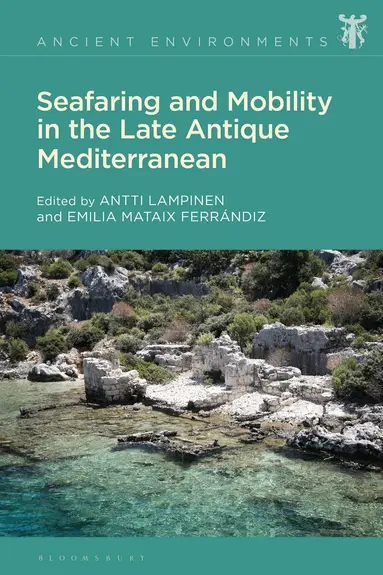
Seafaring and Mobility in the Late Antique Mediterranean
Antti Lampinen, Emilia Mataix Ferrándiz
Inbunden, 2022
1 409 kr
1 138 kr
Kommande. Bevaka för att få ett mejl när produkten kan beställas.
Antti Lampinen, Emilia Mataix Ferrándiz
Inbunden, 2022
1 409 kr
Antti Lampinen, Emilia Mataix Ferrándiz
466 kr
Antti Lampinen, Emilia Mataix Ferrándiz
478 kr
Antti Lampinen, Emilia Mataix Ferrándiz
Häftad, 2024
450 kr


Antti Lampinen, Han Baltussen, John Gruber-Miller, Fiona McHardy, Krzysztof Bielawski, Rachel Zelnick-Abramovitz, Ewa Skwara, Laurence Totelin, Marco Tibaldini, Peter J. Miller, Sadi Maréchal, Alberto Regagliolo
Inbunden, 2026
1 783 kr

Antti Lampinen, Han Baltussen, John Gruber-Miller, Fiona McHardy, Krzysztof Bielawski, Rachel Zelnick-Abramovitz, Ewa Skwara, Laurence Totelin, Marco Tibaldini, Peter J. Miller, Sadi Maréchal, Alberto Regagliolo
Inbunden, 2026
1 783 kr
Antti Lampinen, Emilia Mataix Ferrándiz
478 kr
Antti Lampinen, Emilia Mataix Ferrándiz
Inbunden, 2022
1 409 kr
Antti Lampinen, Emilia Mataix Ferrándiz
466 kr
Antti Lampinen, Emilia Mataix Ferrándiz
Häftad, 2024
450 kr