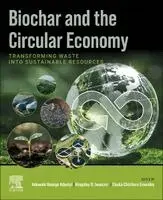
Discover how revolutionary nanoscale materials are transforming organic waste into a restorative force for climate action, energy storage, and environmental engineering with this definitive guide to the science, applications, and practical implementation of nano-biochar. As the planet accelerates toward a crossroads of climate urgency and materials innovation, a quiet revolution is unfolding in laboratories, greenhouses, and industrial hubs: the transformation of biomass into nano-biochar, a marvel of engineered carbon born from organic residue and scientific ingenuity. Nano-biochar is a nanoscale form of biochar, a carbon-rich material produced from biomass through processes like pyrolysis, hydrothermal carbonization, torrefaction, and gasification. Traditional biochar is valued for its environmental and industrial uses. When reduced to the nanoscale, biochar gains higher surface area and porosity, improving its performance in many applications. This book traces the arc of nano-biochar’s life from its structural origins to its societal implications. The volume is a technical compilation and call to reimagine carbon as a restorative force that is capable of cleaning water, enriching soil, storing energy, and revolutionizing biomedical frontiers. Addressing cost, sustainability, and policy concerns that influence production and use, the book gives readers a balanced view of both benefits and challenges. This book helps researchers and professionals understand how to use nano-biochar in practice, filling key knowledge gaps and supporting collaboration between materials scientists, environmental engineers, chemists, and agricultural researchers. Readers will find the volume: Explains how to produce and engineer nano-biochar for real-world use;Explores environmental, agricultural, catalytic, and biomedical applications;Connects biochar science with nanotechnology for practical solutions;Addresses toxicity, sustainability, and policy challenges.Audience Engineers, chemists, materials scientists, environmental researchers, policymakers, and sustainability experts working in renewable materials and nanotechnology.