
The Handbook of Language Policy and Planning
AvPiotr Romanowski,Tamilla Mammadova
Inbunden, Engelska, 2027
Del i serien Wiley Handbooks in Linguistics
1 865 kr
Kommande. Bevaka för att få ett mejl när produkten kan beställas.
Beskrivning
A globally inclusive reference on language policy and planning Language Policy and Planning has evolved from mid-twentieth-century origins into a field shaped by critical and interdisciplinary perspectives. The Wiley Handbook of Language Policy and Planning assembles leading international scholars to examine foundational theories, current debates, and methodological developments. The volume foregrounds multilingualism and integrates scholarship from diverse cultural, educational, and geopolitical contexts across all continents. The handbook connects theory with practice through case studies illustrating how language policies intersect with power, ideology, identity, education, and social change. Contributors examine policy implementation across multilingual and intercultural settings, addressing questions of status planning, corpus planning, and acquisition planning. The volume also proposes directions for future inquiry, identifying emerging research agendas within the field. This book also covers: Critical examination of how language ideologies shape policy decisions and outcomes in educational and governmental institutions worldwideAnalysis of migration-related language challenges and the role of intercultural communication in contemporary policy frameworks across diverse societiesDiscussion of language rights, linguistic justice, and equity considerations central to policy formation in multilingual nations and regionsMethodological approaches used to study language policy, from ethnographic fieldwork to discourse analysis and beyondHow globalization and digital communication are reshaping language ecologies and the scope of planning effortsDesigned for researchers, scholars, and graduate students in applied linguistics, sociolinguistics, and education, this handbook also serves policymakers, educational leaders, curriculum designers, and language planners working in multilingual contexts. It synthesizes existing scholarship while charting new directions for the field.
Produktinformation
Utforska kategorier
Mer om författaren
Hoppa över listan
Mer från samma serie
Handbook of Speech Perception
Jennifer S. Pardo, Lynne C. Nygaard, Robert E. Remez, David B. Pisoni
Häftad, 2025
653 kr
The Handbook of Language Socialization
Alessandro Duranti, Elinor Ochs, Bambi B. Schieffelin
Häftad, 2013
645 kr
Del 125
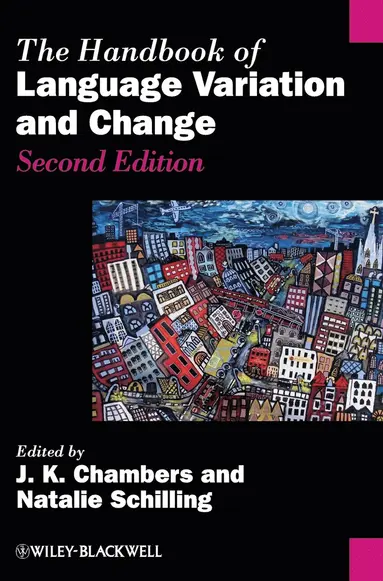
The Handbook of Language Variation and Change
Chambers, Schilling-Estes, J. K. Chambers, Natalie Schilling
Inbunden, 2013
2 584 kr
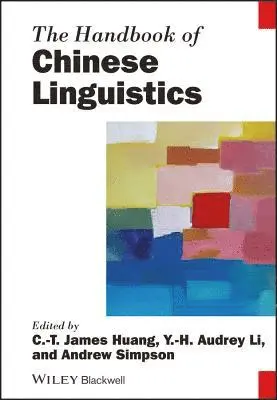
The Handbook of Chinese Linguistics
Huang, Li, C. T. James Huang, Y. H. Audrey Li, Andrew Simpson
Inbunden, 2014
2 657 kr
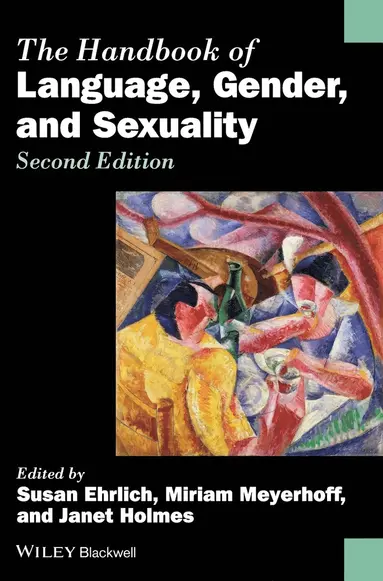
The Handbook of Language, Gender, and Sexuality
Ehrlich, Susan Ehrlich, Miriam Meyerhoff, Janet Holmes
Inbunden, 2014
2 395 kr
The Handbook of Discourse Analysis
Deborah Tannen, Heidi E. Hamilton, Deborah Schiffrin
Inbunden, 2015
5 008 kr
Del 37
Hoppa över listan
Du kanske också är intresserad av
- -15% på allt
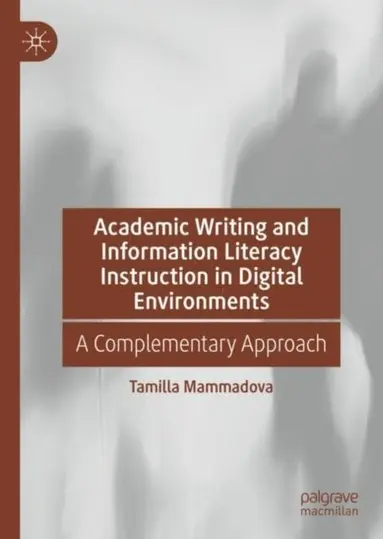
Academic Writing and Information Literacy Instruction in Digital Environments
Tamilla Mammadova
Inbunden, 2023
1 181 kr
- Nyhet
- Nyhet
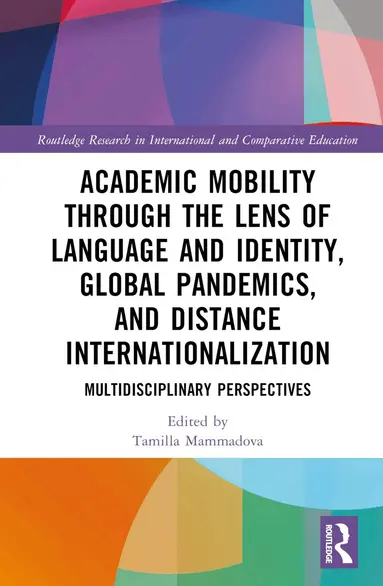
Academic Mobility through the Lens of Language and Identity, Global Pandemics, and Distance Internationalization
Tamilla Mammadova
Inbunden, 2023
2 475 kr
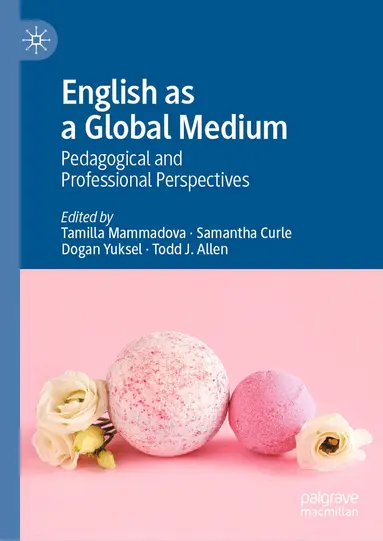
English as a Global Medium
Tamilla Mammadova, Samantha Curle, Dogan Yuksel, Todd J. Allen
Inbunden, 2026
1 601 kr
Academic Mobility through the Lens of Language and Identity, Global Pandemics, and Distance Internationalization
Tamilla Mammadova
E-bok
2023791 kr
Academic Writing and Information Literacy Instruction in Digital Environments
Tamilla Mammadova
E-bok
20231 542 kr