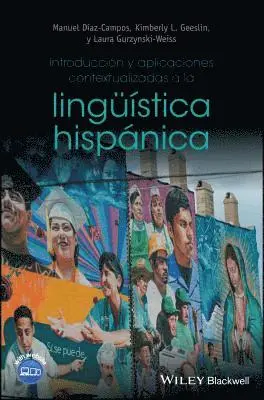
Explore Spanish language and Hispanic society in this fully updated textbook Understanding how Spanish varies across social contexts requires disciplinary grounding and current research. Introducción a la sociolingüística hispánica, now in its second edition, delivers twelve structured chapters written entirely in Spanish. It combines foundational topics—variation, social factors, bilingualism—with emerging lines of inquiry, offering students and instructors a rigorous, pedagogically effective textbook for today's university classroom. New to this edition is a full chapter on linguistic landscapes, a rapidly expanding research area. Each chapter includes discussion questions, summaries, and guided research prompts ("Para investigar y pensar") that foster critical thinking and active learning. Students work directly with empirical data, culminating in a mini-project using spoken and written corpora that builds hands-on analytical skills. Readers will also find: Companion website with chapter-based exercises, practical applications, and multimedia resources supporting flexible, active learning throughout the courseUpdated perspectives, examples, and theoretical developments reflecting sustained engagement with teaching and scholarly dialogue in the fieldAdaptable format makes the text suitable for both undergraduate survey courses and graduate research-oriented seminarsWritten entirely in Spanish, serving as a bridge from foundational linguistics training to socially grounded language analysisAdvanced preparation for seminars in variationist sociolinguistics, bilingualism, language contact, and language ideologies in Spanish language contextsDesigned for undergraduate and graduate students in Spanish linguistics, general linguistics, sociolinguistics, and anthropology, this book serves as a core textbook for introductory courses and a preparatory text for advanced seminars. Instructors gain a flexible resource adaptable to survey courses and specialized, research-oriented contexts.