

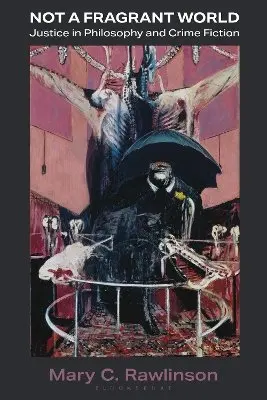
Not a Fragrant World
Justice in Philosophy and Crime Fiction
Inbunden, 2027
925 kr
Kommande. Bevaka för att få ett mejl när produkten kan beställas.
Beskrivning
Plato takes up philosophy’s “old quarrel” with literature in order to establish once and for all the sovereignty of philosophy as the discipline of truth and arbiter of justice. Philosophers since have adhered to this epistemological and political subordination of literature to philosophy. In Not a Fragrant World, Mary C. Rawlinson argues that crime fiction challenges fundamental concepts in political philosophy and undermines its authority over truth and justice. Analysing a wide variety of works, from Wilkie Collins and Chester Himes to Henning Mankell and Aamina Ahmad, Rawlinson shows how philosophical fictions of equality and reciprocal rights mask both legacies of exclusion and privilege and current infrastructures of injustice. While philosophy assumes a rationally ordered world where the law tends to serve justice, crime fiction exposes the complicity of the law and state power with wealth and privilege at the expense of the vulnerable. It invokes the absurdity and violence of an unjust world undergirded by the material infrastructures of racism and the subjection of women, as well as economic arrangements that concentrate wealth and increase precarity. In this malodorous world some count more than others, and some count not at all.Through the figure of the detective, Rawlinson articulates positive principles of justice, anchored in a commitment to the search for truth and in parrhesia or the courage to speak truth to power. Drawing on Nietzsche, Foucault, and Irigaray, Rawlinson develops an account of truth that both avoids relativism and recognizes the irreducible singularity of human experience by identifying the collective practices that produce truth and make justice possible. Her analysis exposes both the precarity of truth in our time and the necessity of finding a way toward a truly shared culture of possibilities without a detour through violence and transgression. Justice, Rawlinson argues, requires a world in which everyone counts.
Produktinformation
Utforska kategorier
Mer om författaren
Innehållsförteckning
Hoppa över listan



Du kanske också är intresserad av
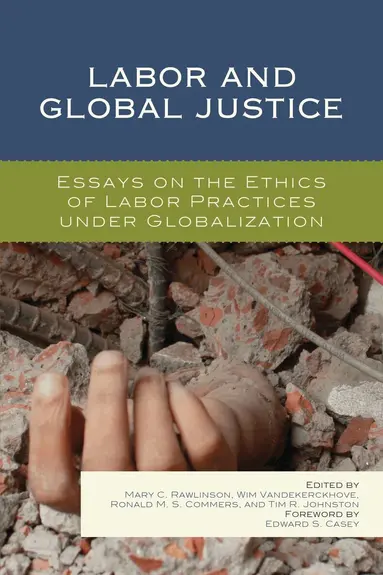
Labor and Global Justice
Mary C. Rawlinson, Wim Vandekerckhove, Ronald M. S. Commers, Tim R. Johnston
Häftad, 2016
722 kr
Del 88
The Voice of Breast Cancer in Medicine and Bioethics
Mary C. Rawlinson, Shannon Lundeen
Häftad, 2011
1 644 kr