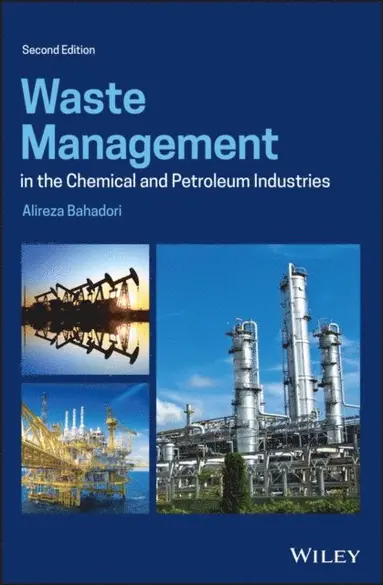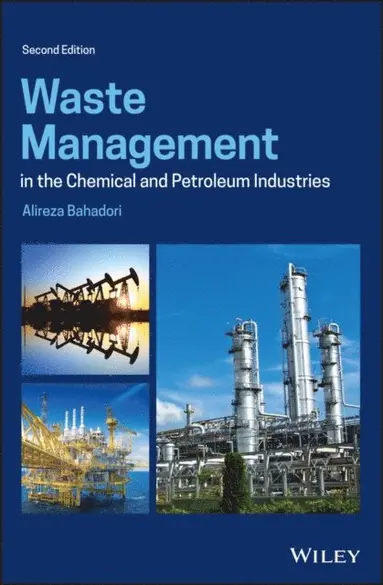
Waste Management in the Chemical and Petroleum Industries
1 470 kr
Tillfälligt slut. Bevaka för att få ett mejl när produkten kan beställas.
Fler format och utgåvor
Beskrivning
Produktinformation
- Utgivningsdatum:2013-11-01
- Språk:Engelska
- ISBN:9781118731741
- Förlag:John Wiley & Sons Inc
- Dimensioner:152 x 229 x 15 mm
Utforska kategorier
Mer om författaren
Alireza Bahadori, School of Environment, Science and Engineering, Southern Cross University, Australia
Recensioner i media
“This is a well-timed valuable book that will be a worthwhile addition to the bookshelves of scientists and engineers working in the area of waste management and will assist in the development of solutions to relevant environmental issues.” (Journal of Petroleum Science and Technology, 1 March 2014)
Innehållsförteckning
- Preface xvAcknowledgments xixBiography xxi1 Wastewater Treatment 11.1 Characteristics of Wastewaters 11.1.1 Suspended Solids 21.1.2 Heavy Metals 21.1.3 Dissolved Inorganic Solids 41.1.4 Toxic Organic Compounds 41.1.5 Surfactants 61.1.6 Priority Pollutants 61.1.7 Volatile Organic Compounds 61.2 Treatment Stages 71.2.1 Sources of Wastewater 81.2.2 Discharge Options and Quality Requirements 81.2.3 Preliminary Wastewater Treatment 91.2.4 Primary Wastewater Treatment 91.2.5 Conventional Secondary Wastewater Treatment 91.2.6 Nutrient Removal or Control 91.2.7 Advanced Wastewater Treatment/Wastewater Reclamation 101.2.8 Toxic Waste Treatment/Specific Contaminant Removal 101.2.9 Sludge Processing 101.3 Treatment Processes 111.3.1 Selection of Treatment Processes 141.4 Chemical Oxygen Demand (COD) in Wastewater Systems 221.4.1 Determination of the COD 231.4.2 Calculation of Theoretical Oxygen Demand 232 Physical Unit Operations 252.1 Flow Measurement 252.2 Screening 252.3 Comminution 282.4 Grit Removal 282.5 Gravity Separation 292.5.1 General 292.5.2 Application 302.5.3 Oil–Water Separator General Design Considerations 302.5.4 Conventional Rectangular Channel (API) Separators 312.5.5 Parallel-Plate Separators 432.5.6 Oil Traps 452.5.7 Oil Holding Basins 462.6 Flow Equalization 462.6.1 Application and Location 462.6.2 Volume Requirements 482.7 Mixing 482.7.1 Description and Type 482.7.2 Application 482.8 Sedimentation 492.8.1 Sedimentation Theory 492.8.2 Application and Type 512.8.3 Design Considerations 532.8.4 Number of Basins 532.8.5 Inlet Arrangements 542.8.6 Short-Circuiting 542.8.7 Outlet Arrangements 542.8.8 Detention Time 542.8.9 Surface Loading Rate 542.8.10 Factors Affecting Sedimentation 552.9 Dissolved Air Flotation (DAF) 562.9.1 General 562.9.2 System Configuration 572.9.3 Variables Affecting DAF Efficiency 582.9.4 Treatability Testing 592.9.5 Design Considerations 592.9.6 Instruments and Control 642.9.7 Piping 652.9.8 Chemical Facilities 652.9.9 Material 652.9.10 Estimation of Air Concentration in Dissolved Air Flotation(DAF) Systems 662.10 Granular-Media Filters 712.10.1 General 712.10.2 Filter Types and Applications 722.10.3 System Design Parameters 742.10.4 Cycle Time 762.10.5 Vessels and Appurtenances 772.10.6 Instrumentation and Controls 783 Chemical Treatment 813.1 Introduction 813.1.1 Chemical Precipitation 813.1.2 Chemical Coagulation 813.1.3 Chemical Oxidation and Advanced Oxidation 823.1.4 Ion Exchange 823.1.5 Chemical Stabilization 843.2 Definition and Application 843.2.1 Activated Carbon Adsorption 853.3 Chemical Precipitation 873.4 Chemical Flocculation 873.4.1 Definition and Applications 883.4.2 Design Considerations 903.4.3 Clarifier 903.4.4 Chemical Addition Systems 933.5 Disinfection 943.5.1 Chemical Agents 953.5.2 Mechanical Means 953.6 Chlorination 953.6.1 Application 963.6.2 Chlorine Dosages 963.6.3 Design Considerations 964 Biological Treatment 994.1 Theory 994.1.1 Biological Activated Carbon Process 1014.1.2 Biokinetic Theoretical Model 1024.2 Biological Treatment Processes 1044.2.1 Major Differences in Aerobic and Anaerobic Treatment 1064.2.2 Aerobic Processes 1074.2.3 Anaerobic Waste Treatment 1124.2.4 Aerobic, Anaerobic (Facultative) Waste Treatment 1124.3 Activated-Sludge Units 1124.3.1 Applications 1134.3.2 Effects of Activated-Sludge 1144.3.3 Feed Composition 1154.3.4 Process Design 1204.3.5 Design Considerations 1204.4 Trickling-Filters 1234.4.1 Trickling-Filter Process Design 1244.5 Rotating Biological Contactor System 1264.6 Sewage Oxidation Ponds 1265 Wastewater Treatment in Unconventional Oil and Gas Industries 1295.1 Background 1295.1.1 Dissolved and Dispersed Hydrocarbon Components 1315.1.2 Dissolved Mineral 1315.1.3 Production Chemicals 1315.1.4 Produced Solids 1325.1.5 Dissolved Gases 1325.2 Toxicity Limitations of Coal Bed Water 1325.3 Shale Gas and Coal Seam Gas Produced Water, Treatment and Disposal 1355.3.1 Evaporation Pond 1365.3.2 Surface Stream Disposal 1365.3.3 Ion Exchange 1385.3.4 Membrane Filtration Technology 1385.3.5 Freeze–Thaw Evaporation 1405.3.6 Adsorption 1405.3.7 Chemical Oxidation 1405.3.8 Filtration 1415.3.9 Constructed Wetlands 1415.3.10 Electrodialysis/Electrodialysis Reversal 1415.3.11 Deep Well Injection at Dedicated Onshore Sites 1415.3.12 Biological Aerated Filters 1425.3.13 Macro-Porous Polymer Extraction Technology 1435.3.14 Thermal Technologies 1435.4 Re-Thinking Technologies for Safer Facing 1475.5 Water Treatment for Oil Sands Mining 1535.5.1 Recycling and Water Treatment Options 1535.5.2 Oily Water Treatment in Oil Sands Mining 1556 Wastewater Sewer Systems 1616.1 Stormwater Sewer System 1626.2 Oily Water Sewer System 1626.3 Non-Oily Water Sewer System 1636.4 Chemical Sewer System(s) 1646.4.1 Disposal of Chemical Sewers 1646.4.2 Neutralization Systems 1646.4.3 Type of Chemical Wastes 1646.5 Sanitary Sewer System 1656.6 Special Sewer Systems 1656.7 Effluent Sources and Disposals 1656.8 Particular Effluents in Refinery and Petrochemical Plants 1676.8.1 Caustic Scrubs (Heavy Oils) 1676.8.2 Desalter Wastewater 1686.8.3 Foul or Sour Waters 1686.8.4 Spent Caustic Solutions 1686.8.5 MTBE or Leaded Contaminated Streams 1706.8.6 Benzene Contaminated Streams 1716.8.7 Spent Sulfuric Acid Products 1716.8.8 Nitrogen Base Components 1726.8.9 Cyanides 1726.8.10 Aluminum Chloride 1736.8.11 Polyelectrolyte 1736.8.12 Ferric Chloride 1736.8.13 Phosphoric Acid 1736.8.14 Hydrofluoric Acid 1736.8.15 Other Spent Catalysts 1736.8.16 Chemical Cleaning Wastes 1746.8.17 Sulfur Solidification and Crushing Facilities and LoadingSystems Drainage 1746.8.18 Water Containing Solids, Emulsifying Agents, etc. 1746.8.19 Heavy Viscous Oils Drainage 1746.8.20 Toxic Metal Contaminated Streams 1746.8.21 Solvent Processes Drainage 1746.8.22 Treating Processes Drainage 1756.9 Petrochemical Plants’ Special Effluents 1756.9.1 Summary of Disposal/Treatment Methods 1756.10 NGL, LNG, and LPG Area Effluents 1786.10.1 Liquefied Gas Spill 1786.11 Gas Treatment Facilities’ Effluents 1786.12 Effluents from Terminals, Depots, and Product Handling Areas 1786.13 General Considerations and Conditions for Release of Wastes 1786.13.1 Characteristics and Composition of Waste 1796.13.2 Characteristics of the Discharge Site and ReceivingEnvironment 1796.13.3 Availability of Waste Technologies 1806.14 Effluent Wastewater Characteristics 1806.14.1 Flow 1806.14.2 Temperature 1816.14.3 pH 1816.14.4 Oxygen Demand 1816.14.5 Phenol Content 1826.14.6 Sulfide Content 1826.14.7 Oil Content 1826.14.8 Light Hydrocarbon Solubility in Water 1826.14.9 Predicting Water–Hydrocarbon System Mutual Solubility 1856.15 Wastewater Emissions 1896.15.1 Point Source Discharge 1896.15.2 Effluent Permissible Concentrations 1937 Sewage Treatment 1957.1 Sewage Effluents 1967.1.1 Receiving Water 1967.1.2 Final Effluents of Domestic Wastewater Plants 1977.2 Methods of Sewage Treatment: General 1977.2.1 Conventional Methods 1977.3 Choice of System: General 1977.4 Design of Sewage Treatment Plants: General Guidances 1987.5 Design of Small Sewage Treatment Plants 1987.5.1 Collection of Information 1987.6 Preliminary Treatment 2007.7 Primary and Secondary Settlement Tanks 2007.7.1 Capacities of Primary Settlement Tanks 2017.8 Sludge Digesters 2027.9 Drying Beds 2027.9.1 Secondary Settlement Tanks 2037.10 Biological Filters 2047.10.1 Distribution 2057.10.2 Volume of Filter 2057.10.3 Mineral Filter Media 2067.11 Activated-Sludge Units 2077.12 Tertiary Treatment (Polishing) Processes 2077.13 Disposal of Final Effluent 2077.14 Advanced Wastewater Treatment 2087.14.1 Effects of Chemical Constituents in Wastewater 2087.14.2 Advanced Wastewater Treatment Operations and Processes 2097.15 Effluent Disposal and Reuse 2127.15.1 Direct and Indirect Reuse of Wastewater 2128 Solid Waste Treatment and Disposal 2158.1 Basic Considerations 2158.1.1 Classification 2158.1.2 Methodology 2158.1.3 Sources 2168.1.4 Characteristics 2198.1.5 Quantities 2238.2 Sludge Handling, Treatment, and Reuse 2238.2.1 General 2238.2.2 Sludge and Scum Pumping 2238.2.3 Sludge Piping 2268.2.4 Preliminary Operation Facilities 2298.2.5 Thickening (Concentration) 2308.3 Stabilization 2338.3.1 Design Considerations 2338.3.2 Lime Stabilization 2338.3.3 Heat Treatment 2348.3.4 Anaerobic Sludge Digestion 2358.3.5 Composting 2368.4 Conditioning 2378.5 Disinfection 2378.6 Dewatering 2378.6.1 Sludge Dewatering Methods 2388.6.2 Vacuum Filtration 2388.6.3 Centrifugation 2388.6.4 Belt Filter Press 2388.6.5 Sludge Drying Beds 2418.6.6 Lagoons 2418.7 Heat Drying 2428.8 Thermal Reduction 2428.8.1 Thermal Reduction Process Applications 2438.9 Land Application of Sludge 2438.10 Chemical Fixation 2458.11 Final Sludge and Solids Conveyance, Storage, and Disposal 2458.11.1 Conveyance Methods 2458.11.2 Environmental Considerations in Sludge Transportation 2468.11.3 Sludge Storage 2468.11.4 Final Disposal 2468.11.5 Incineration 2478.11.6 Ash Handling and Disposal 2488.12 Disposal of Solid Waste 2488.12.1 Types of Waste 2488.12.2 Siting of Hazardous Waste Facilities 2508.12.3 Non-Hazardous Waste 2518.12.4 Sources, Segregation, Quantities, and Characteristics of SolidWaste in Refineries 2518.12.5 Source Reduction Methods 2538.12.6 Resource Recovery and Waste Minimization 2558.12.7 Hazardous Waste Reduction 2588.12.8 Treatment Prior to Ultimate Disposal 2608.12.9 Disposal of Waste Generated in Drilling Wells 2668.12.10 General Sampling Considerations 2678.12.11 Air Monitoring of Waste for Employee Protection 2728.12.12 Procedures 2738.12.13 Hazards 2758.12.14 Quality Assurance Consideration 275Definitions and Terminology 277Bibliography and Further Reading 307Index 323
Mer från samma författare
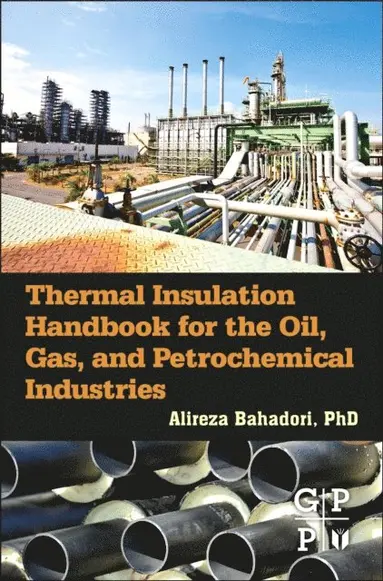
Thermal Insulation Handbook for the Oil, Gas, and Petrochemical Industries
Alireza Bahadori
Inbunden, 2014
1 358 kr
Thermal Insulation Handbook for the Oil, Gas, and Petrochemical Industries
Alireza Bahadori
1 485 kr
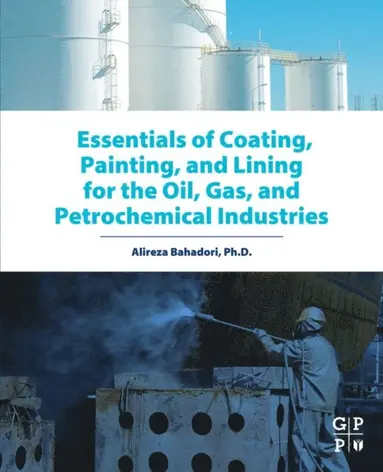
Essentials of Coating, Painting, and Lining for the Oil, Gas and Petrochemical Industries
Alireza Bahadori
Häftad, 2015
1 281 kr
Essentials of Coating, Painting, and Lining for the Oil, Gas and Petrochemical Industries
Alireza Bahadori
1 504 kr
Du kanske också är intresserad av
- -15% på allt
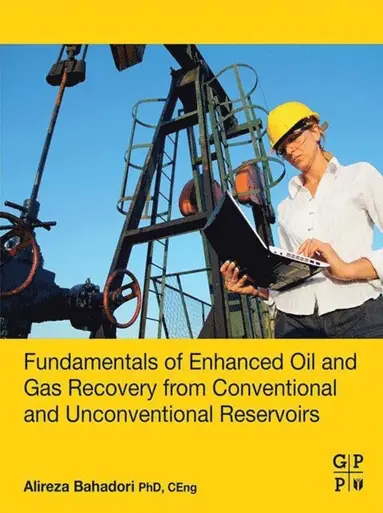
Fundamentals of Enhanced Oil and Gas Recovery from Conventional and Unconventional Reservoirs
Alireza Bahadori
Häftad, 2018
1 982 kr
Fundamentals of Enhanced Oil and Gas Recovery from Conventional and Unconventional Reservoirs
Alireza Bahadori
2 842 kr
Personnel Protection and Safety Equipment for the Oil and Gas Industries
Alireza Bahadori
Häftad, 2015
1 199 kr
Effective Front-End Strategies to Reduce Waste on Construction Projects
Peter G. Rundle, Alireza Bahadori, Ken Doust
Inbunden, 2019
557 kr
Dictionary of Environmental Engineering and Wastewater Treatment
Alireza Bahadori, Scott T. Smith
Häftad, 2018
2 208 kr
Essentials of Coating, Painting, and Lining for the Oil, Gas and Petrochemical Industries
Alireza Bahadori
1 504 kr
Essentials of Coating, Painting, and Lining for the Oil, Gas and Petrochemical Industries
Alireza Bahadori
Häftad, 2015
1 281 kr