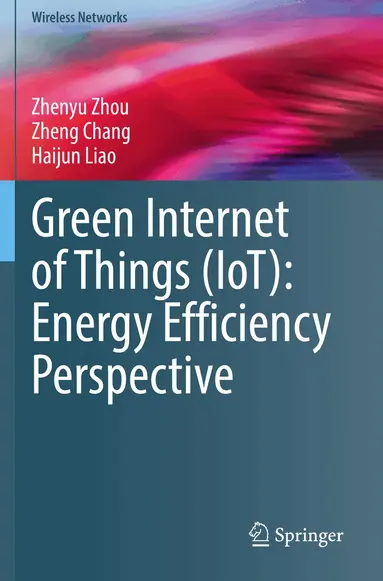
Green Internet of Things (IoT): Energy Efficiency Perspective
Zhenyu Zhou, Zheng Chang, Haijun Liao
Inbunden, 2021
1 644 kr
1 745 kr
Kommande. Bevaka för att få ett mejl när produkten kan beställas.
Zhenyu Zhou, Zheng Chang, Haijun Liao
Inbunden, 2021
1 644 kr
Haijun Liao, Zheng Chang, Zhenyu Zhou
2 096 kr
Zhenyu Zhou, Zheng Chang, Haijun Liao
Häftad, 2022
1 644 kr

Zhenyu Zhou, Zheng Chang, Haijun Liao
Inbunden, 2021
1 644 kr
Haijun Liao, Zheng Chang, Zhenyu Zhou
2 096 kr
Zhenyu Zhou, Zheng Chang, Haijun Liao
Häftad, 2022
1 644 kr

Agnieszka Szpak, Robert Gawłowski, Joanna Modrzyńska, Paweł Modrzyński, Michał Dahl
Inbunden, 2022
1 669 kr

John R. Bryson, Ronald V. Kalafsky, Vida Vanchan
Inbunden, 2021
1 849 kr