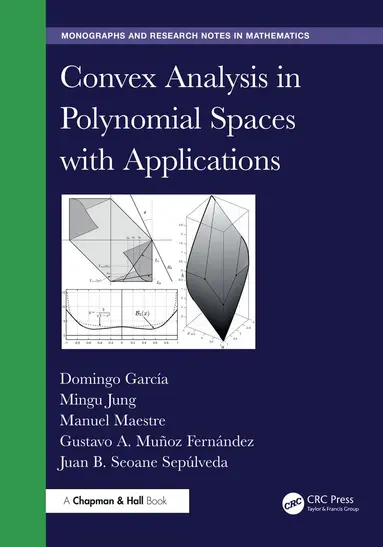
Convex Analysis in Polynomial Spaces with Applications
Domingo García, Mingu Jung, Manuel Maestre, Gustavo A. Muñoz Fernández, Juan B. Seoane Sepúlveda
Inbunden, 2025
2 761 kr
AvDomingo Garcia,Manuel Maestre
2 739 kr
Kommande. Bevaka för att få ett mejl när produkten kan beställas.
Domingo García, Mingu Jung, Manuel Maestre, Gustavo A. Muñoz Fernández, Juan B. Seoane Sepúlveda
Inbunden, 2025
2 761 kr
Juan B. Seoane Sepulveda, Gustavo A. Munoz Fernandez, Manuel Maestre, Mingu Jung, Domingo Garcia
3 151 kr
Juan B. Seoane Sepulveda, Gustavo A. Munoz Fernandez, Manuel Maestre, Mingu Jung, Domingo Garcia
3 151 kr

Pablo Sevilla-Peris, Manuel Maestre, Domingo Garcia, Andreas Defant
2 994 kr

Jesús Ferrer, Domingo García, Manuel Maestre, Gustavo A. Muñoz, Daniel L. Rodríguez, Juan B. Seoane
Häftad, 2023
551 kr

Juan B. Seoane, Daniel L. Rodriguez, Gustavo A. Munoz, Manuel Maestre, Domingo Garcia, Jesus Ferrer
734 kr


Pablo Sevilla-Peris, Manuel Maestre, Domingo Garcia, Andreas Defant
2 994 kr
Juan B. Seoane Sepulveda, Gustavo A. Munoz Fernandez, Manuel Maestre, Mingu Jung, Domingo Garcia
3 151 kr
Juan B. Seoane Sepulveda, Gustavo A. Munoz Fernandez, Manuel Maestre, Mingu Jung, Domingo Garcia
3 151 kr
Juan B. Seoane, Daniel L. Rodriguez, Gustavo A. Munoz, Manuel Maestre, Domingo Garcia, Jesus Ferrer
734 kr
Jesús Ferrer, Domingo García, Manuel Maestre, Gustavo A. Muñoz, Daniel L. Rodríguez, Juan B. Seoane
Häftad, 2023
551 kr
Domingo García, Mingu Jung, Manuel Maestre, Gustavo A. Muñoz Fernández, Juan B. Seoane Sepúlveda
Inbunden, 2025
2 761 kr


Andreas Defant, Domingo García, Manuel Maestre, Pablo Sevilla-Peris
Inbunden, 2019
3 008 kr