
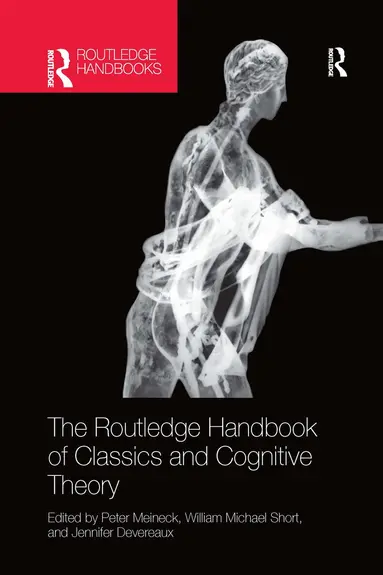
The Routledge Handbook of Classics and Cognitive Theory
Peter Meineck, William Michael Short, Jennifer Devereaux
Häftad, 2020
799 kr
AvJennifer Devereaux,Anna Novokhatko
2 661 kr
Kommande. Bevaka för att få ett mejl när produkten kan beställas.
Peter Meineck, William Michael Short, Jennifer Devereaux
Häftad, 2020
799 kr
Peter Meineck, William Michael Short, Jennifer Devereaux
Inbunden, 2018
3 969 kr
Jennifer Devereaux, William Michael Short, Peter Meineck
898 kr
Jennifer Devereaux, William Michael Short, Peter Meineck
921 kr

Peter Meineck, William Michael Short, Jennifer Devereaux
Häftad, 2020
799 kr
Jennifer Devereaux, William Michael Short, Peter Meineck
921 kr
Peter Meineck, William Michael Short, Jennifer Devereaux
Inbunden, 2018
3 969 kr
Jennifer Devereaux, William Michael Short, Peter Meineck
898 kr
Marcel Schweiker, Joachim Hass, Anna Novokhatko, Roxana Halbleib
Inbunden, 2023
1 547 kr
Roxana Halbleib, Anna Novokhatko, Joachim Hass, Marcel Schweiker
1 956 kr
Anna Novokhatko, Franco Montanari, Anna A. Lamari
2 846 kr
Gilles Polizzi, Anna Novokhatko, Wolfgang Kofler, Marie-France Guipponi-Gineste
889 kr
Anna A. Lamari, Franco Montanari, Anna Novokhatko
Inbunden, 2020
2 836 kr