

Smart Healthcare Systems and Applications
Vivek Kumar Singh, Avinash Kumar Sharma, Amit Kumar Tyagi
Inbunden, 2027
2 583 kr
AvAvinash Kumar Sharma,Vivek Kumar Singh
2 508 kr
Kommande. Bevaka för att få ett mejl när produkten kan beställas.
Vivek Kumar Singh, Avinash Kumar Sharma, Amit Kumar Tyagi
Inbunden, 2027
2 583 kr
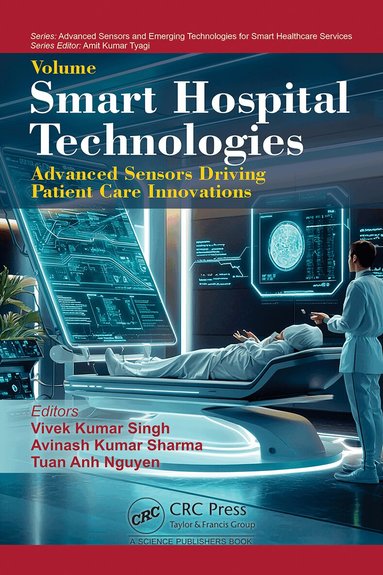
Vivek Kumar Singh, Avinash Kumar Sharma, Tuan Anh Nguyen
Inbunden, 2026
1 906 kr

Amit Kumar Tyagi, Shrikant Tiwari, Senthil Kumar Arumugam, Avinash Kumar Sharma
Inbunden, 2024
2 640 kr

Avinash Kumar Sharma, Senthil Kumar Arumugam, Shrikant Tiwari, Amit Kumar Tyagi
3 138 kr

Avinash Kumar Sharma, Senthil Kumar Arumugam, Shrikant Tiwari, Amit Kumar Tyagi
2 893 kr

Avinash Kumar Sharma, Nitin Chanderwal, Rijwan Khan
Inbunden, 2023
3 668 kr

Avinash Kumar Sharma, Nitin Chanderwal, Rijwan Khan
Häftad, 2023
3 151 kr
Avinash Kumar Sharma, Nitin Chanderwal, Shobhit Tyagi, Prashant Upadhyay
Inbunden, 2024
5 381 kr

Avinash Kumar Sharma, Nitin Chanderwal, Amarjeet Prajapati, Pancham Singh, Mrignainy Kansal
Inbunden, 2024
4 944 kr

Avinash Kumar Sharma, Nitin Chanderwal
Häftad, 2024
4 543 kr

Vivek Kumar Singh, Avinash Kumar Sharma, Amit Kumar Tyagi
Inbunden, 2027
2 583 kr
Vivek Kumar Singh, Avinash Kumar Sharma, Tuan Anh Nguyen
Inbunden, 2026
1 906 kr
Amit Kumar Tyagi, Shrikant Tiwari, Senthil Kumar Arumugam, Avinash Kumar Sharma
Inbunden, 2024
2 640 kr
Avinash Kumar Sharma, Senthil Kumar Arumugam, Shrikant Tiwari, Amit Kumar Tyagi
2 893 kr
Avinash Kumar Sharma, Senthil Kumar Arumugam, Shrikant Tiwari, Amit Kumar Tyagi
3 138 kr

Avinash Kumar Sharma, Nitin, Sumit Kumar
Inbunden, 2025
5 271 kr
Avinash Kumar Sharma, Nitin Chanderwal
Häftad, 2024
5 256 kr
Avinash Kumar Sharma, Nitin Chanderwal
Häftad, 2024
4 543 kr
Avinash Kumar Sharma, Nitin Chanderwal, Rijwan Khan
Inbunden, 2023
3 668 kr