
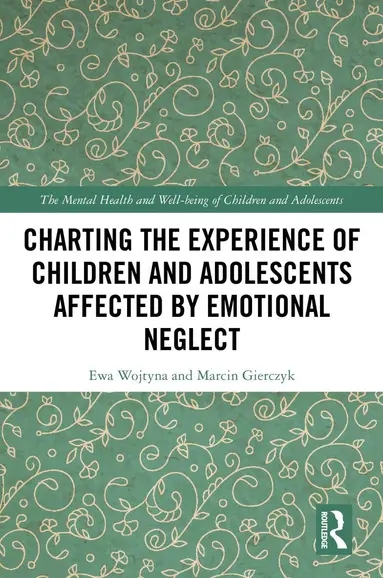
Charting the Experience of Children and Adolescents Affected by Emotional Neglect
Ewa Wojtyna, Marcin Gierczyk
Inbunden, 2024
2 232 kr
AvMarcin Gierczyk,Katarzyna Borzucka-Sitkiewicz
2 445 kr
Kommande. Bevaka för att få ett mejl när produkten kan beställas.
Ewa Wojtyna, Marcin Gierczyk
Inbunden, 2024
2 232 kr
Ewa Wojtyna, Marcin Gierczyk
Häftad, 2026
723 kr
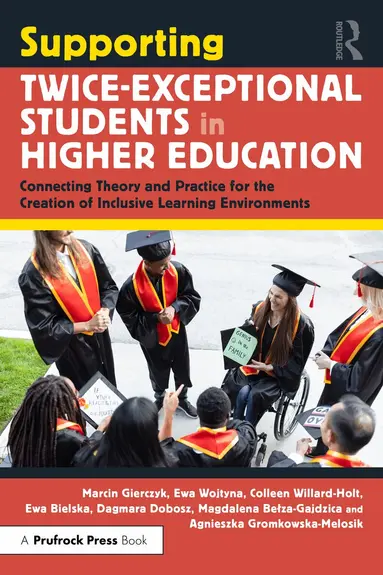
Marcin Gierczyk, Ewa Wojtyna, Colleen Willard-Holt, Ewa Bielska, Dagmara Dobosz, Magdalena Bełza-Gajdzica, Agnieszka Gromkowska-Melosik
Häftad, 2025
366 kr
Marcin Gierczyk, Ewa Wojtyna, Colleen Willard-Holt, Ewa Bielska, Dagmara Dobosz, Magdalena Bełza-Gajdzica, Agnieszka Gromkowska-Melosik
Inbunden, 2025
1 991 kr
Marcin Gierczyk, Ewa Wojtyna
856 kr
Marcin Gierczyk, Ewa Wojtyna
838 kr

Agnieszka Gromkowska-Melosik, Magdalena Belza-Gajdzica, Dagmara Dobosz, Ewa Bielska, Colleen Willard-Holt, Ewa Wojtyna, Marcin Gierczyk
518 kr
Agnieszka Gromkowska-Melosik, Magdalena Belza-Gajdzica, Dagmara Dobosz, Ewa Bielska, Colleen Willard-Holt, Ewa Wojtyna, Marcin Gierczyk
518 kr
Agnieszka Gromkowska-Melosik, Inetta Nowosad, Aleksandra Boroń, Marzanna Farnicka, Marcin Gierczyk, Arkadiusz Tyda
Inbunden, 2024
666 kr

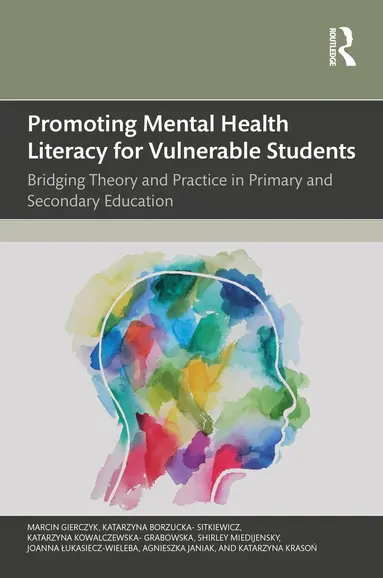
Marcin Gierczyk, Katarzyna Borzucka-Sitkiewicz, Katarzyna Kowalczewska-Grabowska, Shirley Miedijensky, Joanna Łukasiewicz-Wieleba, Agnieszka Janiak, Katarzyna Krasoń
Häftad, 2027
687 kr
Agnieszka Gromkowska-Melosik, Magdalena Belza-Gajdzica, Dagmara Dobosz, Ewa Bielska, Colleen Willard-Holt, Ewa Wojtyna, Marcin Gierczyk
518 kr
Agnieszka Gromkowska-Melosik, Inetta Nowosad, Aleksandra Boroń, Marzanna Farnicka, Marcin Gierczyk, Arkadiusz Tyda
Inbunden, 2024
666 kr
Marcin Gierczyk, Ewa Wojtyna, Colleen Willard-Holt, Ewa Bielska, Dagmara Dobosz, Magdalena Bełza-Gajdzica, Agnieszka Gromkowska-Melosik
Inbunden, 2025
1 991 kr
Marcin Gierczyk, Ewa Wojtyna
856 kr
Agnieszka Gromkowska-Melosik, Magdalena Belza-Gajdzica, Dagmara Dobosz, Ewa Bielska, Colleen Willard-Holt, Ewa Wojtyna, Marcin Gierczyk
518 kr
Ewa Wojtyna, Marcin Gierczyk
Inbunden, 2024
2 232 kr
Marcin Gierczyk, Ewa Wojtyna
838 kr
Ewa Wojtyna, Marcin Gierczyk
Häftad, 2026
723 kr