
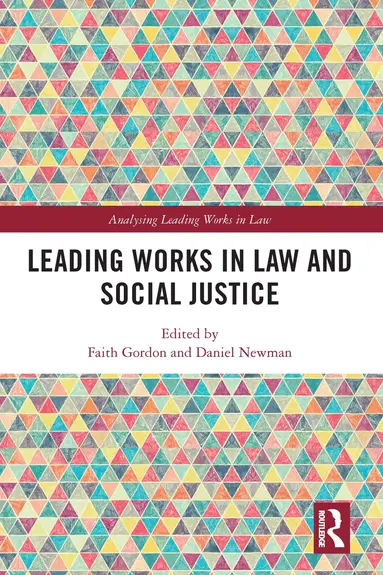
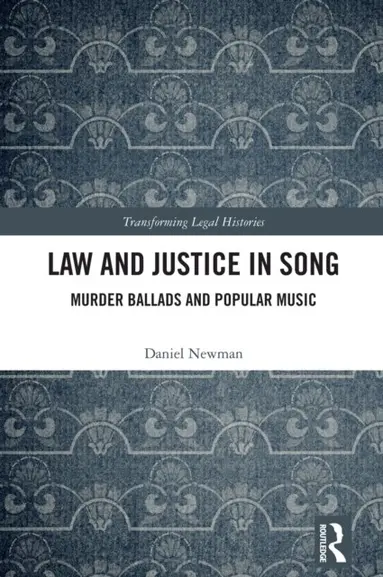
Law and Justice in Song
Murder Ballads and Popular Music
2 348 kr
Beställningsvara. Skickas inom 10-15 vardagar. Fri frakt över 249 kr.
Fler format och utgåvor
Beskrivning
This book examines the murder ballad form, songs about death and killing, from a legal history perspective. It is held that taking on the long history of the murder ballad is a way that we can understand how death and killing in song has a function in dealing with the world around us. The book integrates law and humanities scholarship with diverse musical case studies to construct a typology of murder ballads and thus conceptualise the central messages of how murder ballads have treated death and killing. Drawing on a cultural form in which assessment and consideration of death and killing are so vigorously and richly enacted gives lawyers a guide to how those who do not see these matters through a primarily legal lens might understand this part of their world. The study will be of interest to academics and researchers working in the areas of Criminal Law, Legal History, Socio-Legal Studies, Criminology, and Musicology.
Produktinformation
Utforska kategorier
Mer om författaren
Recensioner i media
Innehållsförteckning
Hoppa över listan





Mer från samma författare
Building Dragons: Digital Transformation in the Experience Economy
Olivier Blanchard, Daniel Newman
Häftad, 2016
320 kr
Futureproof: 7 Key Pillars for Digital Transformation Success
Olivier Blanchard, Daniel Newman
Häftad
320 kr

Hoppa över listan

Du kanske också är intresserad av
- -15% på allt
Futureproof: 7 Key Pillars for Digital Transformation Success
Olivier Blanchard, Daniel Newman
Häftad
320 kr
Global Reflections on Positionality in Rural Access to Justice Research
Michele Statz, Daniel Newman
E-bok
20251 362 kr
Building Dragons: Digital Transformation in the Experience Economy
Olivier Blanchard, Daniel Newman
Häftad, 2016
320 kr
Global Reflections on Positionality in Rural Access to Justice Research
Michele Statz, Daniel Newman
Häftad, 2027
595 kr