
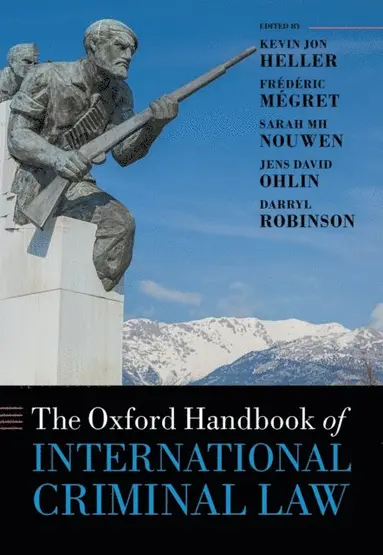
Oxford Handbook of International Criminal Law
Darryl Robinson, Jens Ohlin, Sarah Nouwen, Frederic Megret, Kevin Heller
E-bok
20202 092 kr
AvFrédéric Mégret,Damien Scalia
2 308 kr
Kommande. Bevaka för att få ett mejl när produkten kan beställas.
Darryl Robinson, Jens Ohlin, Sarah Nouwen, Frederic Megret, Kevin Heller
2 092 kr
Darryl Robinson, Jens Ohlin, Sarah Nouwen, Frederic Megret, Kevin Heller
2 092 kr

Darryl Robinson, Kevin Heller, Frédéric Mégret, Sarah Nouwen, Jens Ohlin
Inbunden, 2020
3 176 kr

Nehal Bhuta, Florian Hoffmann, Sarah Knuckey, Frédéric Mégret, Margaret Satterthwaite
Inbunden, 2021
2 060 kr
Kevin Jon Heller, Darryl Robinson, Frédéric Mégret, Sarah MH Nouwen, Jens David Ohlin
Häftad, 2025
755 kr


Vincent Chapaux, Frédéric Mégret, Usha Natarajan
Inbunden, 2023
3 827 kr

Vincent Chapaux, Frédéric Mégret, Usha Natarajan
Häftad, 2025
685 kr

Darryl Robinson, Kevin Heller, Frédéric Mégret, Sarah Nouwen, Jens Ohlin
Inbunden, 2020
3 176 kr
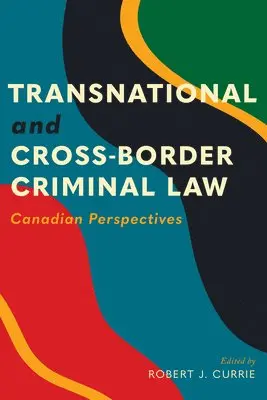
Robert J. Currie, Donald K. Piragoff, Gillian MacNeil, Joseph Rikhof, Michael Nesbitt, Christopher Ram, Leah West, Robin Parker, Peter M. German, James Cohen, Sanaa Ahmed, Michelle Gallant, Joanna Harrington, W. Michael G. Osborne, Kathryn Zedde, Stephen Schneider, Frédéric Mégret, Jeffrey G. Johnston, Amélie Aubut, Adelina Iftene, Olivia Genge, Fraser M. Kelly, Robert J. Currie
Häftad, 2023
763 kr
Vincent Chapaux, Frédéric Mégret, Usha Natarajan
Inbunden, 2023
3 827 kr
Kevin Jon Heller, Darryl Robinson, Frédéric Mégret, Sarah MH Nouwen, Jens David Ohlin
Häftad, 2025
755 kr
Darryl Robinson, Jens Ohlin, Sarah Nouwen, Frederic Megret, Kevin Heller
2 092 kr