- -15% på allt
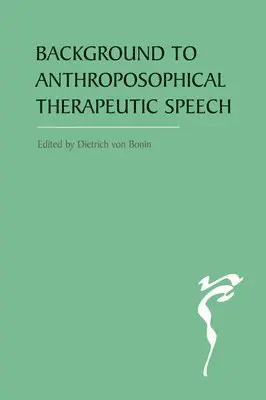
The Physiology of Eurythmy Therapy
AvHans-Broder and Elke E. von Laue
278 kr
Skickas . Fri frakt över 249 kr.
Beskrivning
Produktinformation
- Utgivningsdatum:2010-05-27
- Mått:156 x 234 x 13 mm
- Vikt:257 g
- Format:Häftad
- Språk:Engelska
- Antal sidor:160
- Förlag:Floris Books
- ISBN:9780863157400
- Originaltitel:Zur Physiologie der Heileurythmie
- Översättare:David Macgregor, David MacGregor
Utforska kategorier
Mer om författaren
Hans-Broder von Laue was born in North Germany in 1937. He is a doctor who specialises in anthroposophical medicine. He lectures on cancer treatment and teaches therapeutic eurythmy, and has been widely published. Elke von Laue was born in Dresden, Germany in 1938. She trained as a nurse and has worked as an anthroposophical therapist for many years. She teaches eurythmy therapy and has published several papers on the subject.
Recensioner i media
'This study furthers the relevance and accessibility of eurythy therapy, initially by developing means of describing what the therapeutic tools are and how they work. Therapists and doctors need a common language in which to discuss etheric processes and here we find concrete suggestions of how to structure it. The beauty of the suggestions is that they can be tried out ... It is certainly a weighty contribution. It invites scrutiny and will be a stimulating, enriching study for all anthroposophical health professionals curious about etheric dynamics. It is to be highly recommended for eurythmy therapists and doctors in particular.'-- Ingrid Hermansen, Eurythmy Association Newsletter, Summer 2010
Innehållsförteckning
- 1. Introduction 2. The Processes of the Etheric Body Between the Upper and Lower Human Being 3. The Polar Effects of Consonants and Vowels 253.1 Characterization of the polar effects in the Eurythmy Therapy Course3.2 Summary 3.3 Further characterization giving the opposite point of view 3.4 Description of the polar effects in subsequent literature 3.5 Attempts to resolve the contradiction 4. The Three Elements of Eurythmy 4.1 Rudolf Steiner's first description of movement, feeling and character 4.1.1 Perception of movement, feeling and character 4.1.2 Synaesthetic perceptions of movement, feeling and character 4.1.3 Summary 4.2 Movement, feeling and character in the Eurythmy Therapy Course 4.3 Other descriptions of movement, feeling and character 5. Eurythmy Therapy and Other Movement Therapies 5.1 Physiotherapy (therapeutic gymnastics) 5.2 Dance therapy 5.3 Eurythmy therapy between physiotherapy and dance therapy 6. The Consonants 6.1 A classification of consonants 6.2 A classification of eurythmy therapy indications for the consonants 6.2.1 Indications for the palate sounds 6.2.2 Indications for the teeth sounds 6.2.3 Indications for the lip sounds 6.2.4 Indications for the middle sounds 6.3 Summary 6.4 The work of blown and impact sounds in the organism 7. The Vowels 7.1 Rudolf Steiner's classifications of the vowels 7.2 The relation of speech and eurythmy to the vowels 7.3 A suggested classification of eurythmy therapy indications for the vowels 7.3.1 The I and U exercises 7.3.2 The O and E exercises 7.3.3 The A exercise 7.3.4 The Au and Ei exercises7.4 Summary 8. Vowels and the Upper Human Being; Consonants and the Lower Human Being 8.1 Sounds influencing movements 8.2 Sounds acting on the formation of substances with a specialized function 8.3 Sounds of transformation and individualization of substances 8.4 Sounds for organ-specific substance creation, the diphthongs Au and Ei 9. The Soul Exercises 9.1 Exercises with polar feelings 9.1.1 Forming judgments through thinking: affirming -- negating 9.1.2 Agreement through the will: sympathy -- antipathy 9.2 Polar feeling exercises and vowel exercises 9.2.1 Love -- E 9.2.2 Hope -- U 9.3 Laughter -- H-A, Veneration -- A-H 10. Transforming Eurythmy into Eurythmy Therapy 10.1 The connection between moving and speaking or listening 10.2 The sequence of the eurythmy therapy exercises 10.2.1 The sequence of the vowel exercises 10.2.2 The swiftness of the consonant exercises 10.2.3 The sequence of the consonant exercises 10.3 The four steps of transformation from eurythmy to eurythmy therapy 10.3.1 Arms and legs 10.3.2 Rapid repetition10.3.3 Practising and fatigue 10.3.4 Alertness during the movement 10.3.5 Summary 10.4 Processes of the day and the night to be activated in the ether body 10.5 Transformation of movement, feeling and character into eurythmy therapy 10.5.1 Transformation of the movement element 10.5.2 Transformation of the feeling element 10.5.3 Transformation of the character element10.5.4 In which sequence are the elements experienced? 10.5.5 Summary 11. Harmonizing Speaking and Moving 11.1 When does the therapist speak and when does the patient move? 11.2 The danger of speaking while demonstrating eurythmy 12. The of Spatial Relationships 12.1 The direction of eurythmy therapeutic movement 12.2 The location of movement and of the effect 12.2.1 Migraine -- B 12.2.2 Irregularities in the abdomen -- M 12.2.3 Ordering the rhythm of breathing and circulation -- R 13. Embryological Formative Gestures and their Reflection in Eurythmy Therapy 13.1 The spiritual forces of becoming 13.1.1 The formative forces 13.1.2 The secreting forces 13.1.3 The anchoring or consolidation forces 13.2 The transformation of the forces of becoming into living processes 13.3 The three forces as capacities of soul 13.4 Metamorphosis of the three forces into spiritual capacities 13.5 The three forces and the organism in eurythmy therapy 14. Examples of Therapeutic Words 14.1 The cancer sequence O-E-M-L-Ei-B-D 14.2 Chronic constipation, meteorism L-T / D-R 14.3 A child with hemiplegia S-M-A / L-M-Y / T-M-U 14.4 Teething problems in the upper jaw L-A and in the lower jaw L-O 14.5 Motor restlessness -- fidgeting L-U-O-K-M 13114.6 Dementia R-L-S-I 14.7 Disorder of the liver and intestine, dysphylaxia, cold feet L I -- M A -- R U 14.8 Hypothyroidism S-M-I-A 14.9 Hay fever T-S-R-M-A 14.10 Conclusion 15. Future Tasks of Physicians and Eurythmy Therapists 15.1 Movement diagnosis by the eurythmist 15.2 Questions from the eurythmy therapist to the physician 15.2.1 Questions about the diagnosis 15.2.2 The patient's life circumstances and mental state 15.3 Questions from the physician to the eurythmy therapist 16. Outline of a Physiology of Eurythmy Therapy 17. Epilogue
Du kanske också är intresserad av
- Signerad!
SIGNERAD - Mackans kost : Middagar och matlådor
Marcus Frank
Inbunden, 2026
269 kr
- -15% på allt
- -52%
Pixi adventskalender 2025 : Med böcker av Maria Trolle, Maria Nilsson Thore, Johan Anderblad, Filippa Widlund, Mårten Melin Elsa Beskow, Lotta Olsson mfl
Flera Författare
Häftad, 2025
129 kr269 kr
- Signerad!
- -48%
Pixi adventskalender – Mattias Andersson
Bonnier Carlsen
Häftad, 2024
129 kr249 kr
- -27%
Bakom Nissedörren : en guide till nissens sagolika värld
Alexia Staaf, Christine Billinger
Inbunden, 2024
159 kr218 kr
- -48%
Pixi adventskalender - Filippa Widlund
Bonnier Carlsen
Häftad, 2023
129 kr249 kr
- -25%
Den magiska julklappsjakten
Camilla Beskow
Kartonnage, 2026
119 kr159 kr