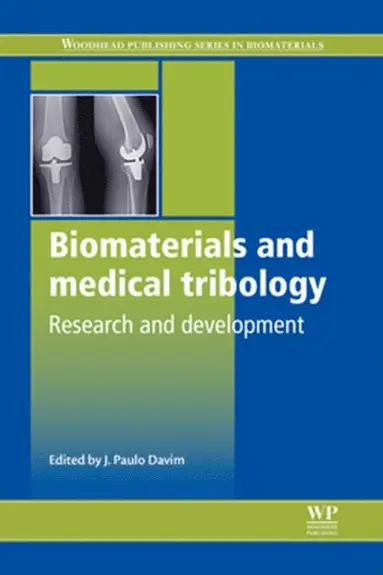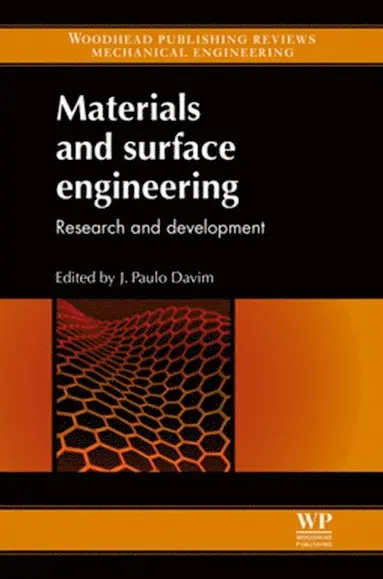
Biomaterials and Medical Tribology
Research and Development
AvJ. Paulo Davim,J Paulo Davim
Inbunden, Engelska, 2013
Del i serien Woodhead Publishing Series in Biomaterials
2 107 kr
Beställningsvara. Skickas inom 11-20 vardagar. Fri frakt över 249 kr.
Fler format och utgåvor
Beskrivning
Medical tribology can be defined as the science of tribological phenomena in the human body, both those that naturally occur in the tissues or organs and those that arise after implantation of an artificial device, while biomaterials are inert substances designed to be incorporated into living systems. Biomaterials and medical tribology brings together a collection of high quality articles and case studies focussing on new research and developments in these two important fields.
The book provides details of the different types of biomaterial available and their applications, including nanoparticles for biomedical applications, synergism effects during fiction and fretting corrosion experiments, application of biomedical-grade titanium alloys in trabecular bone and artificial joints, fatigue strengthening of an orthopaedic Ti6AI4V alloy, wear determination on retrieved metal-on-metal hip arthoplasty, natural articular joints, the importance of bearing porosity in engineering and natural lubrication, tribological characterization of human tooth enamel, and finally, liposome-based carrier systems and devices used for pulmonary drug delivery.
Biomaterials and medical tribology is an essential reference for materials scientists, engineers, and researchers in the field of medical tribology. The title also provides an overview for academics and clinicians in this area.
Produktinformation
Utforska kategorier
Mer om författaren
Recensioner i media
Innehållsförteckning
Hoppa över listan



Mer från samma författare
Advanced Applications in Manufacturing Engineering
Mangey Ram, J. Paulo Davim, J Paulo Davim
Häftad, 2018
2 428 kr
Advanced Applications in Manufacturing Engineering
J Paulo Davim, J. Paulo Davim, Mangey Ram
E-bok
20183 483 kr
Hoppa över listan
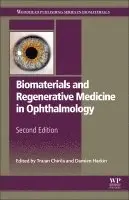


Mer från samma serie
Biomaterials and Regenerative Medicine in Ophthalmology
Traian Chirila, Damien Harkin
Inbunden, 2016
3 288 kr
Management of Periprosthetic Joint Infections (PJIs)
J.J. Chris Arts, Jan Geurts
Inbunden, 2016
2 737 kr
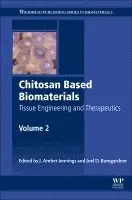
Chitosan Based Biomaterials Volume 2
Jessica Amber Jennings, Joel David Bumgardner
Inbunden, 2016
2 422 kr
Chitosan Based Biomaterials Volume 1
Jessica Amber Jennings, Joel David Bumgardner
Inbunden, 2016
2 422 kr
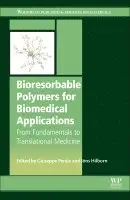
Bioresorbable Polymers for Biomedical Applications
Giuseppe Perale, J�ns Hilborn
Inbunden, 2016
2 619 kr
Medical Devices
Seeram Ramakrishna, Lingling Tian, Charlene Wang, Susan Liao, Wee Eong Teo
Inbunden, 2015
1 963 kr