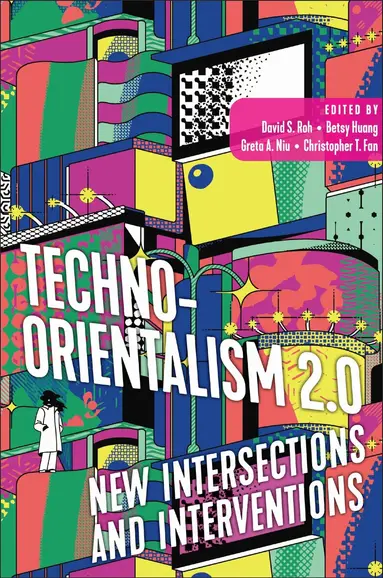
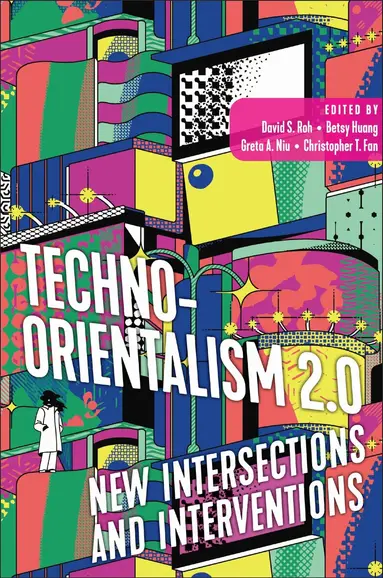
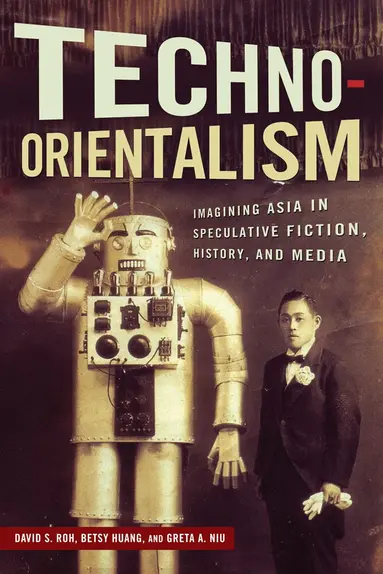
"Taken as a whole, this collection is a useful addition ot the conversation on techno-orientalism. It should prove of interest to both scholars in Asian and Asian American Studies and those with a beginner's understanding of the subject." (The Journal of Popular Culture) "Taken as a whole, this collection is a useful addition ot the conversation on techno-orientalism. It should prove of interest to both scholars in Asian and Asian American Studies and those with a beginner's understanding of the subject." (The Journal of Popular Culture) "Situating itself at the nexus of Asian and Asian American Studies, Techno-Orientalism covers an exciting range of topics and draws productive connections between literature, popular culture, technology, and the emergent geopolitics of what has been called the Pacific Century. This collection is a vital contribution to global media and cultural studies." - Peter Paik (author of From Utopia to Apocalypse: Science Fiction and the Politics of Catastrophe) "Situating itself at the nexus of Asian and Asian American Studies, Techno-Orientalism covers an exciting range of topics and draws productive connections between literature, popular culture, technology, and the emergent geopolitics of what has been called the Pacific Century. This collection is a vital contribution to global media and cultural studies." - Peter Paik (author of From Utopia to Apocalypse: Science Fiction and the Politics of Catastrophe) "'Techno-orientalism' is everywhere. This volume demonstrates for the first time that it is an indispensable critical category for contemporary thought. Any attempt to think globalization, neo-liberalism, and the human is incomplete without it." - Mark C. Jerng (University of California, Davis) "'Techno-orientalism' is everywhere. This volume demonstrates for the first time that it is an indispensable critical category for contemporary thought. Any attempt to think globalization, neo-liberalism, and the human is incomplete without it." - Mark C. Jerng (University of California, Davis) "The editors brilliantly sum up Techno-Orientalism as 'a form of pathology, necessitated by the 'Rising East' rhetoric and rationalized by the neo-liberal logic of (Asian) humans as mortal engines of modernity and economic growth.'" (Muslim World Book Review) "The editors brilliantly sum up Techno-Orientalism as 'a form of pathology, necessitated by the 'Rising East' rhetoric and rationalized by the neo-liberal logic of (Asian) humans as mortal engines of modernity and economic growth.'" (Muslim World Book Review) "This anthology usefully introduces an emergent area of Asian American literary and cultural criticism that seeks to bridge what are often separate realms and discourses of analysis: Asian American studies and critical race studies and speculative fiction studies and media studies." (Journal of Asian American Studies) "This anthology usefully introduces an emergent area of Asian American literary and cultural criticism that seeks to bridge what are often separate realms and discourses of analysis: Asian American studies and critical race studies and speculative fiction studies and media studies." (Journal of Asian American Studies) "Techno-Orientalism: Imagining Asian Speculative, Fiction, History, and Media is a timely and valuable resource for teaching and studying science fiction." (Science Fiction Studies) "Techno-Orientalism: Imagining Asian Speculative, Fiction, History, and Media is a timely and valuable resource for teaching and studying science fiction." (Science Fiction Studies) "Techno-Orientalism is a smart, compelling installment in the 'critical countertechnology' that we must build in order to resist our own sickness." (Extrapolation) "Techno-Orientalism is a smart, compelling installment in the 'critical countertechnology' that we must build in order to resist our own sickness." (Extrapolation) "This collection remains vital in an age of magnified surveillance and racialization, and unambiguously establishes that the critique of techno-Orientalism is both imperative and here to stay." (Journal of Asian Studies) "This collection remains vital in an age of magnified surveillance and racialization, and unambiguously establishes that the critique of techno-Orientalism is both imperative and here to stay." (Journal of Asian Studies) "What happens when we think of techno- orientalism in places like Pakistan, India, Sri Lanka, Thailand, Laos, Cambodia, Vietnam, or the Philippines? The volume offers its readers an invitation to think precisely about such omissions. If there’s something troubling about primarily looking to East Asia for signs of the future, what alternative futures might we be able to imagine if we were to look elsewhere?" (ALH Online) "What happens when we think of techno- orientalism in places like Pakistan, India, Sri Lanka, Thailand, Laos, Cambodia, Vietnam, or the Philippines? The volume offers its readers an invitation to think precisely about such omissions. If there’s something troubling about primarily looking to East Asia for signs of the future, what alternative futures might we be able to imagine if we were to look elsewhere?" (ALH Online) "As with Techno-Orientalism, the conceptual emphasis in The Buddha in the Machine is on considering how racialized ideas about technology are put into circulation, becoming the racial medium for linking together yet other ideas, technologies, and populations, not simply exposing racial ideology as the grounds for cultural production. Particularly impressive is the care with which Williams unfolds stories of reverse-directionality, as represented most clearly by the chapter on the Chinese American writer Lin Yutang’s lifelong at- tempt to invent and bring to production a Chinese typewriter." (American Literary History) "As with Techno-Orientalism, the conceptual emphasis in The Buddha in the Machine is on considering how racialized ideas about technology are put into circulation, becoming the racial medium for linking together yet other ideas, technologies, and populations, not simply exposing racial ideology as the grounds for cultural production. Particularly impressive is the care with which Williams unfolds stories of reverse-directionality, as represented most clearly by the chapter on the Chinese American writer Lin Yutang’s lifelong at- tempt to invent and bring to production a Chinese typewriter." (American Literary History) "A valuable addition to the rela- tively scarce body of scholarship on the topic, Techno-Orientalism is a must-read for scholars in Asian American studies, Asian studies, and race/ethnicity studies, and is a rich source of fresh insight for academics in a range of other fields, including cultural studies, literary criticism, media studies, posthuman theory, speculative fiction studies, and postcolonial studies." (MELUS) "A valuable addition to the rela- tively scarce body of scholarship on the topic, Techno-Orientalism is a must-read for scholars in Asian American studies, Asian studies, and race/ethnicity studies, and is a rich source of fresh insight for academics in a range of other fields, including cultural studies, literary criticism, media studies, posthuman theory, speculative fiction studies, and postcolonial studies." (MELUS) "A dynamite collection...full of tight and intricate arguments that will be of value to Asian Americanists, scholars of speculative fiction, and popular culture." (The Year's Work in English Studies) "A dynamite collection...full of tight and intricate arguments that will be of value to Asian Americanists, scholars of speculative fiction, and popular culture." (The Year's Work in English Studies) "How The Dark Future Of Blade Runner's 2019 Los Angeles Looks In The Light Of Actual Today," by LAist staffhttps://laist.com/2019/11/18/blade_runners_2019_los_angeles_then_now_future_past.php (LAist) "How The Dark Future Of Blade Runner's 2019 Los Angeles Looks In The Light Of Actual Today," by LAist staffhttps://laist.com/2019/11/18/blade_runners_2019_los_angeles_then_now_future_past.php (LAist) "Orientalism, Cyberpunk 2077, and Yellow Peril in Science Fiction: Cyberpunk as a genre, and Cyberpunk 2077 the game, are both rooted in a type of other-ization that can’t be ignored-but it can be examined," by George Yang (Wired) "Orientalism, Cyberpunk 2077, and Yellow Peril in Science Fiction: Cyberpunk as a genre, and Cyberpunk 2077 the game, are both rooted in a type of other-ization that can’t be ignored-but it can be examined," by George Yang (Wired) "Techno-orientalism was first coined in Rutgers UniversityPress’ 2015 book Techno-Orientalism: Imagining Asia in Speculative Fiction, History, and Media. Edited by David S. Roh, Betsy Huang and Greta A. Niu, it investigates the phenomenon of how Asia and Asians are represented in hypo- or hyper-technological terms, 'while critically examining the stereotype of Asians as both technologically advanced and intellectually primitive, in dire need of Western consciousness-raising.'" (The Hollywood Reporter) "Techno-orientalism was first coined in Rutgers UniversityPress’ 2015 book Techno-Orientalism: Imagining Asia in Speculative Fiction, History, and Media. Edited by David S. Roh, Betsy Huang and Greta A. Niu, it investigates the phenomenon of how Asia and Asians are represented in hypo- or hyper-technological terms, 'while critically examining the stereotype of Asians as both technologically advanced and intellectually primitive, in dire need of Western consciousness-raising.'" (The Hollywood Reporter) "Episode 193: Asian Futures Without Asians" (Imaginary World podcast) "Episode 193: Asian Futures Without Asians" (Imaginary World podcast) "Where the Future is Asian, and the Asian Are Robots," by Jane Hu (New Yorker) "Where the Future is Asian, and the Asian Are Robots," by Jane Hu (New Yorker)