

Collective Individualism
The World’s First Welfare State and the Origins of the Industrial Revolution
Inbunden, Engelska, 2027
598 kr
Kommande. Bevaka för att få ett mejl när produkten kan beställas.
Beskrivning
How the 1601 Elizabethan Poor Law created the first welfare state, and how this led to historic economic successWith Collective Individualism, Simon Szreter offers a radically new perspective on the economic history of the last five hundred years. He argues that the world’s first universal welfare state was created not by the UK’s post-World War II Labour Party government, or Bismarck’s efforts in the newly unified Germany of the 1880s, but during the reign of Elizabeth I. The 1601 Elizabethan Poor Law, funded by a progressive local tax, delivered care to orphans, the ill, the elderly and the involuntarily unemployed, parish by parish. It provided protection against harvest failures at a time when famine mortality was high, which freed the young to leave elder generations in the care of rural parishes while they themselves migrated to provincial manufacturing centres. This new labour mobility, Szreter argues, linked the social welfare state to rapid, dynamic economic growth.Szreter calls the state’s provision of universal support from its growing prosperity, thereby promoting the opportunities for all individuals, “collective individualism.” He argues that collective individualism in England was subsumed by the rise of self-interested individualism after 1834, when the deterrent workhouse system replaced social programs and the connection of welfare to productivity was lost. More than a century later, the welfare state and collective individualism were reinvented in William Beveridge’s famous 1942 blueprint, implemented straight after the war. Today, however, economic success brings rising inequality and irresponsible fossil fuel exploitation. We would do well, Szreter suggests, to rediscover the values and virtues of collective individualism.
Produktinformation
Utforska kategorier
Mer om författaren
Hoppa över listan






Mer från samma författare
Del 182
Del 36
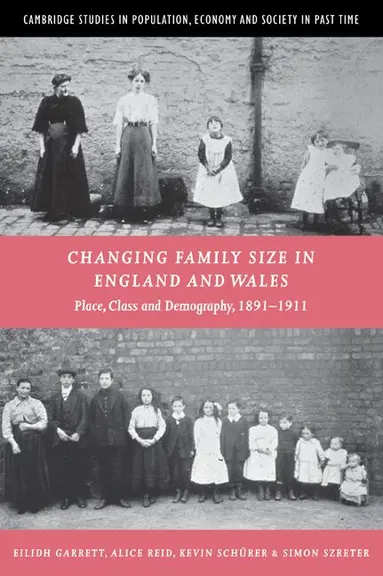
Changing Family Size in England and Wales
Eilidh Garrett, Alice Reid, Kevin Schürer, Simon Szreter
Häftad, 2006
899 kr
Del 16
Sex Before the Sexual Revolution
Simon Szreter, Kate Fisher, Simon Szreter, Kate Fisher
Häftad, 2010
435 kr
Del 27
Del 27
Fertility, Class and Gender in Britain, 1860-1940
Simon Szreter, Richard Smith, Jan De Vries
Häftad, 2002
849 kr
Del 16
Sex Before the Sexual Revolution
Simon Szreter, Kate Fisher, Simon Szreter, Kate Fisher
Inbunden, 2010
1 677 kr
Del 36
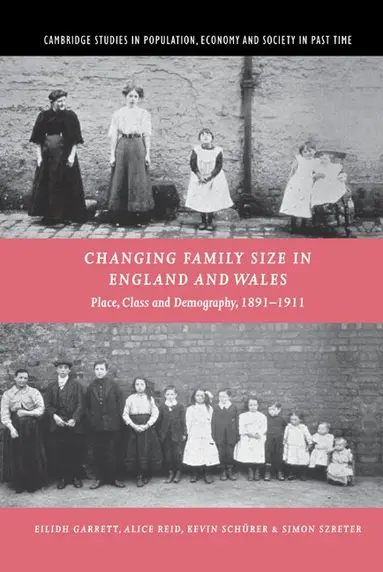
Changing Family Size in England and Wales
Eilidh Garrett, Alice Reid, Kevin Schürer, Simon Szreter
Inbunden, 2001
2 198 kr
History, Historians and Development Policy
C.A. Bayly, Vijayendra Rao, Simon Szreter, Michael Woolcock
Inbunden, 2011
1 263 kr
Hoppa över listan





Du kanske också är intresserad av
- -15% på allt
Del 182
History, Historians and Development Policy
C.A. Bayly, Vijayendra Rao, Simon Szreter, Michael Woolcock
Häftad, 2011
344 kr
Del 36
Changing Family Size in England and Wales
Eilidh Garrett, Alice Reid, Kevin Schürer, Simon Szreter
Inbunden, 2001
2 198 kr
Del 46
Del 16
Sex Before the Sexual Revolution
Simon Szreter, Kate Fisher, Simon Szreter, Kate Fisher
Inbunden, 2010
1 677 kr