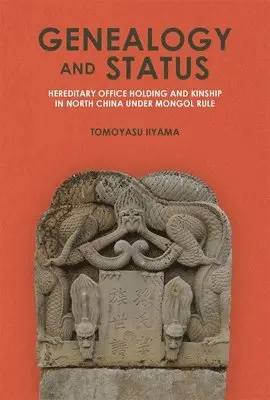
Classifying Ancestries comprehensively examines the long-term, often obscured impact of Mongol rule in North China by tracing the evolution of non-Han ancestries from the thirteenth century to the present. Challenging the notion that “barbarian” dynasties were mere interludes and that their descendants were fully absorbed into an undifferentiated Han majority, the book shows how memories of Yuan-era Mongol, Semu, and other non-Han migrants persisted within local lineage organizations and later intersected with twentieth-century ethnic classification by state.Drawing on stele inscriptions, lineage genealogies, local gazetteers, and recent “Search for Roots” movements, Tomoyasu Iiyama reconstructs how lineages in North China selectively commemorated, reinterpreted, or silenced non-Han forebears in response to the changing political regimes, intellectual trends, and institutional incentives. Theoretically, the study adopts a constructivist notion of ethnicity and proposes “reclassification” to describe shifts in ethnic identity that do not map neatly onto a Han/non-Han binary. Through detailed case studies of several lineages, Iiyama analyzes how ancestral narratives were reshaped around Yuan officials, Mongol princes, or Tangut officers, and how these stories later underpinned claims to Mongol ethnicity status. Tracing a deep, diachronic history of ethnic categorization, memory, and lineage politics in North China, the book makes a significant contribution to both Chinese and Eurasian history by revealing how non-Han/non-Chinese imperial administration became a wellspring of modern ethnic (minzu) identities.