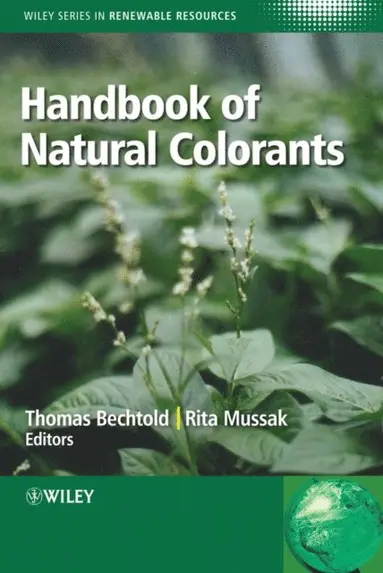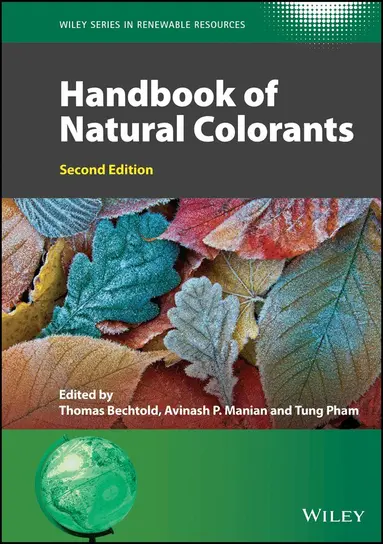
Handbook of Natural Colorants
1 468 kr
Tillfälligt slut. Bevaka för att få ett mejl när produkten kan beställas.
Fler format och utgåvor
Beskrivning
Produktinformation
- Utgivningsdatum:2009-04-28
- Språk:Engelska
- ISBN:9780470744970
- Förlag:John Wiley & Sons Inc
- Serie:Wiley Series in Renewable Resource
- Dimensioner:175 x 253 x 32 mm
Utforska kategorier
Mer om författaren
Dr Thomas Bechtold is Head of the Institute for Textile Chemistry and Textile Physics at the Leopold-Franzens University of Innsbruck, Austria. His key research interests are: dyeing with vat, indigo and sulfur dyes; electrochemistry in textile processes; formulation of special detergents.He has published over 70 papers in this research field in the last 20 years.Dr Rita Mussak is based in the Department of Theoretical Chemistry at the Leopold-Franzens University of Innsbruck, Austria.
Recensioner i media
Review copy sent 02/11/10: Chimie Nouvelle
Innehållsförteckning
- List of Contributors xvSeries Preface xixPreface xxiPart I Historical Aspects 11 History of Natural Dyes in the Ancient Mediterranean World 3Maria J. Melo1.1 Introduction 31.1.1 Ancient Mediterranean World 31.1.2 Dyes from Antiquity 41.1.3 Unveiling the Secrets of Ancient Dyes with Modern Science 51.2 Ancient Reds 61.2.1 Anthraquinone Reds 61.2.2 Redwoods 81.2.3 Flavylium/Anthocyanin Reds 81.3 Ancient Blues 101.3.1 Indigo Blues 101.3.2 Anthocyanin Blues 121.4 Ancient Purple (Tyrian Purple) 131.5 Ancient Yellows 151.5.1 Flavonoid Yellows 151.5.2 Carotenoid Yellows 171.5.3 Chalcone and Aurone Yellows 17Acknowledgement 17References 172 Colours in Civilizations of the World and Natural Colorants: History under Tension 21Dominique Cardon2.1 Introduction 212.2 The Triumph of Mauvein: Synthetic Fulfilment of the Antique Purplemania 222.3 Blue: from Kingly Regional to Globally Democratic 232.4 Red and Yellow: from Micro to Macro Scales 242.5 What Future for Natural Colorants in the Dawning Era of Renewable Resources? 25Acknowledgement 26References 263 History of Natural Dyes in North Africa ‘Egypt’ 27Harby Ezzeldeen Ahmed3.1 Introduction 273.2 Natural Dyes in Pharaonic Textiles 283.3 Dyeing Techniques 283.4 Dye Sources 293.4.1 Woad 293.4.2 Indigo 303.4.3 Red 303.4.4 Yellow 303.4.5 Black 313.4.6 Brown 313.4.7 Green 313.4.8 Purple 313.5 Dyeing in Coptic Textiles 313.6 Wool Dyed Fabric with Natural Dye 333.7 Dyes in Islamic Textiles 333.8 Mordants 34References 36Part II Regional Aspects of Availability of Plant Sources 374 Dye Plants in Europe 39Andrea Biertümpfel and Günter Wurl4.1 Introduction 394.2 Potential European Dye Plants 394.3 Cultivation of Dye Plants Yesterday and Now 404.4 Modern Cultivation Methods for Important European Dye Plants 414.4.1 General Facts 414.4.2 Blue Dyeing Plants 424.4.3 Red Dyeing Plants 434.4.4 Yellow Dyeing Plants 444.4.5 Brown Dyeing Plants 464.5 Production of Dye Extracts 484.6 Relevant Examples for the Application 504.7 Conclusions, Discussion and Summary 50References 515 Dyes in South America 53Veridiana Vera de Rosso and Adriana Zerlotti Mercadante5.1 Introduction 535.2 Annatto 555.3 Turmeric 575.4 Marigold 595.5 Cochineal and Carmine 60Acknowledgements 62References 626 Natural Dyes in Eastern Asia (Vietnam and Neighbouring Countries) 65Hoang Thi Linh6.1 Introduction 656.2 Annatto (Botanical Name Bixa orellana L., Family Bixaceae) 656.3 Tea (Botanical Name Camellia sinensis (L.) Kuntze, Family Theaceae) 676.4 Umbrella Tree (Botanical Name Terminalia catappa L., Family Combretaceae) 676.5 Diospyros mollis – Mackloeur (Botanical Name Diospyros mollis L. Griff, Family Ebenaceae) 686.6 Indigo (Botanical Name Indigofera L., Family Fabaceae) 686.6.1 Indigofera tinctoria L. 686.6.2 Indigofera galegoides DC. 696.6.3 Strobilanthes cusia (Baphicacanthus) 696.7 Henna (kok khan, or khao youak in Laos) (Botanical Name Lawsonia spinosa L., Family Lythraceae) 696.8 Nacre (Botanical Name Khaya senegalensis, Family Meliaceae) 696.9 Sappan Wood (Botanical Name Caesalpinia sappan L., Family Fabaceae) 696.10 Sophora japonica Flowers (Botanical Name Sophora japonica L., Family Leguminosae) 706.11 Turmeric (Botanical Name Curcuma longa L., Family Zingiberaceae) 706.12 Sapodilla (Botanical Name Manilkara zapota L. or Achras zapota, Family Sapotaceae) 706.13 Betel (Botanical Name Piper betle L., Family Piperaceae) 716.14 Eucalyptus (Botanical Name Eucalyptus, Family Myrtaceae) 716.15 Caesalpinia Yellow (Botanical Name Caesalpinia pulcherrima L., Family Fabaceae) 716.16 Brow-tuber (Botanical Name Dioscorea cirrhosa Lour, Family Dioscoreaceae) 71Part III Colorant Production and Properties 737 Indigo – Agricultural Aspects 75Philip John and Luciana Gabriella Angelini7.1 Introduction 757.2 Isatis 767.2.1 Introduction 767.2.2 Agronomy 777.3 Persicaria (Polygonum) 927.3.1 Introduction 927.3.2 Agronomy 937.4 Indigofera 101Acknowledgements 103References 1038 Indigo – Extraction 105Philip John8.1 Introduction 1058.2 Methods of Determining Indigo 1068.3 Precursors in the Plants and Indigo Formation 1088.4 Extraction Procedures 1148.4.1 Traditional Process Using Crushed Leaf Material 1148.4.2 Steeping in Water 1178.5 Purity of Natural Indigo 126Acknowledgements 130References 1309 Anthocyanins: Nature’s Glamorous Palette 135Maria J. Melo, Fernando Pina and Claude Andary9.1 Chemical Basis 1359.1.1 Chemical Structures 1359.1.2 Equilibria in Solution 1379.1.3 Colour and Colour Stability 1409.1.4 Anthocyanins as Antioxidants 1419.2 Natural Sources for Anthocyanins 1429.2.1 Plant Sources, Content, Influencing Parameters 1429.3 Applications 1449.3.1 Food Colorants 1449.3.2 Other Uses 1459.4 Examples of Commercial Products and Processing 146References 14710 Natural Colorants – Quinoid, Naphthoquinoid and Anthraquinoid Dyes 151Thomas Bechtold10.1 Introduction 15110.2 Benzoquinone Dyes 15110.3 Naphthoquinone Dyes 15210.3.1 Lawson (2-hydroxy-1,4-naphthoquinone, CI Natural Orange 6) 15310.3.2 Juglone (5-hydroxy-1,4-naphthoquinone, CI Natural Brown 7) 15610.4 Anthraquinone Dyes 15710.4.1 Main Components Emodin and Chrysophanol –Rheum Species and Rumex Species 15710.4.2 Main Components Alizarin and/or Pseudopurpurin/Purpurin 15910.5 Other Sources of Anthraquinoid Dyes 171References 17111 Dyes from Lichens and Mushrooms 183Riikka Raisanen11.1 Use of Lichen and Mushroom Dyes in the Past 18311.2 Cultivation of Lichens and Mushrooms 18411.3 Dyestuffs in Lichens and Mushrooms 18511.3.1 Lichen Dyestuffs: Orchils and Litmus 18511.3.2 Yellowish, Brownish and Reddish Colorants from Lichen 19111.3.3 Benzoquinone Derivatives 19211.3.4 Anthraquinones 19211.3.5 Other Colorants of Fungi 19611.4 Colour-fastness of Lichen and Mushroom Dyes 19711.5 New Approaches to Lichen and Fungal Natural Dyes 198References 19812 Tannins and Tannin Agents 201Riitta Julkunen-Tiitto and Hely Haggman12.1 Introduction 20112.2 Chemical Structure, Biosynthesis and Degradation 20312.3 Properties of Tannins 20712.4 Chemical Activities of Tannins 20812.5 Analysis of Tannins 20912.5.1 Sample Preservation 20912.5.2 Extraction and Purification 20912.5.3 Quantification of Tannins 21012.6 Use, Toxicology and Safety Aspects of Tannins 212References 21413 Carotenoid Dyes – Properties 221U. Gamage Chandrika13.1 Introduction 22113.1.1 Occurrence of Carotenoids 22113.1.2 Chemistry of Carotenoids 22113.1.3 Chemical Characteristics of Natural Carotenoids 22213.2 Properties and Functions of Carotenoids 22513.2.1 Carotenoids Role as Pro-vitamin A 22513.2.2 Use of Carotenoids as Markers of Dietary Practices 22713.2.3 Carotenoids as Antioxidants 22713.2.4 Carotenoids in the Macular Region of the Retina 22713.2.5 Carotenoids as Anticancer Agent 22813.2.6 Carotenoids as a Natural Colorant 22813.3 General Procedure for Carotenoid Analysis 22813.3.1 Sampling 22813.3.2 Extraction 23013.3.3 Saponification of Carotenoids 23013.3.4 Chromatographic Separation 23013.3.5 Chemical Tests 23113.3.6 Detection and Identification of Carotenoids 23113.3.7 Quantification of Carotenoids 23313.4 Problems in Carotenoid Analysis 233References 23414 Carotenoid Dyes – Production 237U. Gamage Chandrika14.1 Factors Influencing Carotenoid Composition in Plant Sources 23714.1.1 Stage of Maturity 23714.1.2 Cultivar or Varietal Differences 23814.1.3 Climatic or Geographic Effects 23814.1.4 Post-harvest Storage and Packing 23914.1.5 Changes in Processing/Cooking 23914.1.6 Effect of Agrochemicals 241References 24115 Chlorophylls 243Ursula Maria Lanfer Marquez and Daniela Borrmann15.1 Introduction 24315.2 Chlorophylls as Colorants 24415.3 Other Applications of Chlorophylls and their Derivatives 24715.4 Chemical Structures and Physicochemical Properties 24715.5 Stability and Analysis 25015.6 Sources, Storage and Handling 25015.7 Purity, Standardization and Quality Control 25115.8 Toxicological and Safety Aspects 252References 253Part IV Application in Technical Use and Consumer Products 25516 Flavonoids as Natural Pigments 257M. Monica Giusti and Taylor C. Wallace16.1 Introduction 25716.2 Role of Localized Flavonoids in the Plant 25816.3 General Flavonoid Chemical Structure 25816.4 Biosynthesis of Flavonoids 25916.5 Anthocyanins as Natural Colorants 26116.5.1 Color Stability 26116.5.2 Structure 26116.5.3 Structural Transformation and pH 26316.5.4 Temperature 26416.5.5 Oxygen and Ascorbic Acid 26416.5.6 Light 26516.5.7 Enzymes and Sugars 26516.5.8 Sulfur Dioxide 26616.5.9 Co-pigmentation and Metal Complexation 26716.6 Other Flavonoids as Natural Colorants 26816.6.1 Yellow Flavonoid Pigments 26816.6.2 Tannins 26916.7 Therapeutic Effects of Flavonoids in the Diet 27016.8 Regulations on the Use of Flavonoid Colorants 271References 27217 Application of Natural Dyes in the Coloration of Wood 277Martin Weigl, Andreas Kandelbauer, Christian Hansmann, Johannes Pöckl, Ulrich Müller and Michael Grabner17.1 Introduction 27717.1.1 General Basics 27817.1.2 Color Measurement 28217.1.3 Color Stability 28317.2 Coatings 28317.3 Dyes 28517.3.1 Dyeing for Analytical Purposes 28517.3.2 Impregnation 28617.4 Color Modification 29017.4.1 Drying 29117.4.2 Steaming 29517.4.3 Thermal Treatment 29717.4.4 Ammoniation 29817.4.5 Bleaching 30117.4.6 Enzymatic Treatment 30317.4.7 Radiation 30517.5 Outlook 308References 30818 Natural Colorants in Textile Dyeing 315Rita A. M. Mussak and Thomas Bechtold18.1 Introduction 31518.2 Reasons for Natural Coloration 31618.3 Analysis of a Dyeing Process 31718.3.1 Water 31818.3.2 Energy 31818.3.3 Dyestuff and Chemicals (Mordants and Auxiliaries) 31918.3.4 Machinery 32118.4 Basics of Natural Dyeings 32118.4.1 Requirements of the Dyestuff 32118.4.2 Dye-ability of Substrates 32118.4.3 Standardization of the Dyestuff 32618.4.4 Ecological Aspects 32718.4.5 Aspects of Application 32818.4.6 Dyeing Technology 32918.4.7 Mordanting 33018.4.8 Standardization of the Coloration Process 33118.4.9 Mixtures of Plant Material 33118.5 Natural Dyes on an Industrial Scale 33218.5.1 Hank Dyeing of Woolen Yarn and Production of Woolen Caps 33218.5.2 Dyeing of Cones in a Yarn Dyeing Machine 33318.5.3 Dyeing of Cotton Fabric on a Jet Dyeing Machine 33318.5.4 Dyeing of Cotton Fabric on a Jig Dyeing Machine 33318.5.5 Fabric Dyeing on a Garment Dyeing Machine 33318.5.6 Dyeing of Polyamide Tights in a Paddle Dyeing Machine 33418.6 Conclusion 334Acknowledgment 334References 33519 Natural Colorants in Hair Dyeing 339Thomas Bechtold19.1 Introduction 33919.2 Human Hair 34019.3 General Requirements on Hair Dyeing Concepts 34019.4 Chemical Principles of Dyestuff Binding 34119.5 Relevant Natural Dyes for Hair Dyeing 34219.5.1 Naphthoquinone Dyes – Henna and Walnut 34219.5.2 Indigo 34319.5.3 Metal Complexes 34519.5.4 Metal Reaction Dyes 34619.5.5 Anthraquinoid Dyes 34719.6 Specialities 34719.7 Regulations 347References 347Part V Environmental 35120 Environmental Aspects and Sustainability 353Erika Ganglberger20.1 Introduction 35320.2 Supply of Plant Material 35420.2.1 Cultivation of Dye Plants 35420.2.2 Residual Materials and By-products 35520.2.3 Selection Process for a Sustainable Supply of Plant Material 35620.3 Processing to Dyestuff 35720.3.1 Energy Consumption 35820.3.2 Water Consumption 35920.4 Application of Colouring Matter 36020.4.1 Dyeing Procedure 36120.5 Considerations Concerning the Life Cycle 36120.5.1 Raw Material 36120.5.2 Processing of Raw Material 36220.5.3 Extraction of Dyestuff 36220.5.4 Dyeing Procedure 36320.5.5 Transport 36320.6 Conclusion 36420.6.1 Dealing with Sustainability 364References 36521 Economic Aspects of Natural Dyes 367Susanne Geissler21.1 Introduction 36721.2 Basic Requirements for the Industrial Use of Natural Colorants 36821.3 Challenges for the Industrial Use of Natural Colorants 37021.3.1 Quality of Raw Material and Reproducibility of Colours 37021.3.2 Range of Available Colours 37021.4 Consumer Expectations 37121.4.1 Market Research for Naturally Dyed Products 37221.5 Production Costs of Natural Colorant Products 37521.5.1 Cost Categories 37521.5.2 Aspects Influencing Production Costs 37621.5.3 Prices of Synthetic Dyes – How Much Are Textile Companies Prepared to Pay for Dyes? 37821.5.4 Acceptable Production Costs through a Mixed Portfolio (Agricultural Primary Production and Residues from Other Production Processes) 37921.6 Closed-Loop Economy: Towards a Zero-Emission and Zero-Waste Society 38121.7 Conclusion: Aspects Influencing Market Development for Natural Colorants 382References 383Index 385
Mer från samma serie
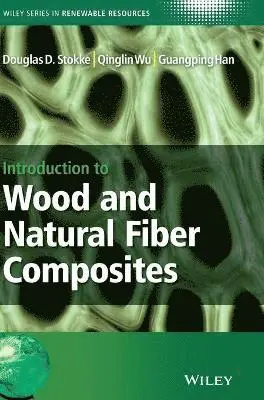
Introduction to Wood and Natural Fiber Composites
Douglas D. Stokke, Qinglin Wu, Guangping Han, Christian V Stevens
Inbunden, 2014
1 133 kr
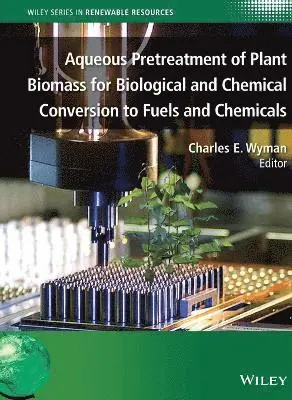
Aqueous Pretreatment of Plant Biomass for Biological and Chemical Conversion to Fuels and Chemicals
Charles E. Wyman, Charles E. Wyman
Inbunden, 2013
1 939 kr
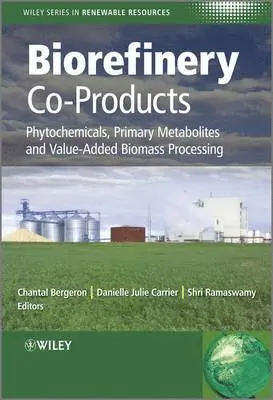
Biorefinery Co-Products
Chantal Bergeron, Danielle Julie Carrier, Shri Ramaswamy
Inbunden, 2012
1 561 kr
Lignin and Lignans as Renewable Raw Materials
Francisco G. Calvo-Flores, José A. Dobado, Joaquín Isac-García, Francisco J. Martín-Martínez
Inbunden, 2015
2 010 kr