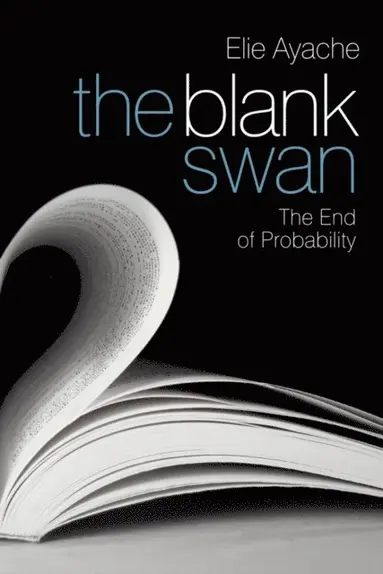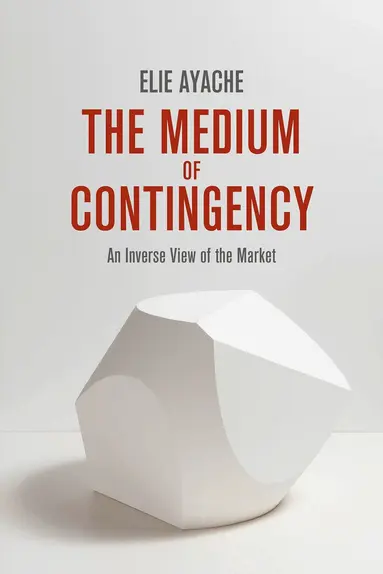
The Blank Swan
The End of Probability
515 kr
Beställningsvara. Skickas inom 7-10 vardagar. Fri frakt över 249 kr.
Beskrivning
Produktinformation
- Utgivningsdatum:2010-05-24
- Mått:168 x 244 x 38 mm
- Vikt:976 g
- Format:Inbunden
- Språk:Engelska
- Antal sidor:496
- Förlag:John Wiley & Sons Inc
- ISBN:9780470725221
Utforska kategorier
Mer om författaren
Elie Ayache was born in Lebanon in 1966. Trained as an engineer at l'École Polytechnique of Paris, he pursued a career of option market-maker on the floor of MATIF (1987-1990) and LIFFE (1990-1995). He then turned to the philosophy of probability (DEA at la Sorbonne) and to derivative pricing, and co-founded ITO 33, a financial software company, in 1999. Today, ITO 33 is the leading specialist in the pricing of convertible bonds, in the equity-to-credit problem, and more generally, in the calibration and recalibration of volatility surfaces. Elie has published many articles in the philosophy of contingent claims, as well as a book, dedicated to the philosophy of writing.
Innehållsförteckning
- Introduction xvPart I Writing and Event 11 Writer of The BLANK Swan 31.1 Prediction versus Prescription 31.1.1 My private Black Swan 31.1.2 Pierre Menard’s trading room 41.1.3 Probability, replication, context and beyond 41.1.4 Contingency 51.1.5 The process of change of contexts 61.1.6 Writing the Black Swan 71.1.7 Finding the context in The Black Swan 81.1.8 Writing backwards 91.1.9 Poetry and The Black Swan 101.2 Generalizing Prediction 111.2.1 Postponing history 111.2.2 Incompatible contexts 111.2.3 Knowledge as prediction 131.2.4 True empiricism 141.2.5 Meta-contextual prediction and backward causality 151.3 The Derivatives Market 181.3.1 Possibility, capacity and the market of contingent claims 181.3.2 Market mechanics 191.3.3 Price and the implicate ontology 191.3.4 Technology of the future 211.3.5 Context change and the necessity of jumps 231.3.6 The ‘derivative–derivative’ trader 241.3.7 Bringing the Black Swan to nest 251.3.8 The regime-switching model as a meta-contextual pricing tool 261.3.9 ‘Transcendental deduction’ of the derivatives market 271.3.10 A return to history 282 The Writing of Derivatives 312.1 First Steps on the Surface 312.1.1 Theoretical speculation versus speculation 322.1.2 Rethinking probability 332.1.3 Nonarbitrage 342.1.4 Writing, difference and deferral 372.1.5 Reality of the market: the virtual 382.2 Introducing Contingency 402.2.1 Derivative writing as an alternative to metaphysics 402.2.2 Inverting the logic 412.2.3 Present value versus present price 422.2.4 Derivative technology 432.2.5 From derivatives to contingent claims 452.2.6 The medium of contingency 462.2.7 Possibility versus capacity 472.2.8 Immanent differentiation and univocal contingency 492.3 The Pricing Surface 512.3.1 Reversibility of pricing and absolute market 512.3.2 Price and exchange 542.3.3 The two faces of price and reversion to the surface 552.3.4 The liquidity and the fold of price 562.3.5 The new metaphysics of liquidity and of the past of prices 583 The Event of the Market 613.1 From States of the World to Market Prices 613.1.1 The market, a place of exchange not of prediction 613.1.2 Value versus price 633.1.3 Elements of financial valuation theory 633.1.4 The advent of derivatives and market prices as states of the world 643.2 The Black–Scholes–Merton Paradigm 653.2.1 Price process and Brownian motion 653.2.2 The Black–Scholes revolution and derivative pricing theory 663.2.3 The dynamic replication of derivative instruments 673.2.4 A universal pricing formula 683.3 The Critique of Derivative Pricing Theory 703.3.1 The real consequences of derivative pricing theory 703.3.2 The very special mode of being of the market 713.3.3 The market as given 723.3.4 The market as the ‘inversion’ of theory or the ambivalence of price 733.4 The Necessity of Meta-Contextual Ascent 753.4.1 A new ‘logic’ for a new science 753.4.2 New generations, endless generation 773.4.3 The necessity of the context and the necessity of its surpassing 773.4.4 A meta-contextual pricing tool 793.4.5 Technology of the future versus knowledge of the future 823.4.6 The performative surpassing of representation and possibility 834 Writing and the Market 874.1 Pierre Menard 874.1.1 The reality of contingency 874.1.2 The im-possibility of history 894.1.3 Writing history 914.1.4 The very sad writing of Pierre Menard 924.1.5 The differential definition of writing and the unpredictability of the Quixote 954.1.6 The past of possibility 974.2 Reading and Writing 1004.2.1 The significance of replication and the turn to the virtual 1004.2.2 Writing as forgetting 1034.2.3 Anti-memory as trading and literary creation 1044.2.4 The resurfacing of writing 1074.3 Approaching the Market 1084.3.1 Univocity of the market 1084.3.2 Immanence of the market 1114.3.3 The sense of the market 1134.3.4 Announcing the genesis of the market 1154.3.5 Originality of price and of the market 1164.3.6 The Blank Swan 118Part II Absolute Contingency and the Return of Speculation 1235 The Necessity of Contingency 1255.1 Against Speculation 1255.1.1 Writing history (reprise) 1255.1.2 The writer’s (and trader’s) body 1265.1.3 Beyond possibility, capacity and ethics: a political interlude 1285.1.4 State of power 1295.1.5 The absolute 1315.1.6 Absolute irony 1325.2 Speculative Materialism 1325.2.1 Speculative metaphysics 1325.2.2 The shortcoming of Kant’s critical philosophy 1335.2.3 Meillassoux’s proposition: the absolute necessity of contingency 1345.2.4 Is the absolute thinkable? 1365.2.5 The absolutization of facticity 1375.2.6 Positively thinking the absolute 1385.2.7 Chaos, yet not without structure 1396 Passage to the Future 1436.1 From Possibility to Inexistence 1436.1.1 The passing of the possible 1446.1.2 Factual ontology 1456.1.3 Cantor’s set theory as meta-ontology 1466.1.4 Factual derivation of the un-totalization 1476.1.5 Effective contingency versus absolute contingency 1486.1.6 Speculative result versus metaphysical result 1496.2 The Passage 1506.2.1 The future and the world 1506.2.2 Passage to the future 1516.2.3 Gravity of the world 1526.2.4 The quality of happening 1536.2.5 Turning the future on 1556.3 The Future 1566.3.1 Badiou and Deleuze 1566.3.2 Ontologizing the passage 1576.3.3 Cutting to the future 1586.3.4 A paper rotation 1596.3.5 Keeping only the future 1607 Necessity of the Future 1637.1 A Model World 1637.1.1 Derivatives world 1637.1.2 The event of trading the derivative 1647.1.3 Exchange as fundamental ontology 1667.1.4 The market as the exchange of knowledge 1677.1.5 The market as the process of history 1687.1.6 Arche-exchange 1687.2 The Implied Absolute 1697.2.1 The absolute is in the inversion 1697.2.2 Why derivative pricing is not a human science 1717.2.3 The implied volatility smile is the absolute truth 1737.2.4 Implication is faster than thought 1747.2.5 The market as the last absolute 1758 Necessity of Writing 1778.1 Radical Speculation 1778.1.1 Elevating implication 1778.1.2 The ‘What?’ question 1788.1.3 Thinking speculation reflexively 1788.1.4 Critical speculation 1798.1.5 Absolute speculation 1818.1.6 Implication as the radicalization of speculation 1828.2 The Pricing Alternative 1838.2.1 Price as a crossing 1838.2.2 The absolutization of mathematics 1838.2.3 The mathematics of price 1848.2.4 Price as the exchange of metaphysics and possibility 1868.2.5 The ‘letter’ of the necessity of contingency 1878.2.6 Immanence and materiality of price 1888.3 From the Market to Work 1898.3.1 Price is the other of thought 1898.3.2 Meillassoux’s body 1908.3.3 The work (of the trader, of the poet) 1918.3.4 Writing the world 192Part III Flight to Sydney, Or the Genesis of the Book 1959 The Mathematics of Price 1979.1 The Absolute without Thought 1979.1.1 Mathematical thinkability 1979.1.2 The absolute without necessity 1999.1.3 Impossible exchange 2019.1.4 Writing as nonmetaphysical speculation 2039.2 The Absolute within Thought 2059.2.1 Philosophy of the event 2059.2.2 Necessity as tension 2089.2.3 The event of thought 2099.2.4 Deep necessity versus superficial speculation 2119.2.5 The cohesion of thought 21210 Barton Fink 21710.1 The Pledge 21710.1.1 Passivity of thought and the exchange surface 21710.1.2 Fiction, fabrication and dynamic programming 21910.1.3 The first mark on the surface 22110.1.4 The partition 22210.2 The Turn 22410.2.1 The turn of the world 22410.2.2 The violence in movie-making 22510.2.3 The probability distribution 22810.2.4 Partition of the world and shoe distribution 22910.2.5 The bellhop 23210.2.6 Time frame and deadline 23310.2.7 Woman, or the end of the partition 23410.2.8 The sum total of possibilities and the problem in the head office 23511 The Narrative Adventure 23711.1 The Line of Flight 23711.1.1 The other end of the world 23711.1.2 The book of derivatives 23811.1.3 Tour du monde versus point of the world 23911.1.4 Flight to Sydney, or the retro-adventure 24111.2 The POINT of the World 24311.2.1 Flight to the virtual 24311.2.2 Eternal turn versus eternal return 24611.2.3 Writing after the departure of possibility 24711.2.4 The narrative from the point of the world 24911.2.5 The Australian bank, book and market 25012 Out of the Box 25312.1 The Purple Gastropod 25312.1.1 Quants and the enterprise-wide system 25312.1.2 Integration versus differentiation 25412.1.3 How to be Australian 25512.1.4 Creators of a boîte 25712.1.5 After dinner 25912.2 The Point of Return, the Point of Inversion 26112.2.1 The mark, the market and the point of return of the world 26112.2.2 Turning the world into a point, inverting the surface 26312.2.3 Blindness and insight 26412.2.4 Inverting the world, and the only remaining question 26512.2.5 From theory to the narrative adventure, to the only remaining book 26812.3 How to be a Writer 26912.3.1 My place as a writer 26912.3.2 My memory of the market 27212.3.3 Walking on my head 27612.3.4 Double writer, double trajectory 27913 The Prestige 28313.1 Finding the Market, Binding the Book 28313.1.1 Reversibility between the book and the market 28313.1.2 Sydney process and writing process 28613.1.3 Marketing the philosophy book, and my trademark 28713.1.4 The infinite duration of writing 28813.1.5 The question of the book, the equation of the book 29113.2 Absolute Deterritorialization 29313.2.1 Making the point of the market 29313.2.2 Head office and blank box 29813.2.3 The revolutionary and virtual exotic market 30013.2.4 How the plane of immanence takes precedence 30314 The Geographical Process 30514.1 The Field of Ruins 30514.1.1 Ancient Greece, the market and Australia 30514.1.2 The market as field of ruins and geographical process 30614.1.3 The method of the intuition of the market 30814.1.4 The becoming of the book and the pressing of the ruins 31014.1.5 The dwelling of the virtual and the implosion of the ruins 31314.1.6 The book after the market and the cross of history 31414.1.7 Pulling out the tool, drawing the book and withdrawing in a hotel 31814.2 Landing on the Market 32014.2.1 The tool to write the market 32014.2.2 Reality of the market 32514.2.3 Absolute exchange 32714.2.4 Exchange as a category of its own 32914.2.5 Option volatility smile and exchange 33214.2.6 The heart of the market 336Part IV Conversion of Credit into Equity, Or the Genesis of the Market 34115 History of the Market 34315.1 The Conversion 34315.1.1 The significance of the convertible bond 34315.1.2 Genesis of the market 34315.1.3 Passivity and activity 34415.1.4 The moment of the conversion 34515.2 Possibility versus Contingency 34715.2.1 Contingent claim versus projected possibility 34715.2.2 Pricing versus evaluation 34715.2.3 Price and the stochastic process 34815.2.4 The meaning of the market and the volatility smile 35115.2.5 Possibility unmasked and return to the virtual 35315.2.6 Backward possibility 35415.3 The Market 35715.3.1 The privilege of the market 35715.3.2 The place of the trader 35815.3.3 The trader as a writer of last resort 36015.3.4 The end of the flight in possibility 36115.3.5 Summary 36216 From Debt to Equity 36516.1 Deduction of the Contingent Claim 36516.1.1 Debt, death and contingency 36516.1.2 The morphing of debt into equity 36616.1.3 The conversion/conservation of writing 36716.1.4 Company of the future 36816.2 Deduction of the Exchange 37016.2.1 The past of debt and the definition of probability 37016.2.2 The exchange place as the conversion of face 37116.2.3 Breaking the circle of representation 37216.2.4 The market without possibility 37316.2.5 The market as the medium of contingency 37516.2.6 The impossible exchange 37616.3 Deduction of Price 37916.3.1 Price as the ‘value’ of the contingent claim 37916.3.2 How does price differentiate? 38116.3.3 The atemporal pit of price 38217 The Market and the Philosophy of Difference 38517.1 The Pit of Price 38517.1.1 The price of exotics as the key 38517.1.2 Price as intensive difference 38617.1.3 Price as meaning 38817.1.4 Price and the intensive conception of time 39017.2 The Market and Time 39217.2.1 The market as noncausal redistribution of probability distributions 39217.2.2 Creative time 39517.2.3 Creation as eternal return 39717.2.4 The single dice-throw 39817.3 The Market and Difference 40317.3.1 The pure order of time 40317.3.2 Internal difference 40517.3.3 The market as philosophy and conversion as meta-philosophy 40617.3.4 Immanence and the ontology of multiplicities 40917.3.5 Reawakening the virtual 41118 Future of the Market 41518.1 The Category of Price 41518.1.1 Price as interface 41518.1.2 Possibility as a pretext for writing 41818.1.3 The past of possibility 42018.1.4 The aleatory point lying at the heart of the contingent claim and the exchange 42118.1.5 The market, as exchange, is the answer to the impossible exchange 42418.1.6 Time-to-expiry versus place 42618.2 The Step Beyond 42718.2.1 Reactivating the conversion 42718.2.2 Possibility is only a tool 42918.2.3 The pricing tool 43218.2.4 Making money in the market 43318.2.5 The market as alternative to probability 43518.2.6 Suppressing possibility 43618.2.7 Thinking of contingency instead 43718.2.8 Beyond the financial market 43918.3 Place and Contingency 44018.3.1 The sense of place 44018.3.2 The power of price 44218.3.3 A life in contingency 44318.3.4 Success and succession 44518.3.5 Becoming the market 44618.4 Conclusion 44819 Appendix 1 The Logic and Mathematics of Regime Switching 449A1.1 Description of the Regime-Switching Model 450A1.1.1 Regimes 450A1.1.2 Risk-free yield curve 451A1.1.3 Dividends 451A1.1.4 Regime probability 452A1.2 General Backward Equations 452A1.2.1 Stand-alone default regime 453A1.2.2 Coupled nondefault regimes 453A1.2.3 Fixed dividends 454A1.2.4 Proportional dividends 454A1.2.5 Vanilla calls 454A1.3 Credit Default Swaps 454A1.3.1 Definitions 454A1.3.2 Value in default 455A1.3.3 Backward equation 455A1.4 Calibration 456A1.5 Recalibration 45620 Appendix 2 From ‘Being and Time’ to ‘Being and Place’ with Jeff Malpas 459Bibliography 463Index 467
Du kanske också är intresserad av
- -15% på allt
- -15% på allt
- -15% på allt
Välkommen till Känslornas Hotell
Lidia Brankovic
Inbunden, 2026
159 kr
- -28%
Benny barnätaren
Jonna Björnstjerna
Inbunden, 2026
129 kr179 kr
- -15% på allt
Systrarna på Sophiahemmet
Ruth Kvarnström-Jones
Inbunden, 2026
239 kr
- -15% på allt